Chatting with Morgane Côme, Author of La Peinture en Lettres
Behind the scenes of creating a landmark book about France’s sign painting story, past and present.

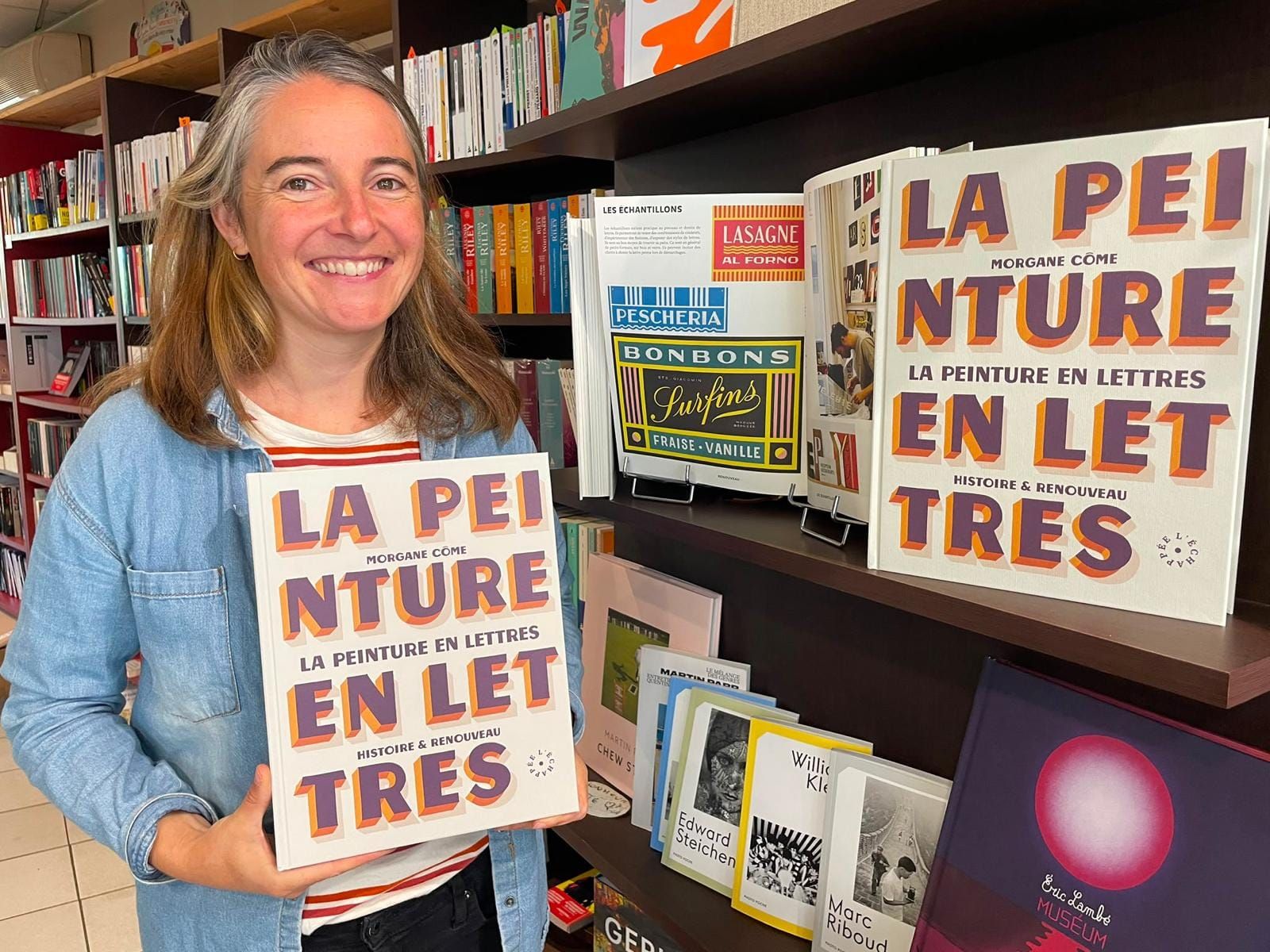
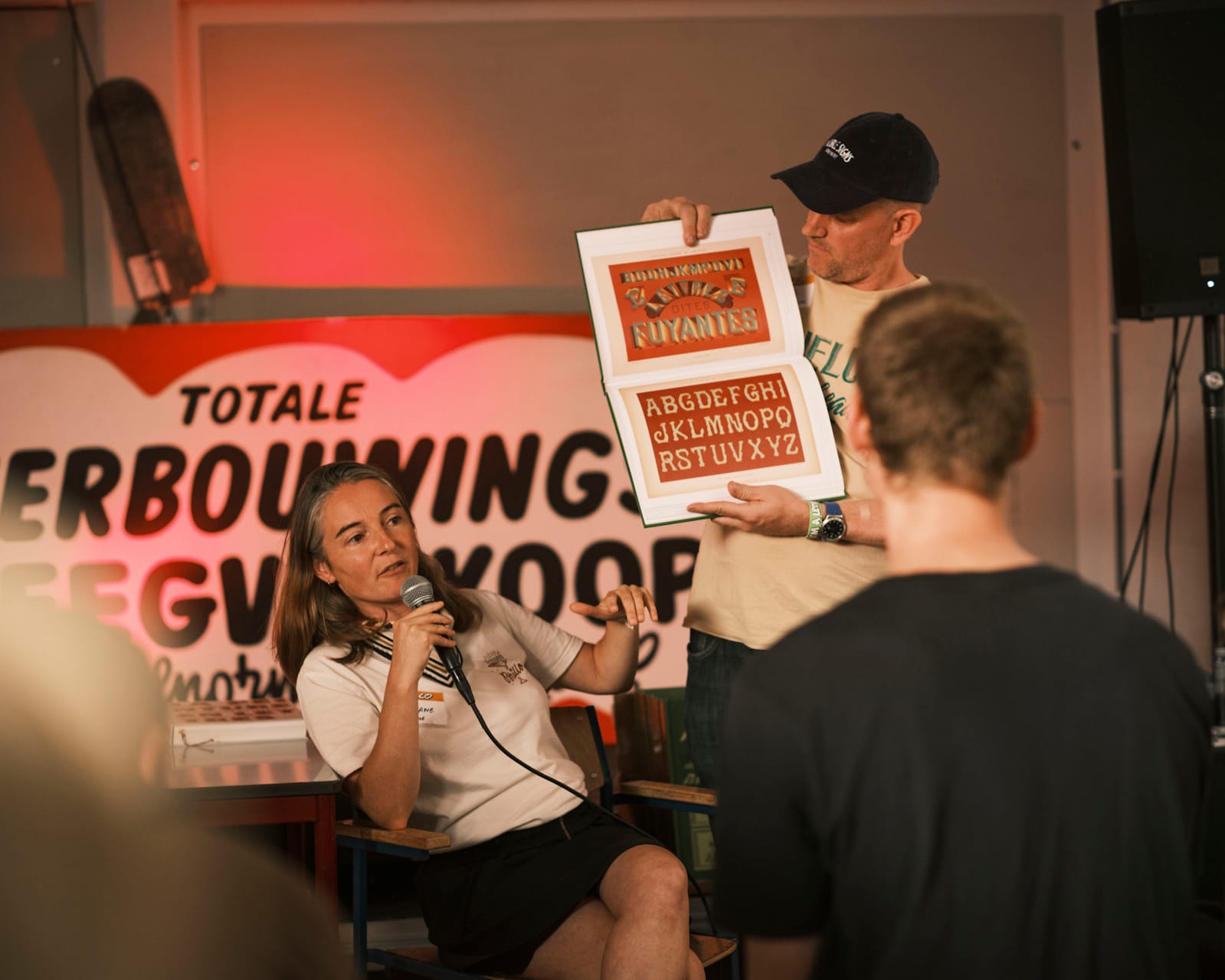
At the recent Letterheads meet in Amsterdam I interviewed Morgane Côme about her Letterform Archive book, Lettres Décoratives. Those in attendance were also treated to a sneak peak of her second book, La peinture en lettres, Histoire & Renouveau (Sign Painting: History & Revival). As her personal ‘Tour de France’ (Le Festival) to celebrate the book’s publication continues, Morgane took some time out to talk to me about her journey bringing it to fruition.
Tell us briefly about you and your work/career.
I am a sign painter and graphic designer based in Brittany, France. I was born in the small town of Épinal in 1988. This place has a rich history in printing and a strong visual culture. I moved to England in 2010 with the idea of starting a career in graphic design.
Over time, I developed a desire to bring a manual dimension to my work. The discovery of sign painting in 2013 in New York — when I stumbled upon ESPO’s painted letters — was the turning point. Then I followed my first sign painting course with Mike Meyer, Ash Bishop and Mark Josling organised by you, and that core moment marked the beginning of the adventure!
Give us a brief summary of your new book.
La peinture en lettres, Histoire & Renouveau explores the profession of sign painting and its revival in France from every angle: historical, technical and social. It features over 500 images and is the result of unprecedented research.
Break down the contents of the book and what you and the publisher have sought to achieve with its development and publication.
The book consists of three parts:
- History, covering signs during medieval times, the beginning of the sign painting trade around 1830, the golden age in the late nineteenth century, its mutation over the twentieth century, a second golden age in 1950s and then the threat of disappearance in the late twentieth century.
- Technique with a how-to guide, sources of inspiration and a detailed glossary of terms.
- Revival of the trade in France profiling contemporary practitioners and a variety of projects that include signs, vehicles, wayfinding, etc.
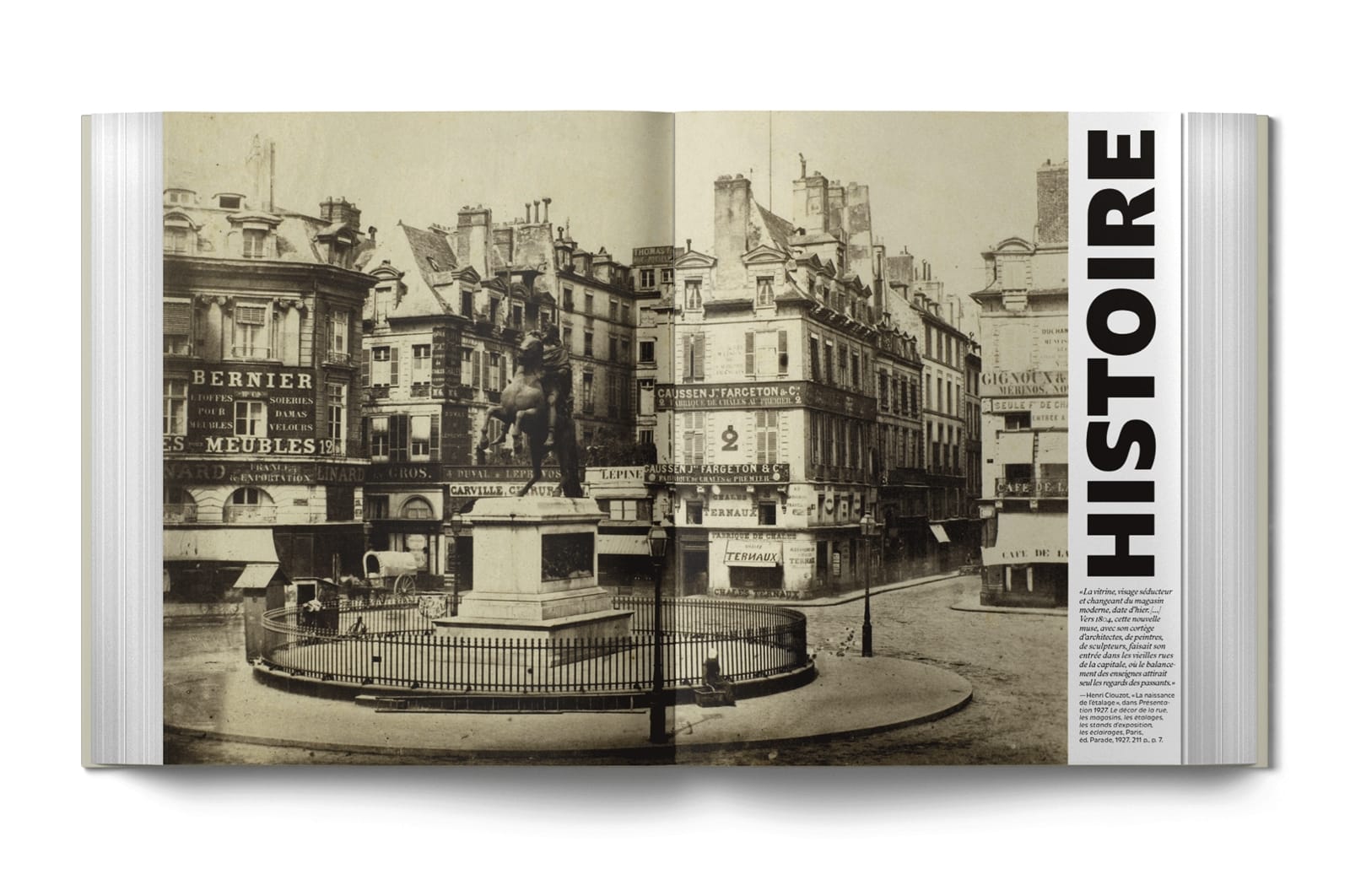
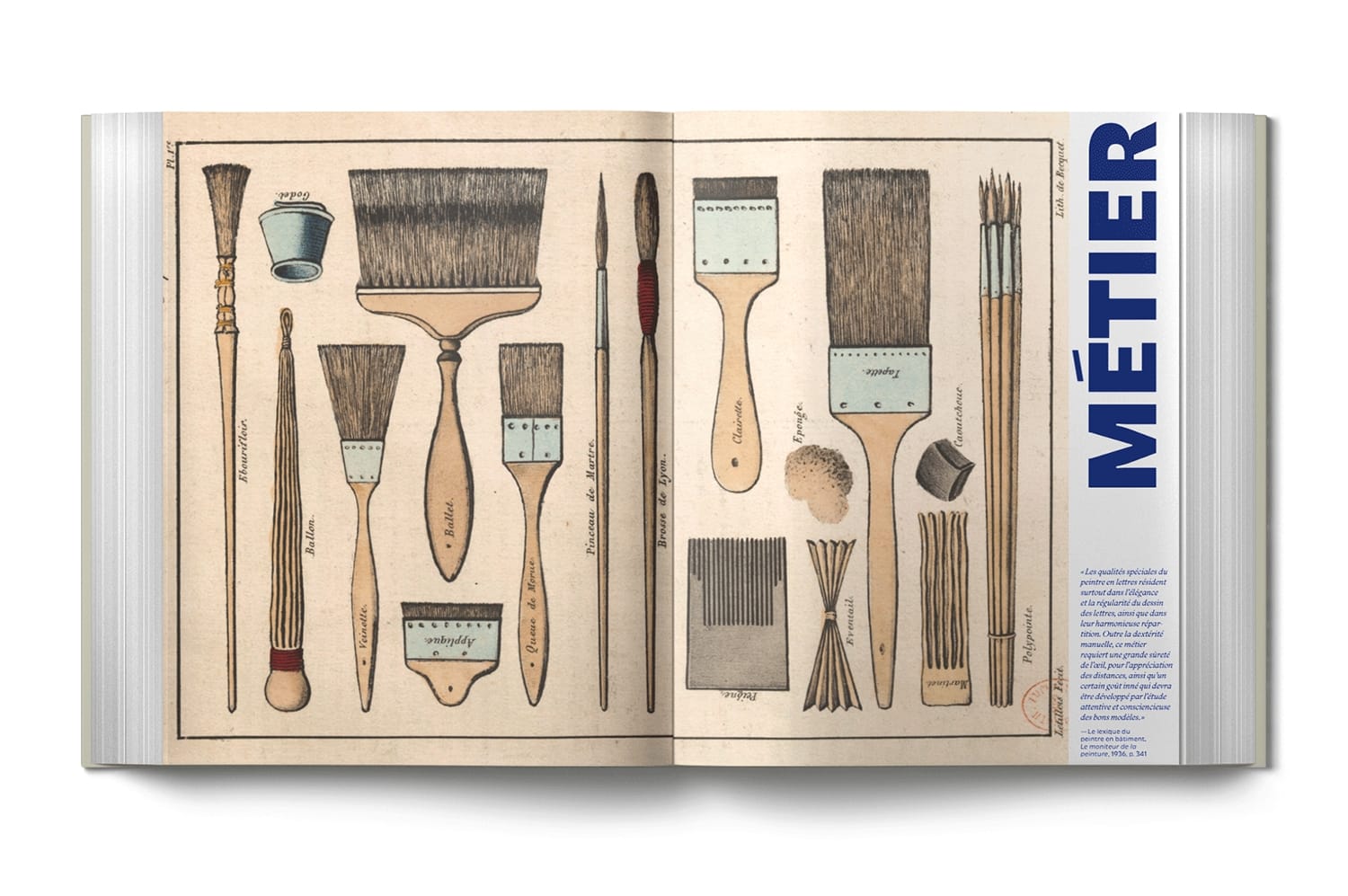
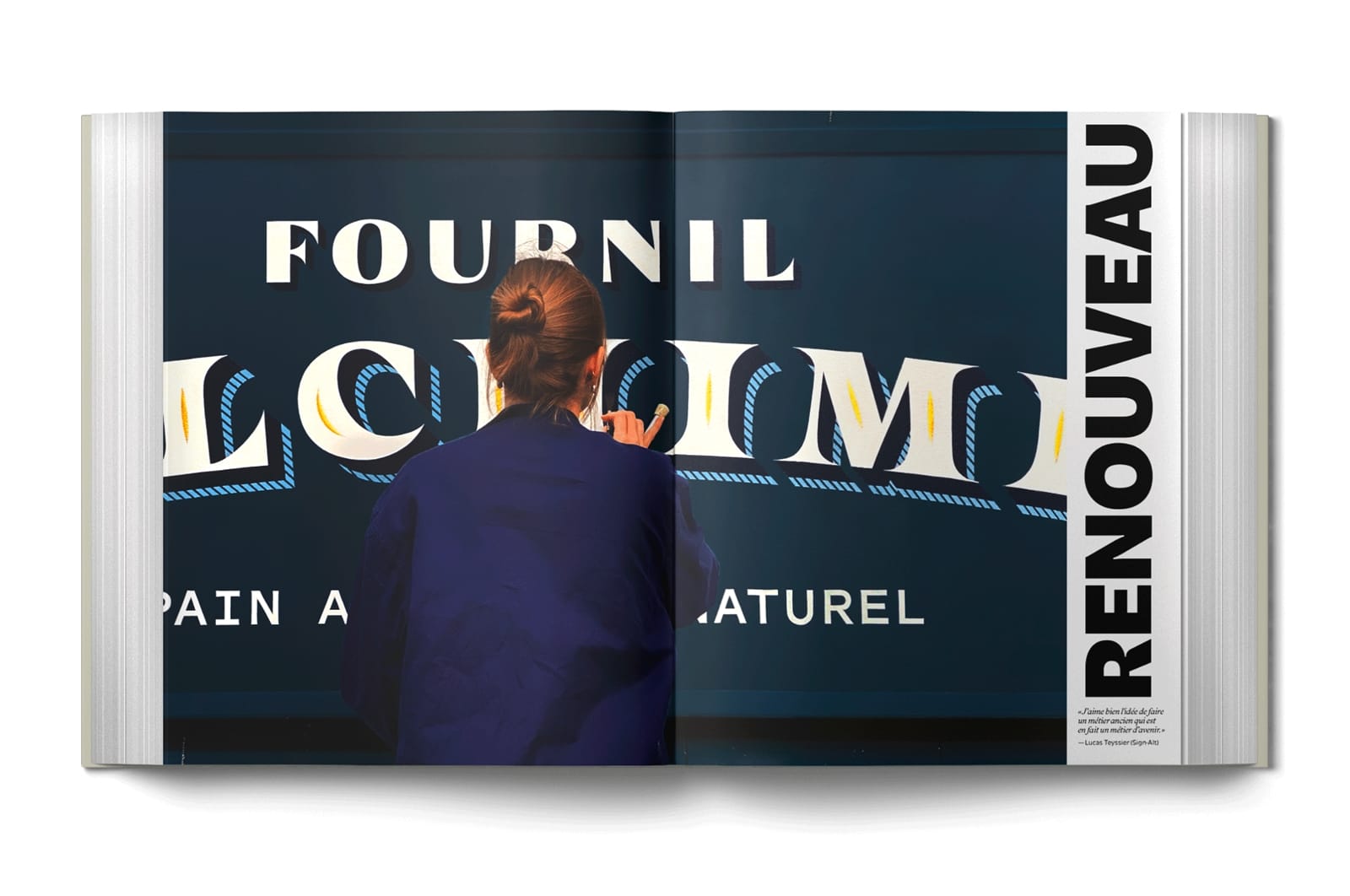
Openers for the book’s three main sections.
How long have you been working on the project, and what has this involved in terms of research, writing, and editing?
I started working on the book at the end of 2023. It was the result of a meeting with Cédric Biagini (the editor from L'Échappée), who proposed that I take on this enormous project. I had long wanted to write a book about sign painting in France (so I had already gathered archives), and from the beginning, the publisher and I shared the same vision for the publication. His energy, knowledge, experience, and our good relationship were essential to create a book as ambitious as it is.
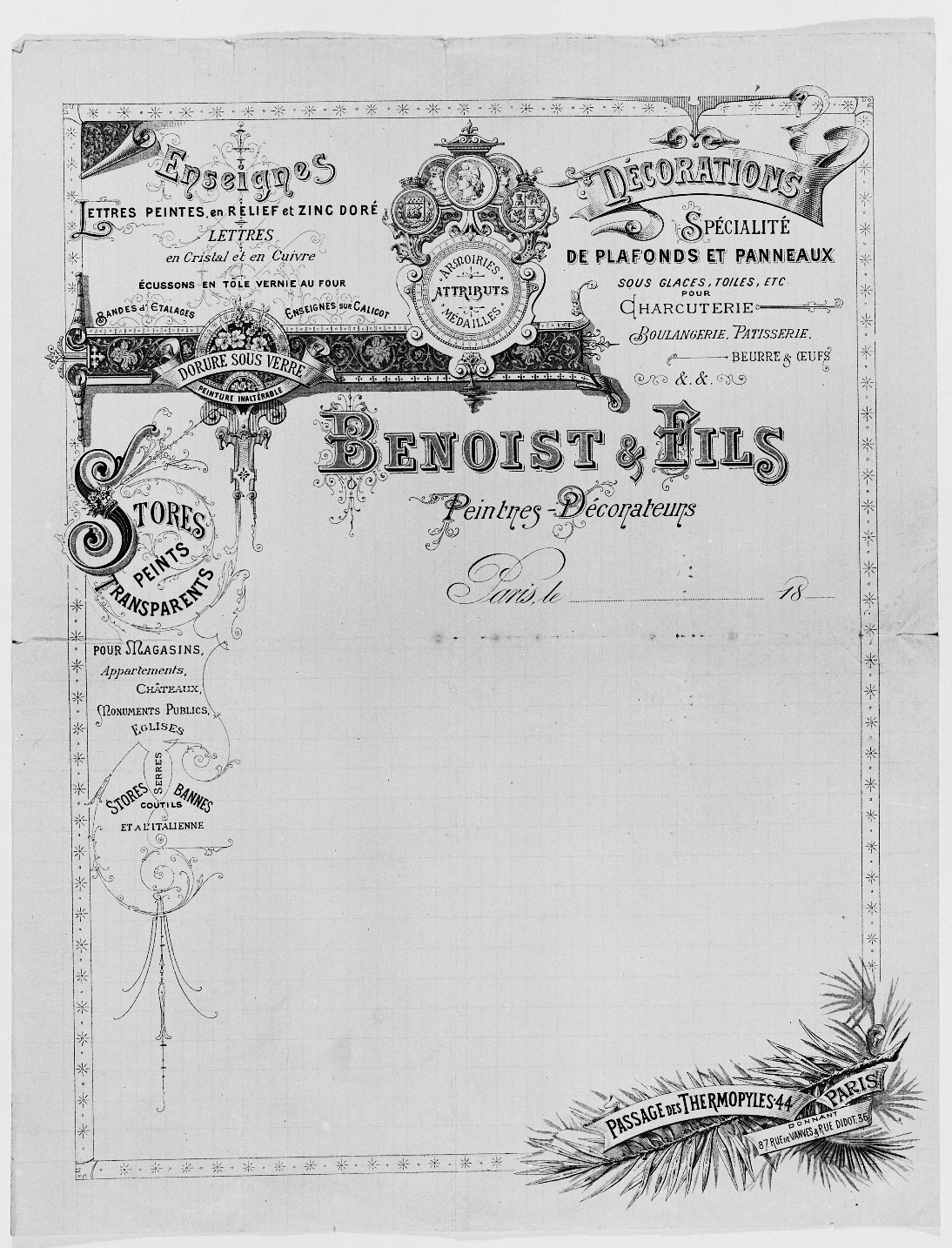
The historical part took me the most time. I conducted a tremendous amount of research because there are very few documents on the subject in France. I scoured libraries, museums, directories, memoirs, and more. In 2024, I made a sort of tour of France to meet both veteran and young sign painters to enrich my research. I gradually built my narrative on the history of the profession, completing this section at the beginning of 2026.
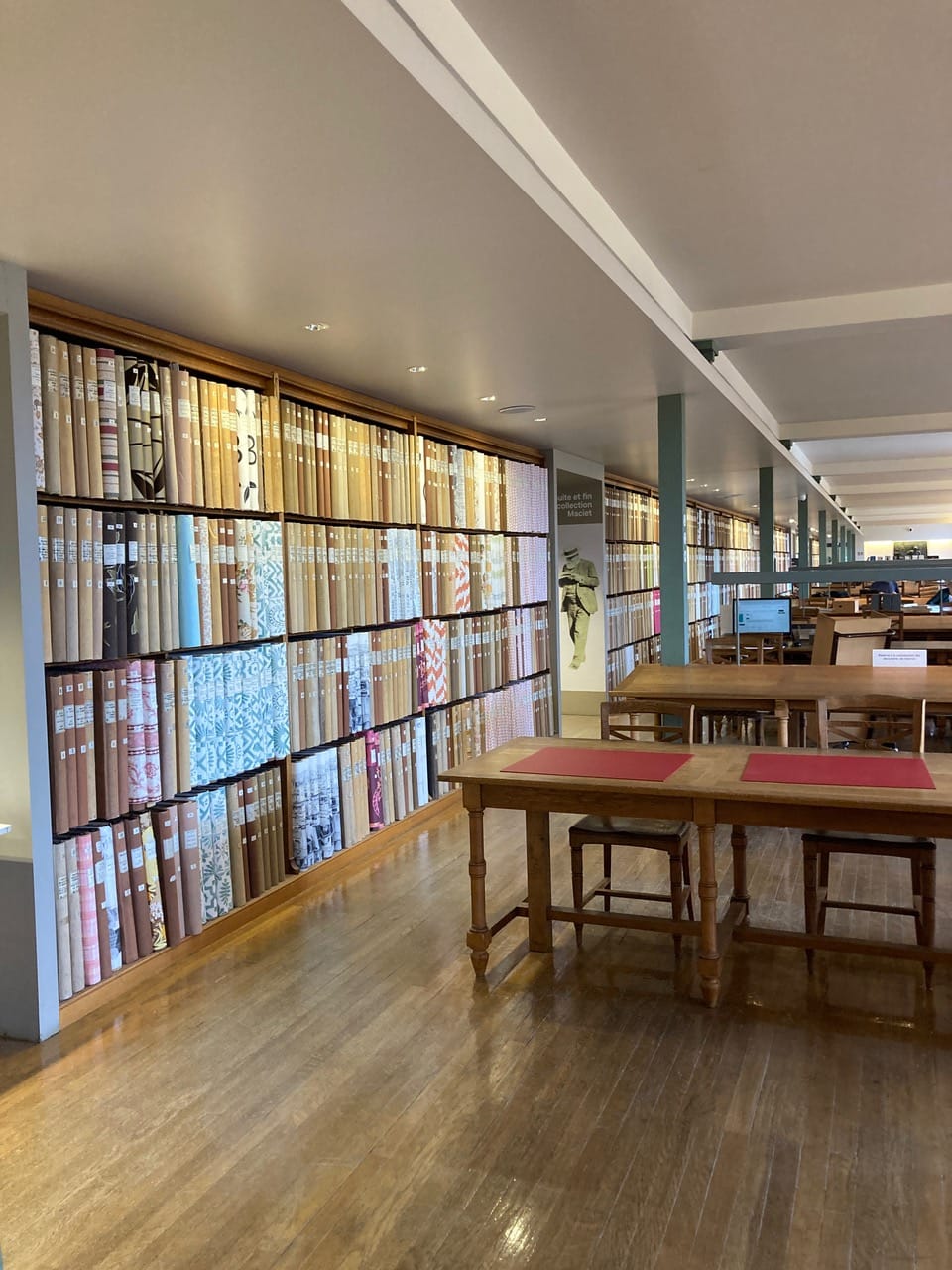
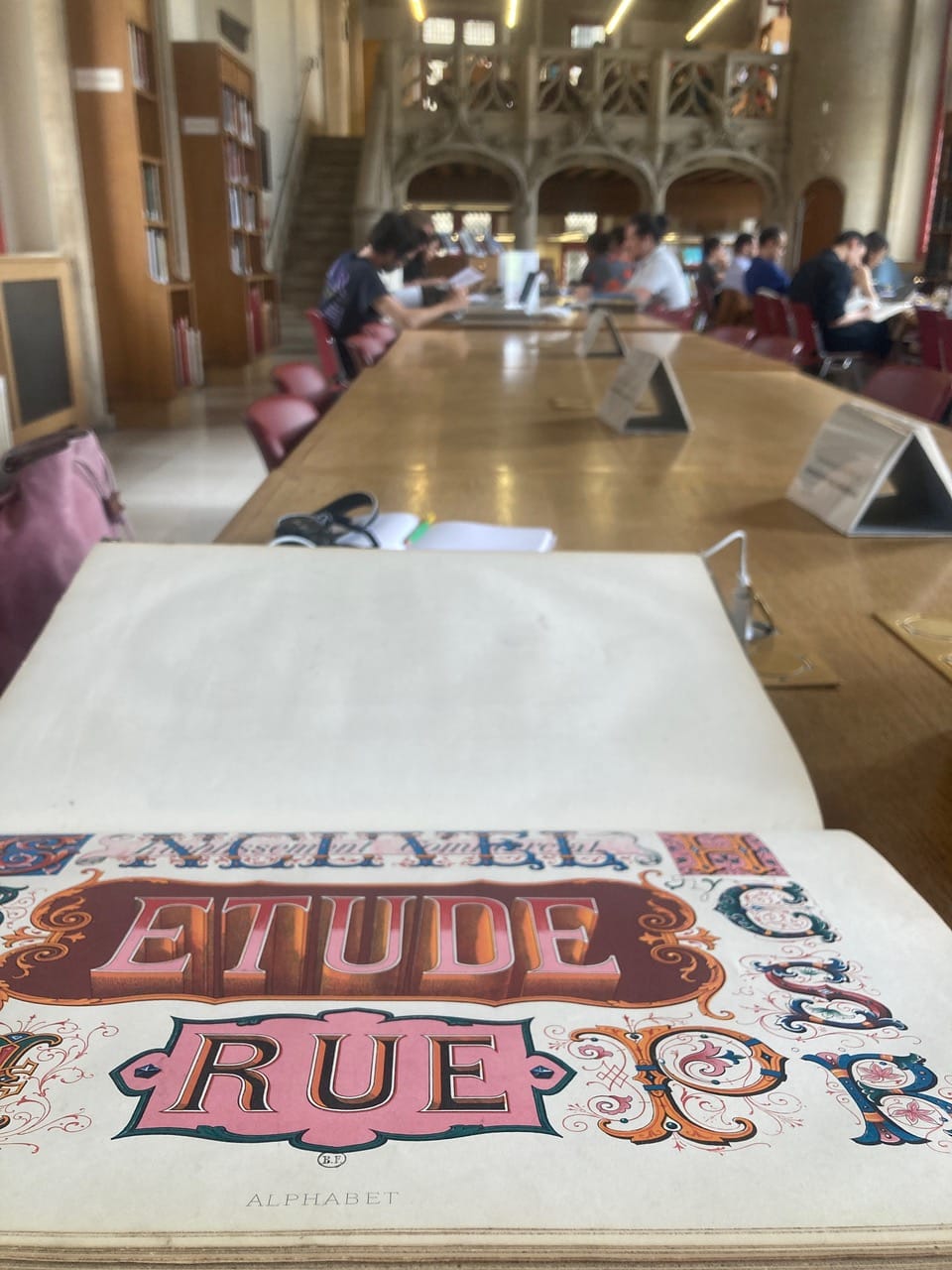
Inside the Bibliothèque des Arts décoratifs (Decorative Arts Library) and the Bibliothèque Forney (Forney Library).
At the same time, I prepared a guide on how to paint letters, based on the workshop I’ve been teaching since 2017. Finally, I tackled the contemporary section, which was also challenging — unlike the historical part, I had a lot of content (especially from Instagram), but I needed to weave a portrait of the profession today, representing all of its aspects. The book aims to be as exhaustive as possible, which was a real challenge given the richness and diversity of the practice.
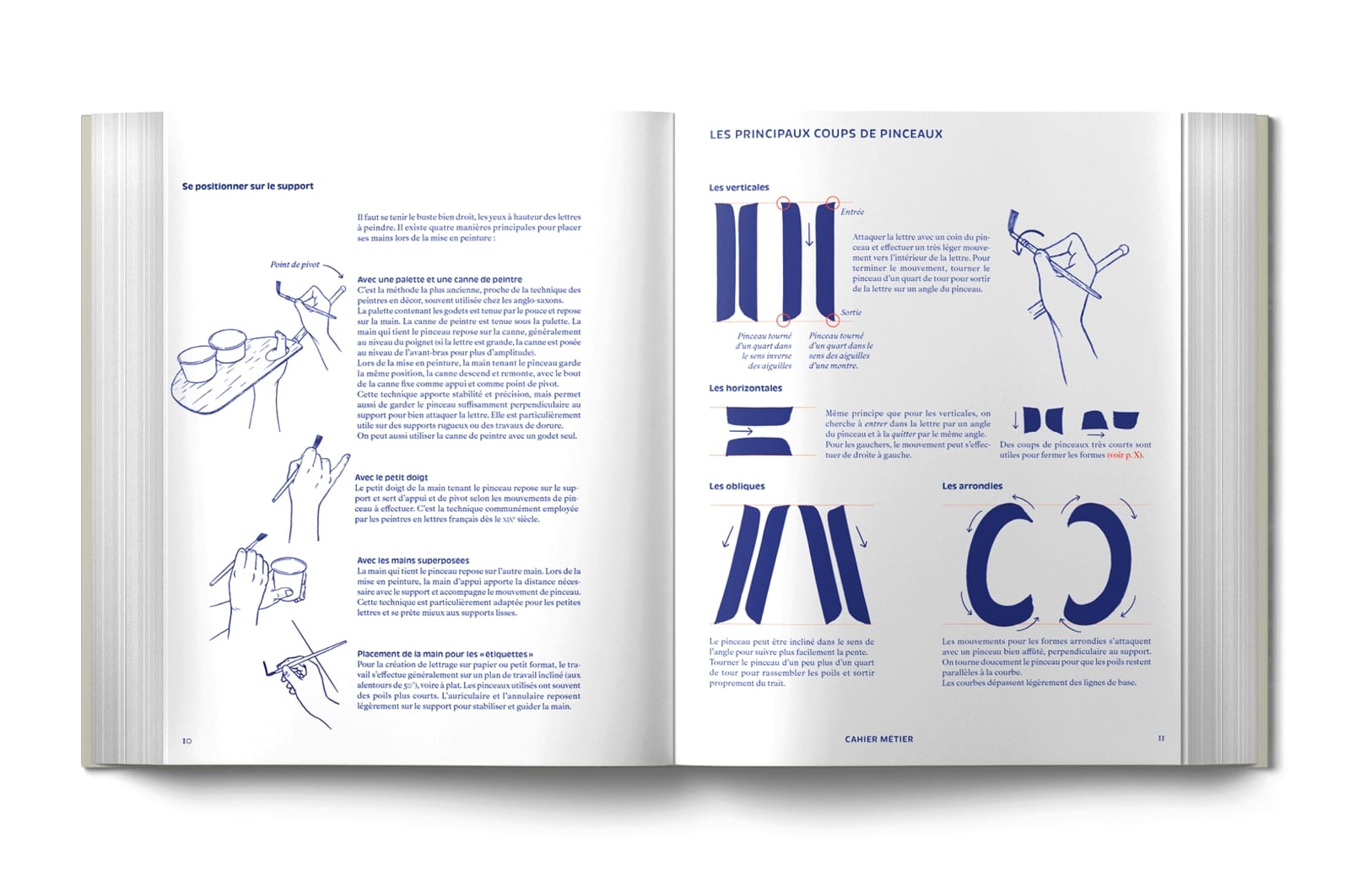
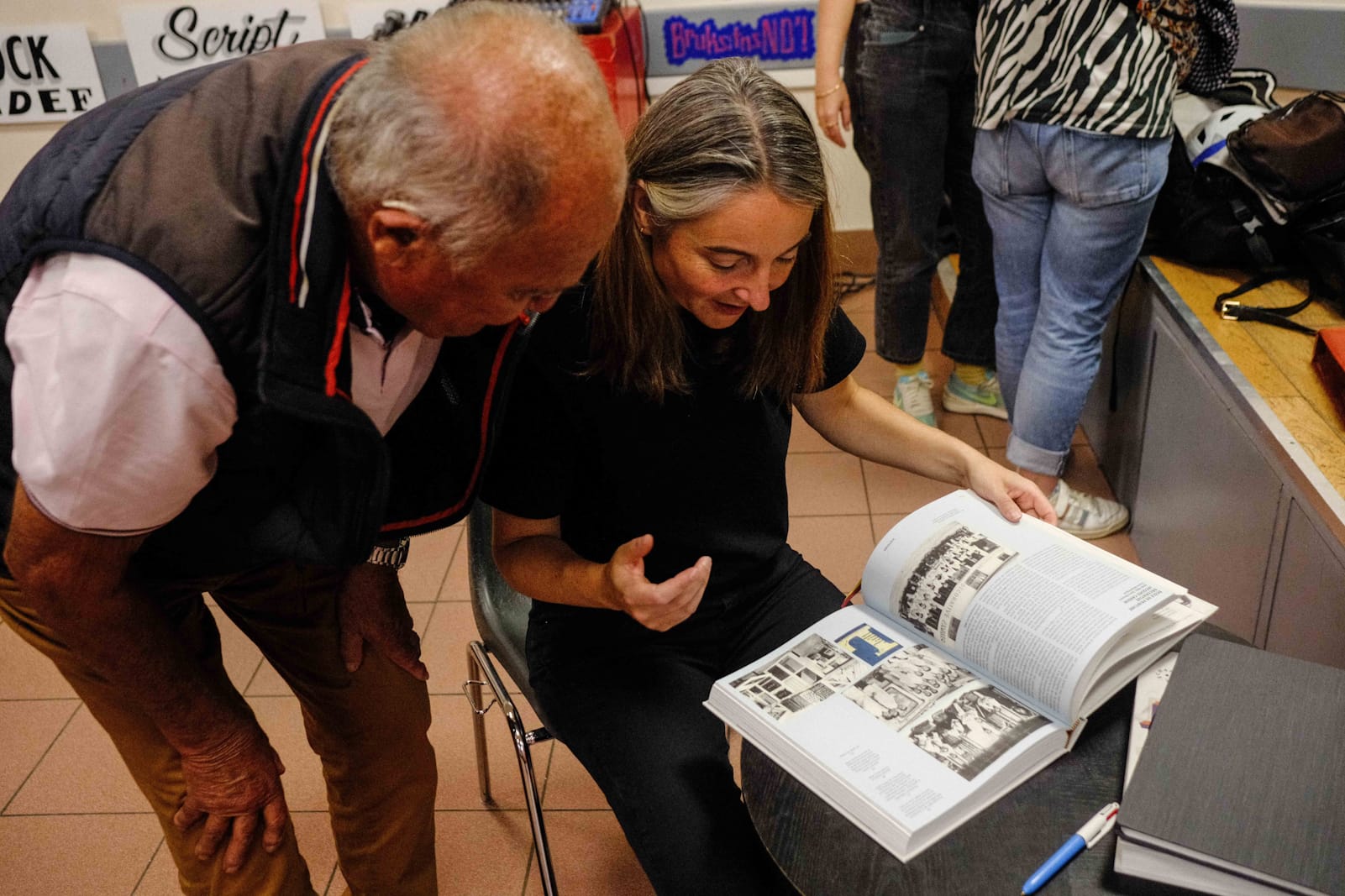
My father was the first person to proofread the text. This was very helpful as he was available almost at any time, and had already been following the book’s development. As a result, he had the story arc in mind. I wasn’t working continually on it as I had to work on signs from time to time, so having someone I could consult at any time was key.
I had some help from Camille Weber (a sign painter based in Lyon) who has done lots of research into the history of the sign painting for cinemas. Anton Moglia (a type designer based in Annecy) also helped me on the glossary and wrote a page on an old kerning method. Other friends in the trade gave me energy and great advice such as Hélène Marian, Jack Usine, and Stéphane Hervé, while the wider lettering community gave me strength and helped me overcome difficult times during this demanding process.
What have been some of your favourite discoveries in the process of bringing the book together?
I made so many discoveries, each of which only deepened my passion for the craft. Without a doubt, I most enjoyed working on the historical section, especially looking through all those old photos to find hand-painted signs — I must have looked at thousands and I never got tired of it. I especially loved uncovering the speciality of showcards in France, known here as l’étiquette, and I want to research this topic more as it truly deserves further exploration.
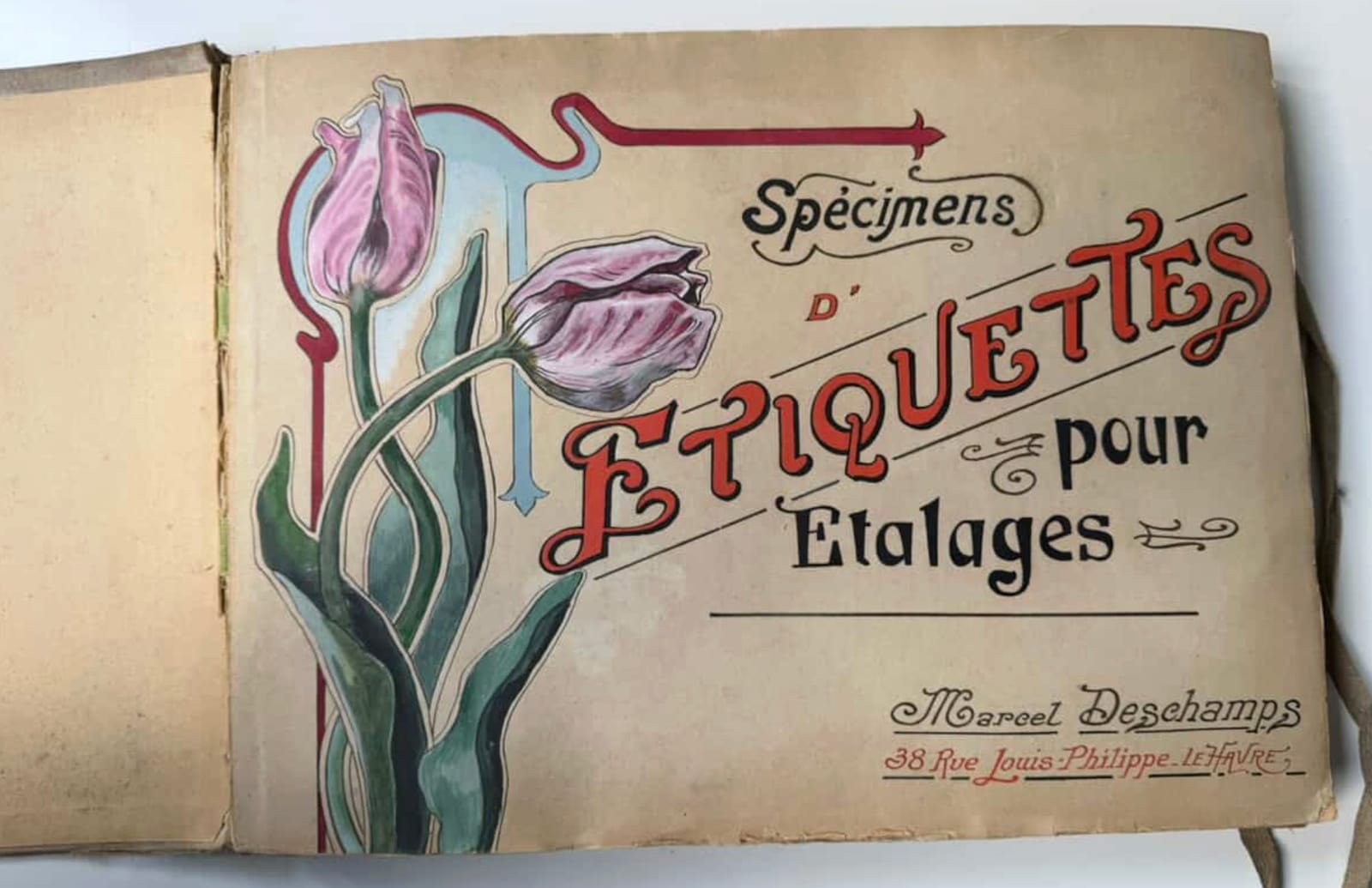
You were obviously working on this in parallel with Lettres Decoratives, so to what extent was there overlap and/or aspects that ended up in one rather than the other?
Yes, it was a great opportunity to write the introduction to the Letterform Archive book during the first few months of my research. It allowed me to delve much deeper into the subject of French sign painters’ portfolios. However, the two books approach this subject in rather different ways; we don’t have as many plates in La peinture en lettres but those we did include are juxtaposed with other visual resources to provide a historical context for their creation.
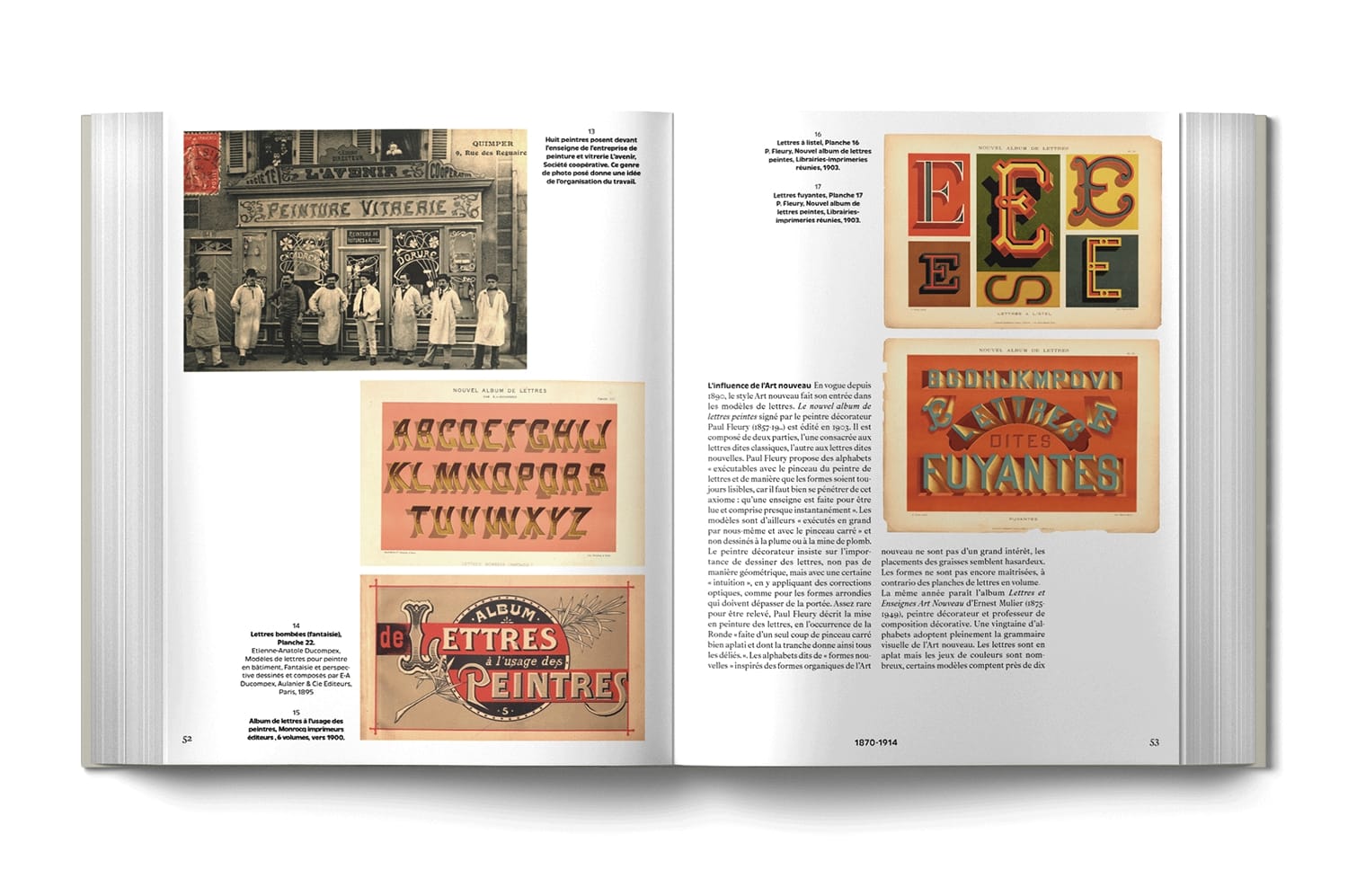
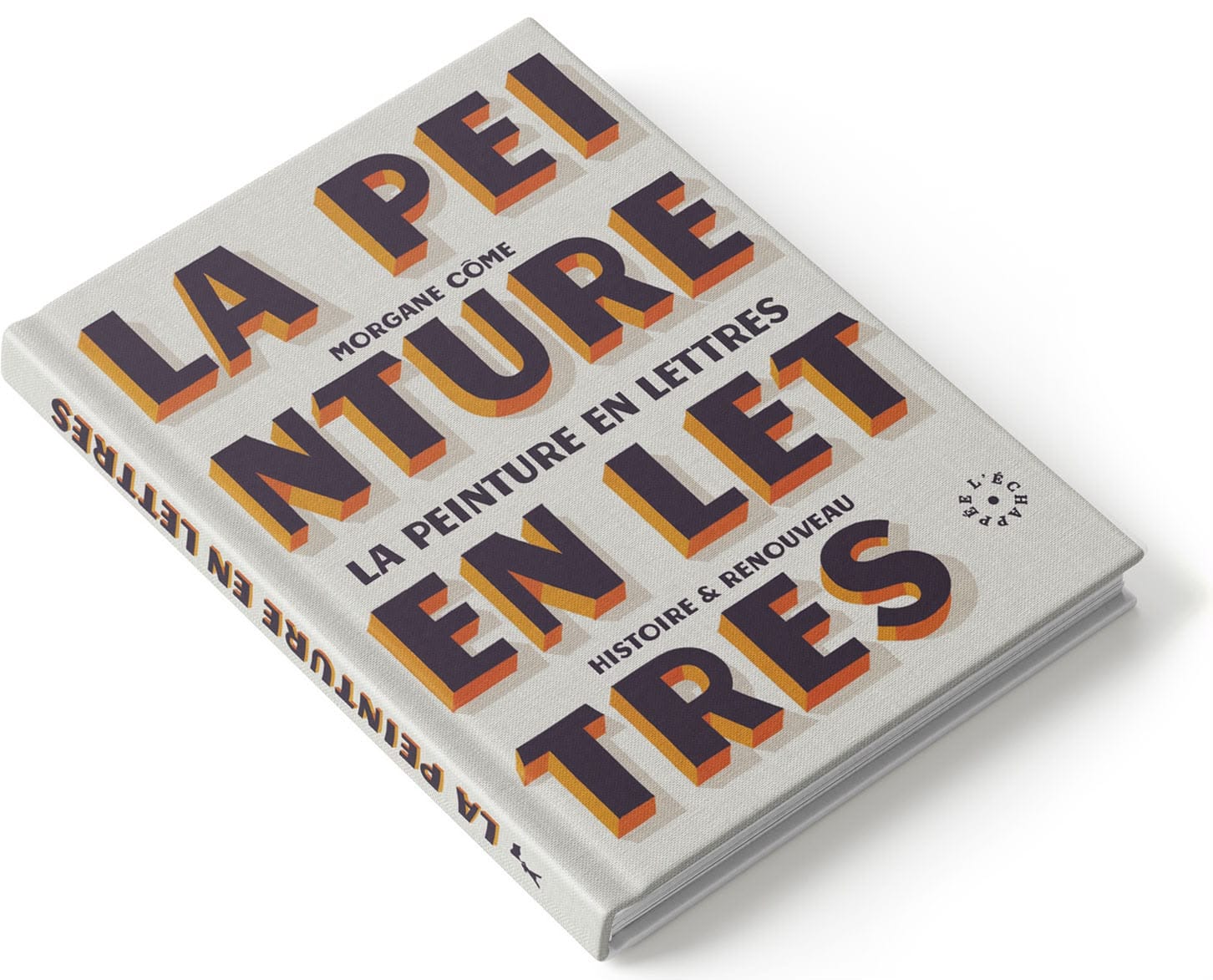
Can you say anything about the cover design?
Well that’s interesting because it’s one of the few points on which Cédric and I didn’t agree. I had imagined a fairly understated cover with painted lettering without any shadow or depth. He immediately told me that we needed something much stronger and more impactful. So I added shadows which are characteristic of hand-painted lettering and made the letters as large as possible, cropping the words (in the manner of an old sign where you would only see certain parts of the letters). The composition is striking and should stand out well on bookstore shelves!
That makes it two books in one year. What’s next for you?
Aha, yes it’s quite an achievement to have completed these two projects while still painting signs. And the work isn’t over yet as L’échappée and I have organised a three-month festival to promote the book and celebrate the trade.
From 2027, I want to focus again on my studio with a fresh and enriched vision for the trade and a desire to work in an even more analogue way. However, I really loved the process of research the craft and will also continue with this, perhaps via some projects that are slightly less ambitious in scope. I’d love to co-organise an exhibition in France about the craft, bringing together signs from museum collections, old books, examples of contemporary work, so watch this space.
PS. What advice would you give to someone who thinks they’ve got a book in them?
They should be aware that writing a book is a tremendously long project that doesn’t bring in much money and takes up a lot of mental space. There are moments of doubt but it’s absolutely worth it in the end!
The most important thing is to be very organised from the start. Set up a clear folder structure to keep every document properly filed and constantly be on the lookout, magpie-like, for forgotten materials people’s words that you can record. Doing this will help to shape the book’s narrative and enrich your content. A book occupies your mind at all times so you have to be prepared to dedicate part of your brain to it no matter what day of the week it is.
Any book project will no doubt lead to some wonderful encounters and exciting projects. So, if you’re passionate about a topic, ready to dedicate time, and lucky enough to have an experienced publisher, go for it!
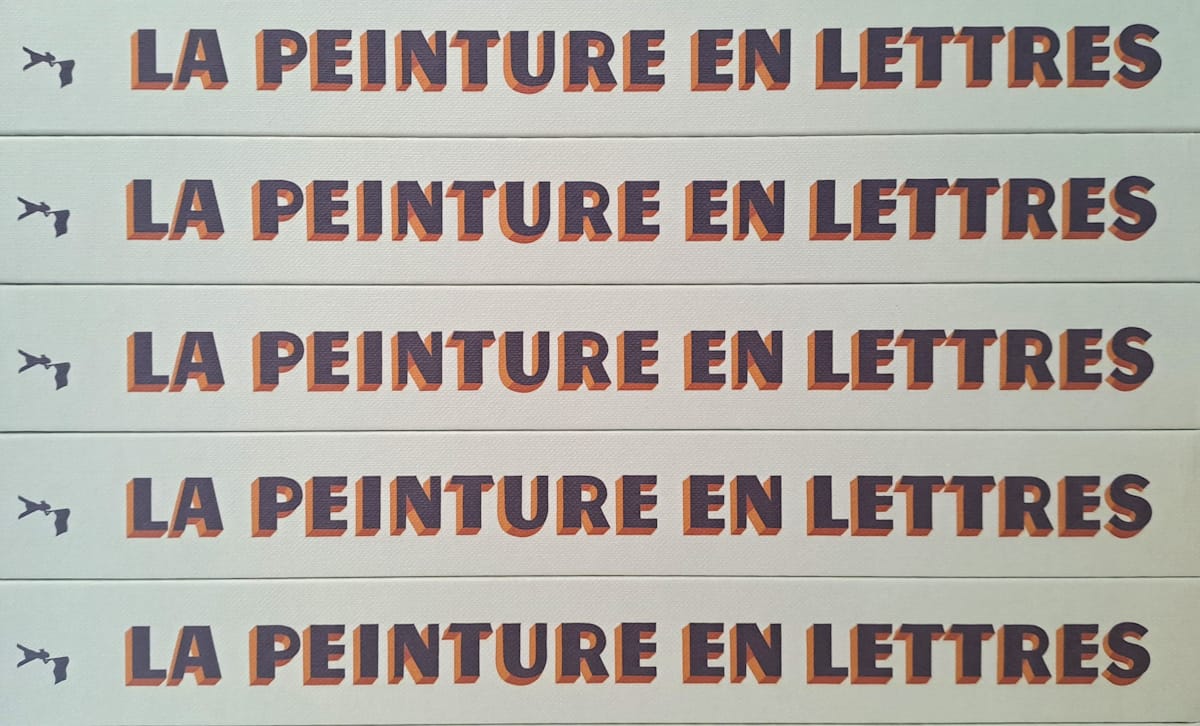
La peinture en lettres, Histoire & Renouveau is available to order from the BLAG shop, with shipping from Spain for EU customers (select the UPS option.
More Books
 Better Letters