Unpredictable Precision: Bringing Gluechipping Back to Japan
Sayumi Mizukoshi shares her sign painting story and her work reviving gluechipping in Japan.

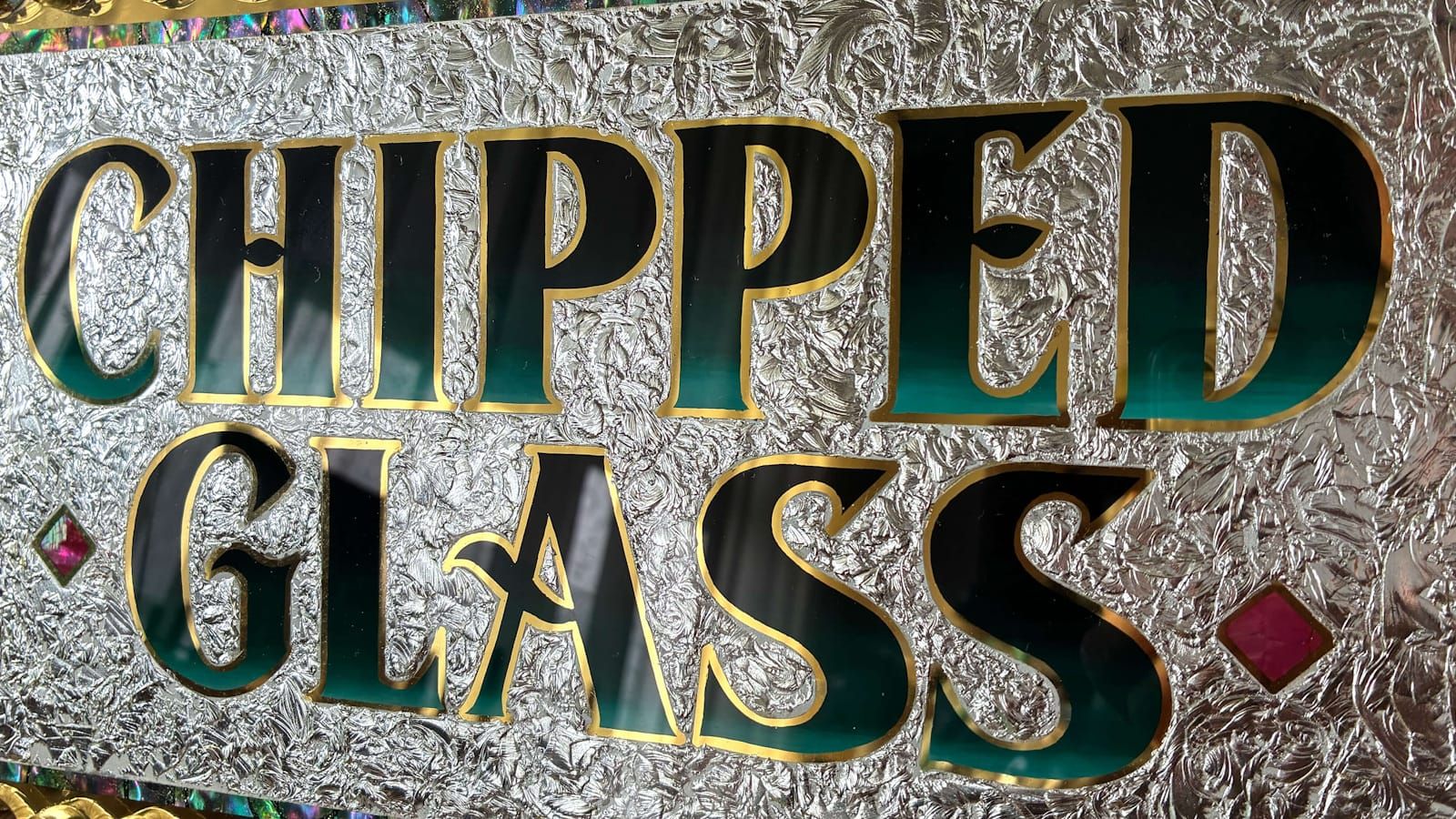
Since contributing to his Ghostletters Vienna book and collaborating on When Better Letters Met Josef Samuel, I have never ceased to be impressed by Tom Koch’s dedication to initiatives outside of his paid projects.
I have been equally impressed by the tenacity and commitment shown to the crafts of sign painting and gilding by Sayumi Mizukoshi in Japan, who I had the pleasure of meeting at Tokyo Letterheads.
It was therefore a pleasure to learn that the two recently met each other in Tokyo, and that Tom invited Sayumi to talk about her journey to date and the work she is doing to bring the technique of gluechipping back to Japan.
Unpredictable Precision: Bringing Gluechipping Back to Japan
By Tom Koch
I met Sayumi Mizukoshi at the Tokyo Sign Painting Festival, organised by Peter Liedberg, aka Letterboy, in Shibuya in April. When she told me her story, I was immediately fascinated, as for me it brings together several of the qualities that make Japanese craftsmanship so distinctive.
Sayumi has devoted herself to a technique that came to Japan from Europe in the early 20th century: so-called gluechipping. Here, it was adapted for local applications before gradually falling into obscurity. Around a hundred years later, it was Sayumi who travelled in the opposite direction, heading west to learn the technique and subsequently re-establish it in Japan.
The adoption of techniques from abroad and their further development to suit Japanese requirements is one of the principles that has shaped Japanese craftsmanship since at least the Meiji Restoration of 1868. At the same time, Sayumi’s story reflects another central aspect: the principle of lifelong learning and continuous improvement.
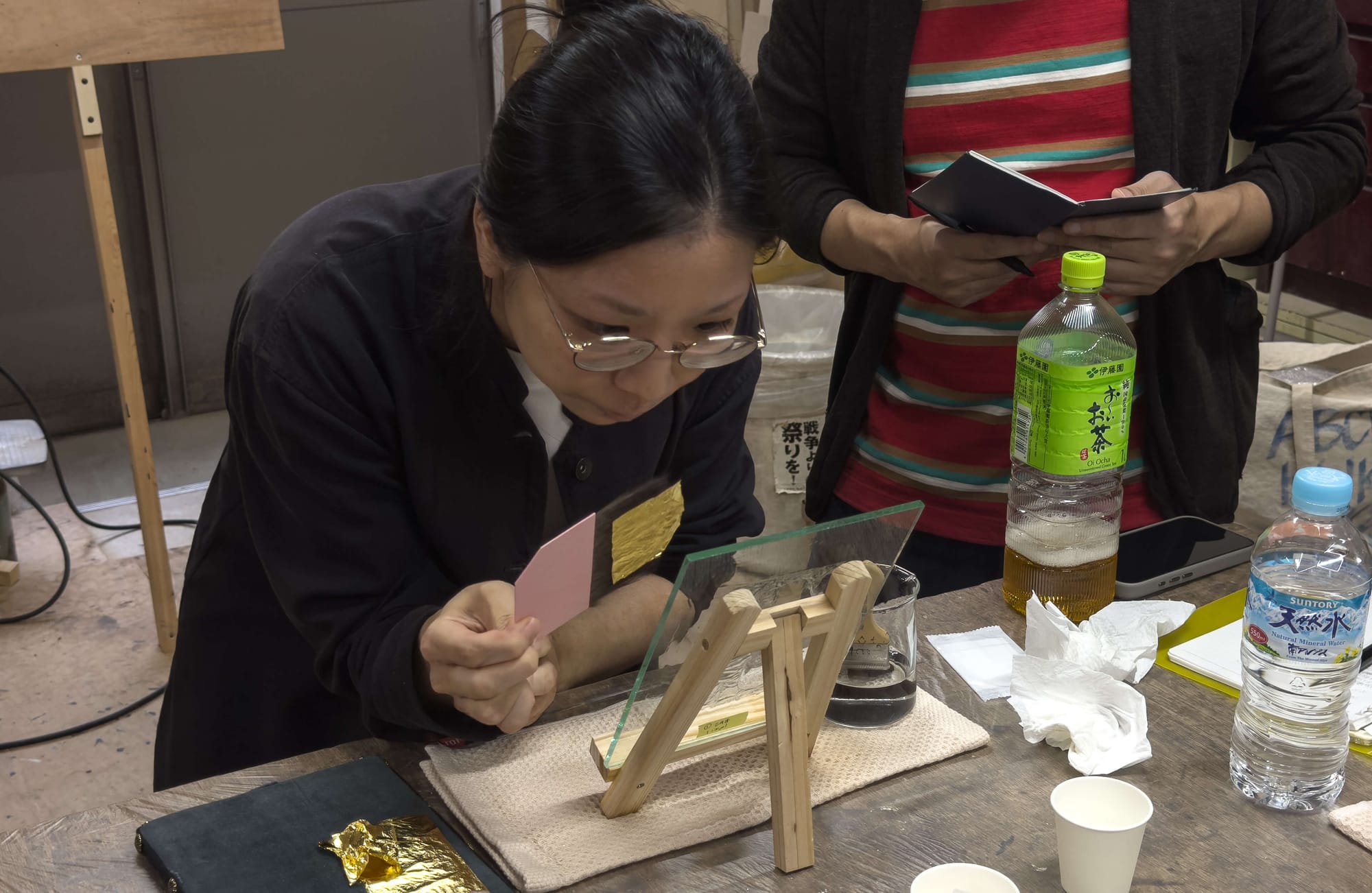
On my final day in Tokyo, I visited her at her first gluechipping workshop, which she held in Shinagawa for a group of Japanese sign painters.
We met at the first Tokyo Sign Painting Festival this April. What first led you to sign painting?
I first came into contact with sign painting through my work at a sign shop in Tokyo, very close to Asakusa. Most of the time, I was installing signs or applying vinyl to windows and walls. But sometimes we also painted signs. At that time, I didn’t really know how to do sign painting properly. I kept wondering how I could work quickly and still make it look beautiful. That was when I started looking things up online and discovered the world of sign painting.
I didn’t go to art school or study graphic design. I studied management, so it was not related to art at all. But once I found out that there were people called sign painters in the US and Europe, I immediately felt: this is interesting — maybe this is what I want to do for the rest of my life.
After that, I began looking for workshops. In 2018, I took several sign painting workshops in Japan, including Modern Twist Signs, Paint Factory and Letterboy. I followed many sign painters on Instagram, studied their work and tried to understand how they did it.
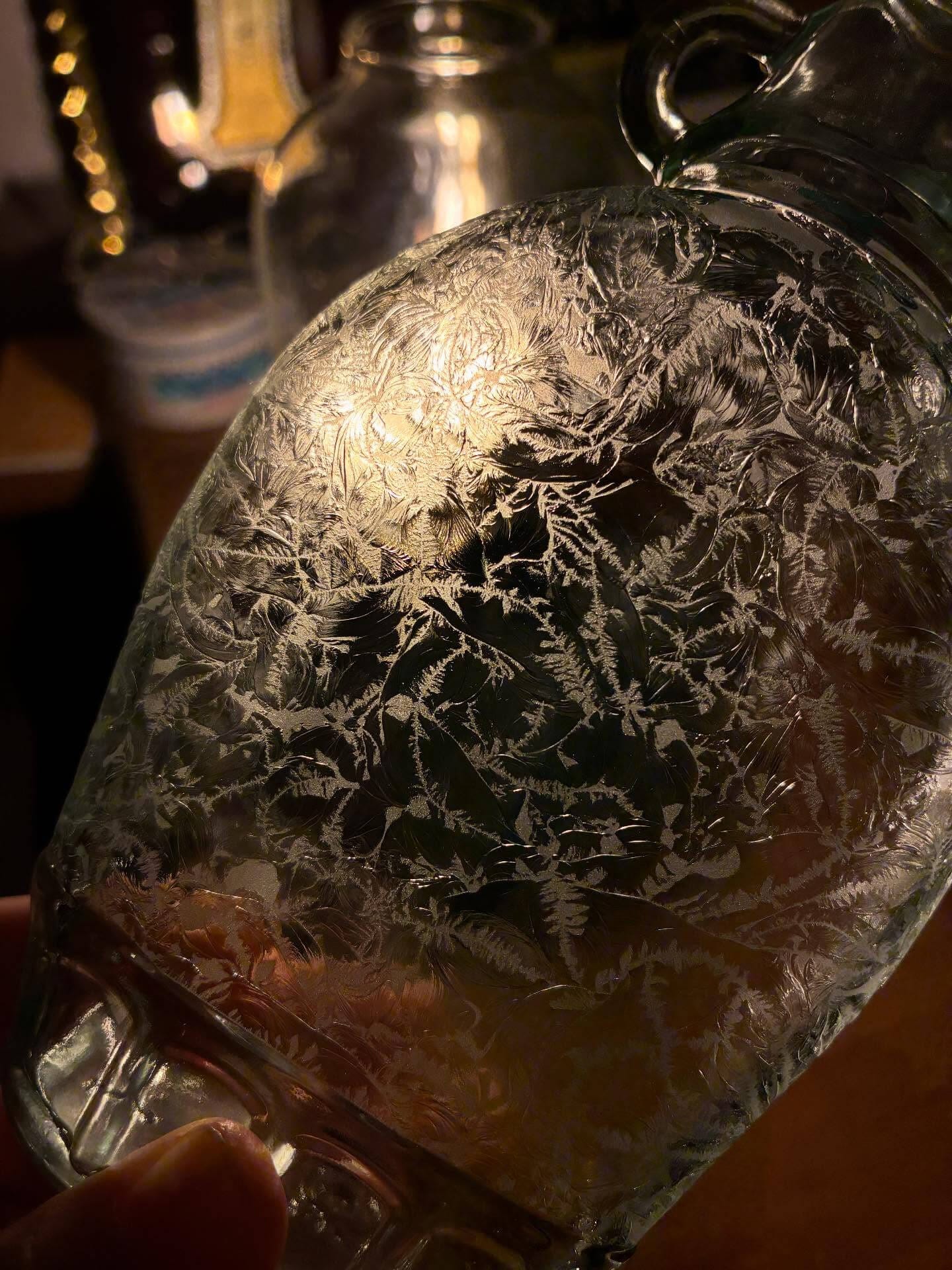
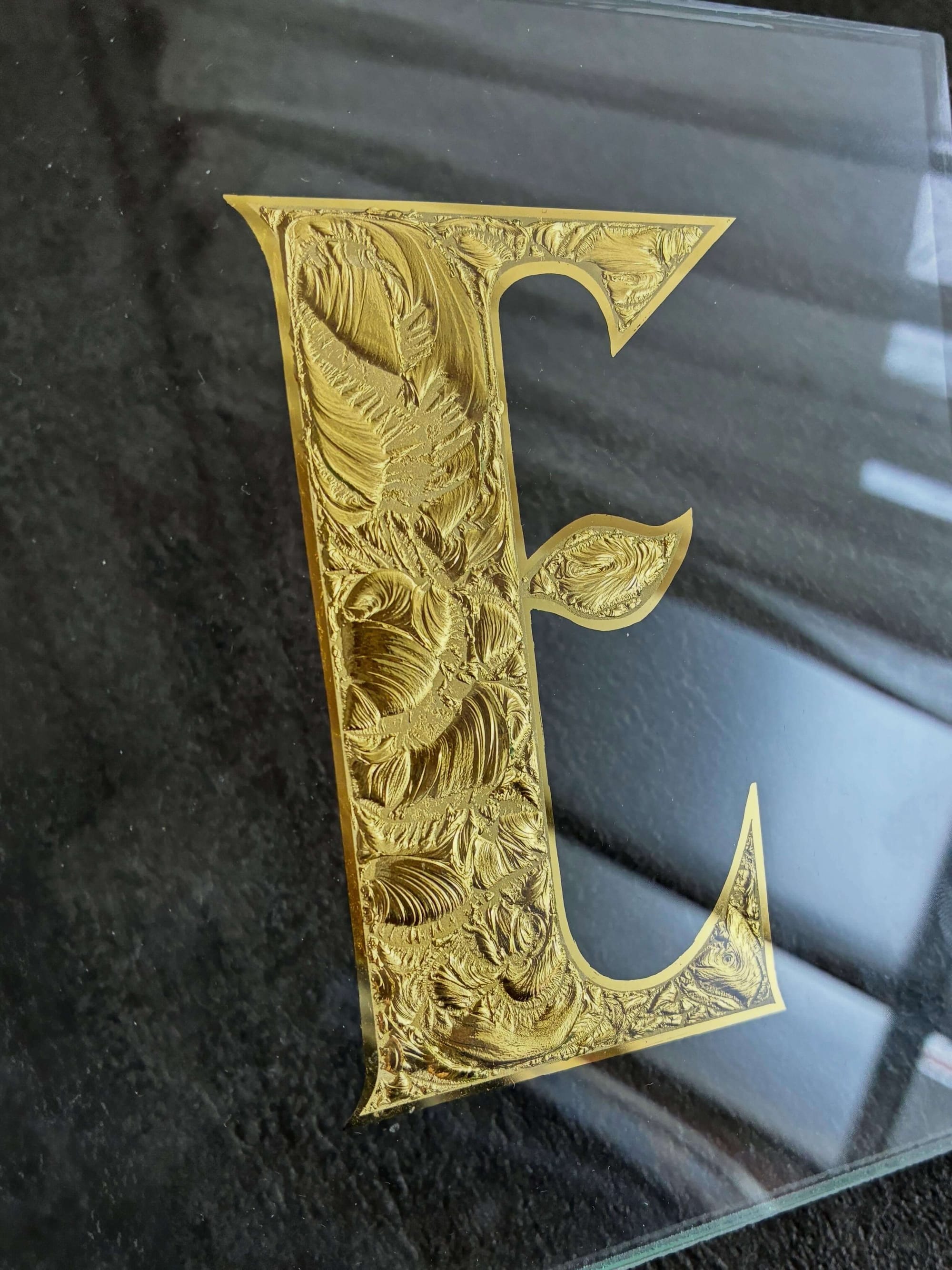
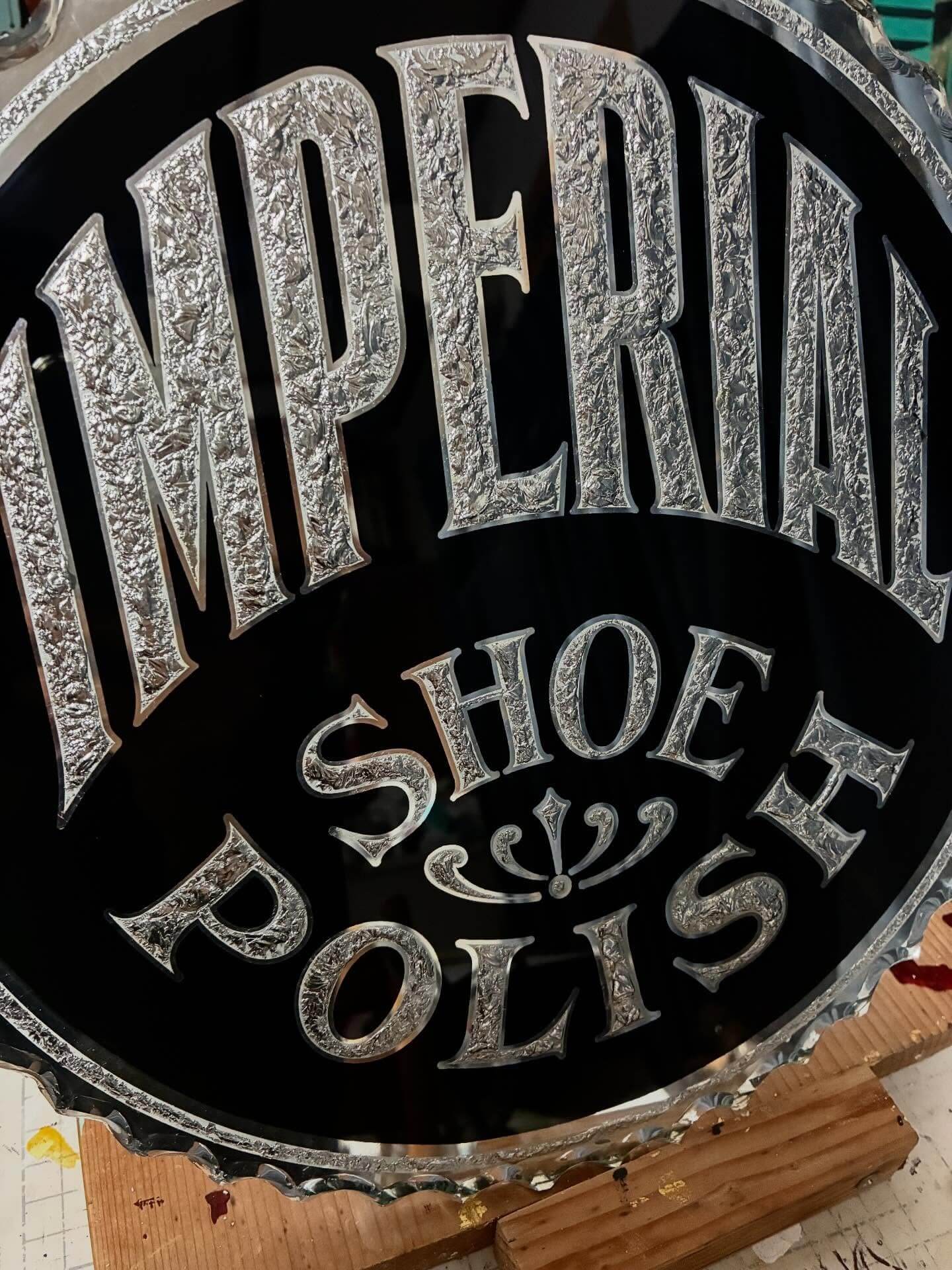
Sayumi began as a sign painter, but soon specialised in gilding techniques and gluechipping. Photos: @sayumihandpaint.
You work in traditional sign painting and gilding. On social media, however, you mainly show a technique I would associate more with my favourite Victorian pub in London, The Princess Louise, than with Japan: gluechipping. What exactly is it?
In Japan, gluechipped glass is known as kessō garasu. It is also sometimes called nikawa garasu, because it is made using nikawa, an animal hide glue. It is a decorative glass technique that creates snowflake-like patterns on the surface of the glass.
It used to be made by hand in Japan in the early twentieth century, especially around the 1920s and 1930s. At that time, Japanese craftsmen used gluechipping for architectural glass, windows and cabinets. Later, as glass production developed and machine-made patterned glass became available, the handmade technique gradually disappeared.
What makes gluechipping so special is that the pattern is created by hand, but also by the natural environment. You apply the glue to the glass, and as it dries, it shrinks and pulls tiny flakes from the surface. That creates the pattern. It is not machine-made, so each piece is different.
But it is not easy to control. Temperature, humidity, the thickness of the glue – everything matters. If the glue is too thick, it does not chip properly. If it is too thin, it does not work either. A beautiful pattern can only be made by someone who really understands the process.
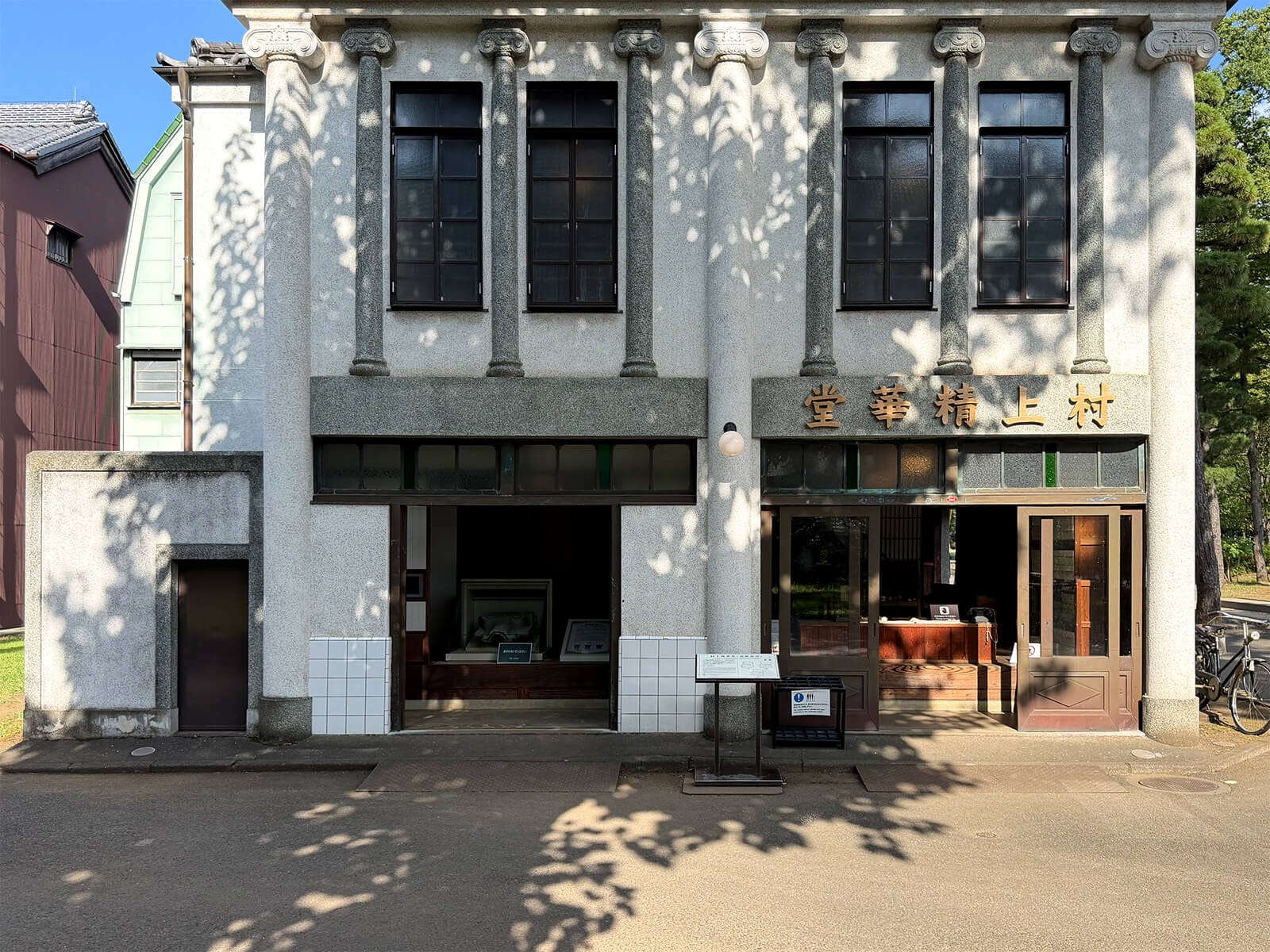
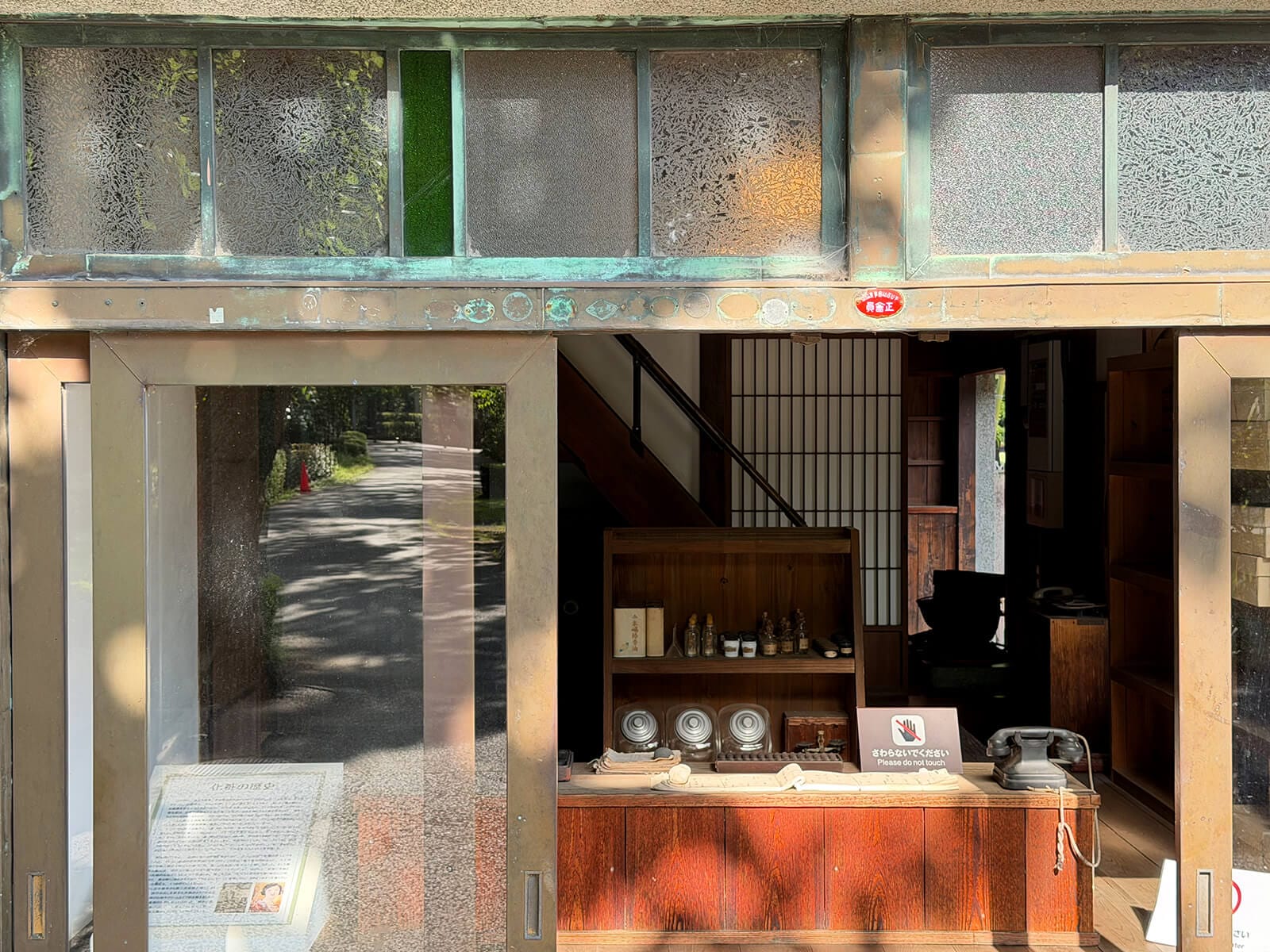
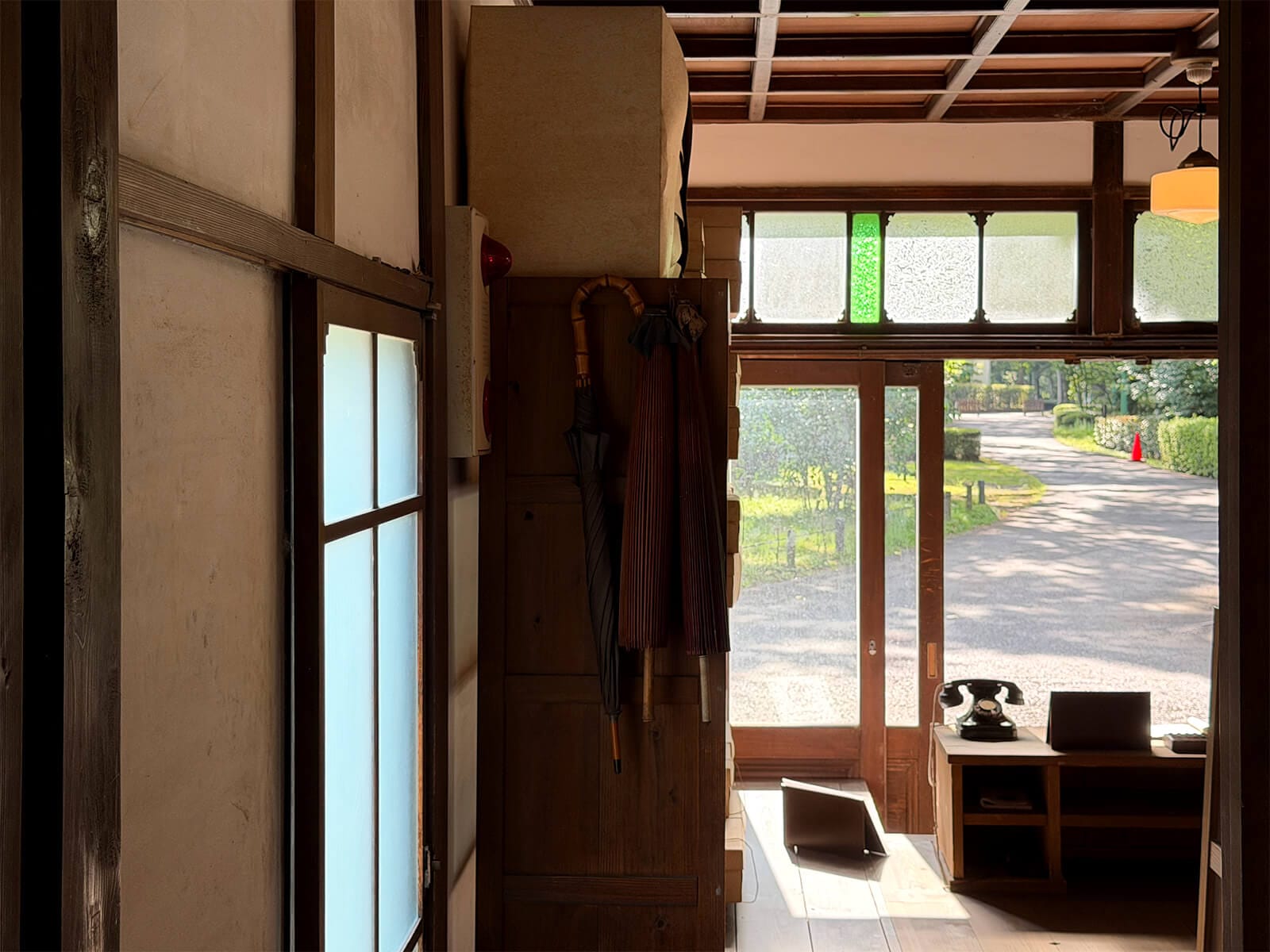
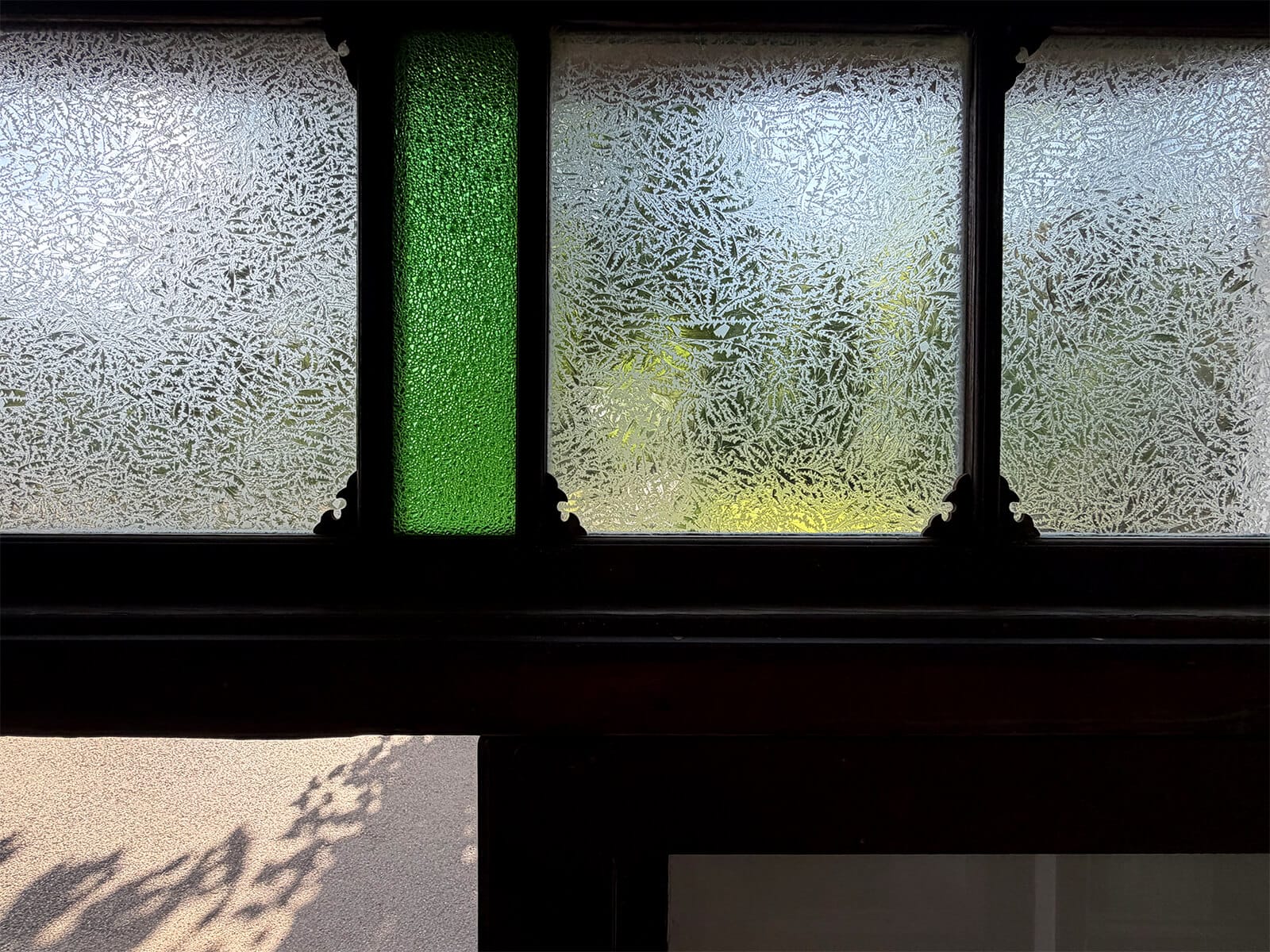
The Edo-Tokyo Open Air Architectural Museum includes the former Murakami Seikado cosmetics building, originally built in Taitō Ward in 1928. Its transom windows feature gluechipped glass.
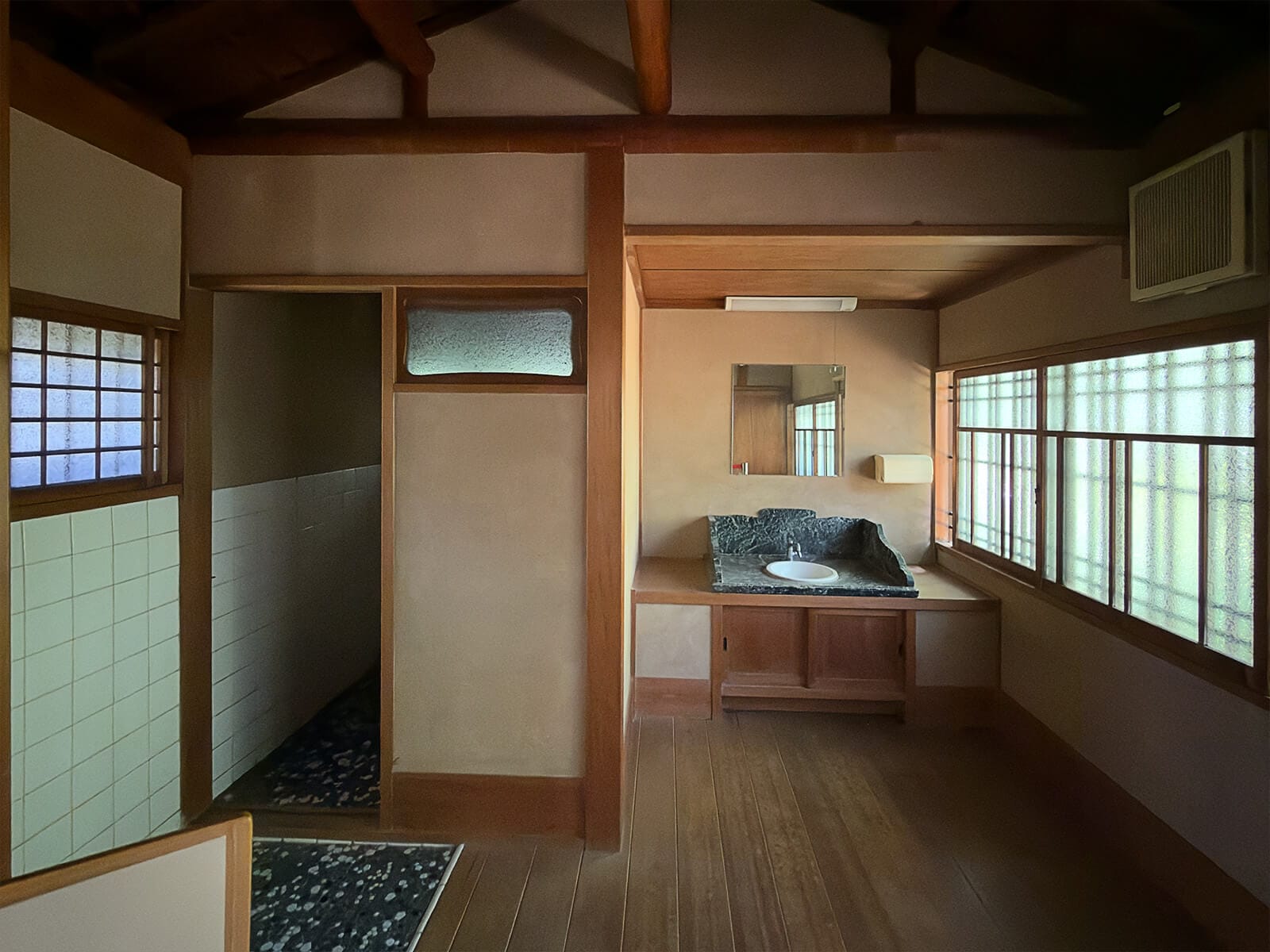
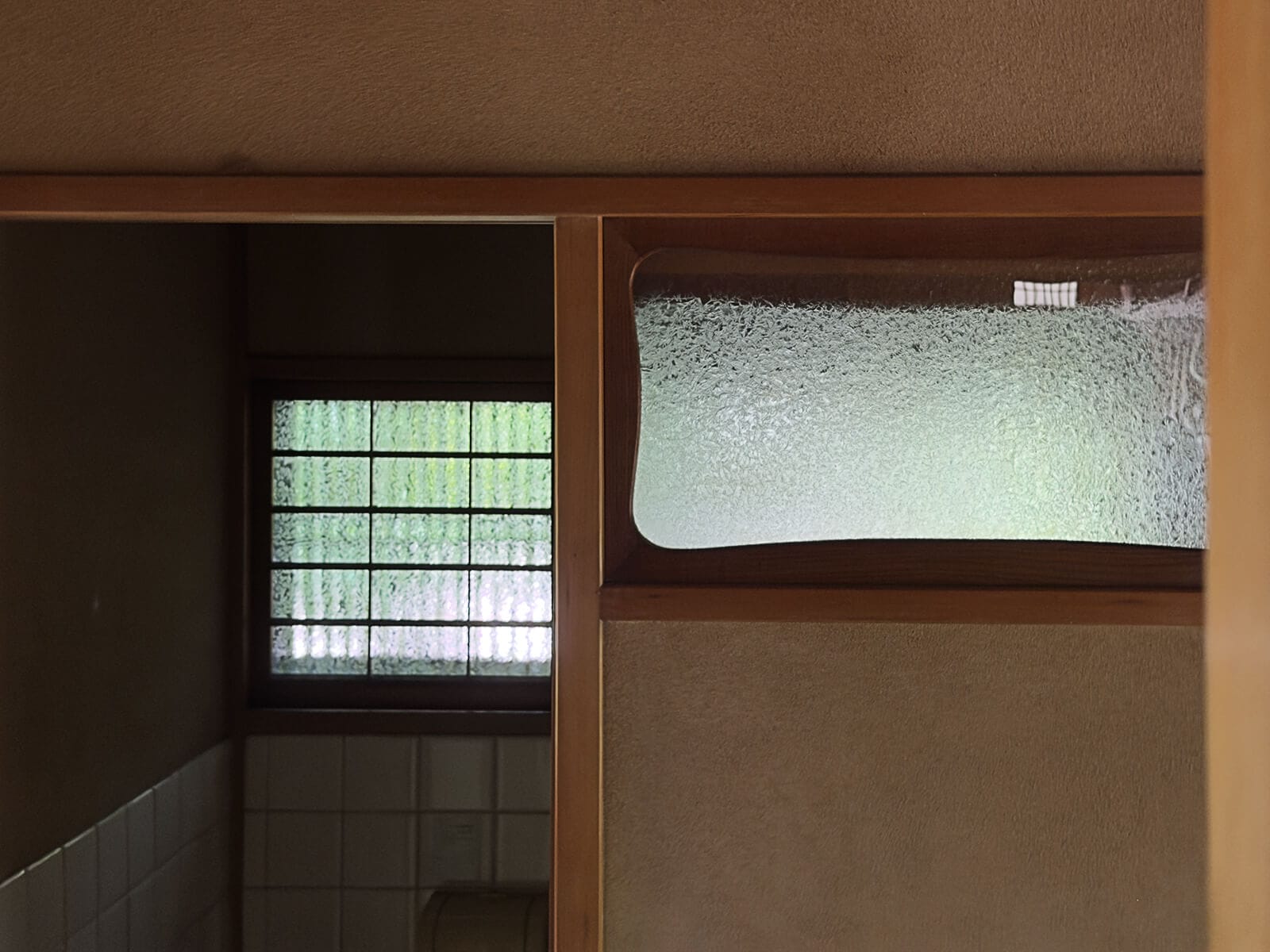
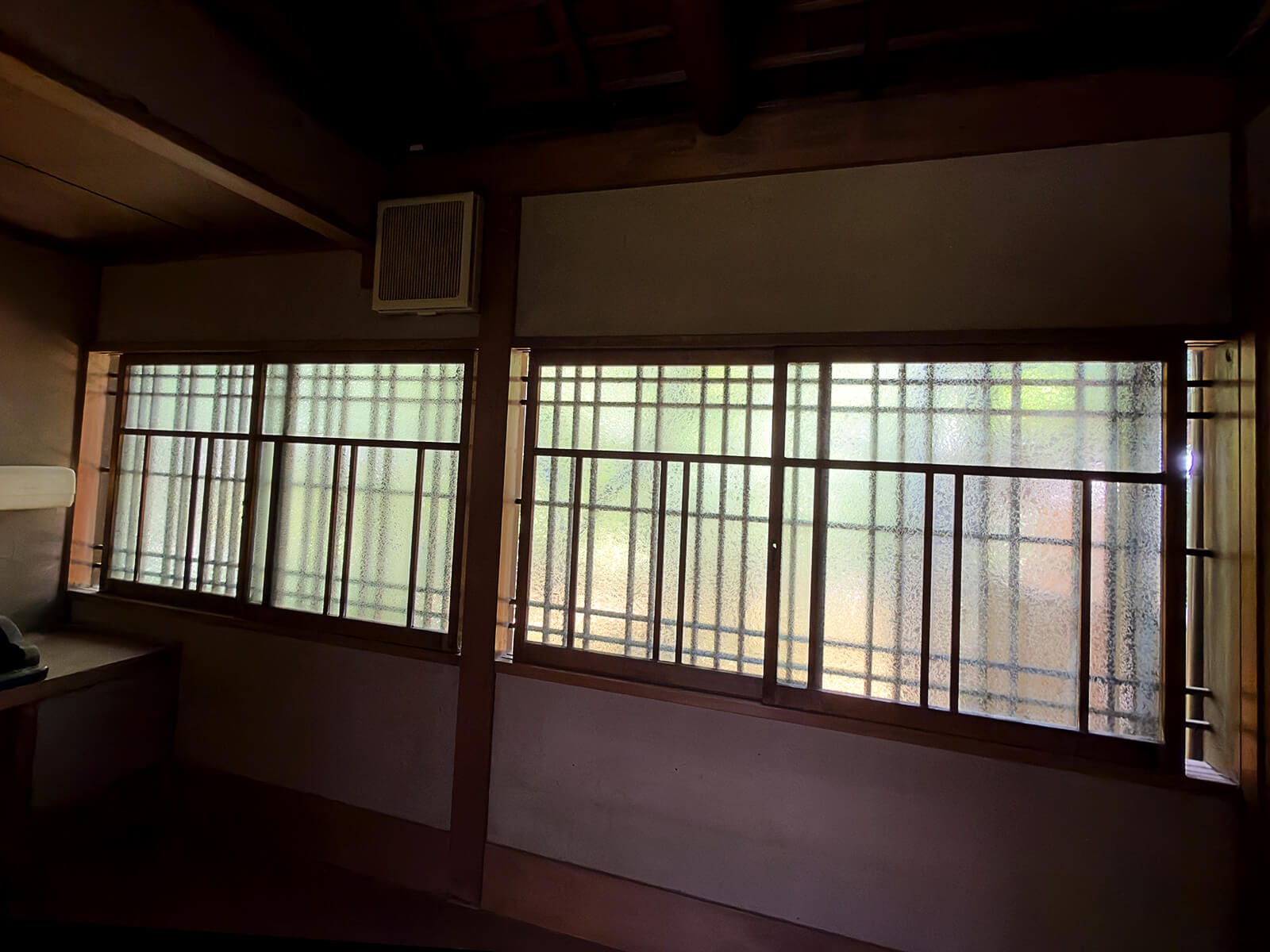
The Kyu Asakura House, also known as the Former Asakura Residence, is a historic wooden mansion built in Shibuya in 1919 during the Taishō period. The basement bathroom makes extensive use of kessō garasu, which was considered a luxury at the time.
This technique had its heyday from the late eighteenth century through to the 1920s. How did you come across it?
After the lettering workshops in Japan, I found out that there would be a Letterheads meet in Tokyo only a few months later. That was the first time I saw international sign painters working together in person. Until then, I had mostly known that world from photos and online.
Mike Meyer also came to Tokyo for the event, and I watched him very closely — his brushwork, how he moved, how he painted. He later invited me to join his workshop in Mazeppa, Minnesota. A few months later, I went to the US to learn sign painting with him.
“Sayumi came to my workshop smack dab in the middle of the United States and threw herself in the world of sign lettering, absorbing the technical aspect of all things sign related! I always knew she would continue to evolve and she’s gone way above my expectations!” — Mike Meyer
At Mike’s place, I saw a large gluechipped and gilded glass sign for the first time. I had never seen anything like it in person. It was so beautiful, and I immediately wanted to know how it was made.
When I came back to Japan, I started researching the technique and realised that if I wanted to learn more about glass gilding and gluechipping, I would need to go to David A. Smith’s workshop in the UK.
How did you go about learning the technique?
Basically, I read a lot, experimented a lot by myself, and also took Dave’s online class.
But to go back to the very beginning: when I was told that I had to reschedule Dave’s workshop in the UK, I happened to be in Taiwan. I was really shocked and depressed at that moment, but then one sign painter came to mind.
I knew him from Instagram. His name is Ron, from Rebirth Signs, and he was doing gilding workshops in Taiwan. He had already taken Dave’s workshop in person, so I contacted him immediately and asked if he could teach me water gilding.
My stay in Taiwan was only a week, and I had just a few days left, but Ron and his friend Zeek, from Incross Custom Art, arranged a workshop just for me. Zeek let us use his studio, even though they both had busy schedules. That was my very first time learning water gilding — and really the beginning of learning these techniques.
After I got back to Japan, I roughly learned how to do gluechipping and started experimenting and testing by myself. At the beginning, it often didn’t go well. Sometimes the glass didn’t chip at all; sometimes it chipped off in large pieces. I never got beautiful patterns.
So I posted photos on Instagram Stories and asked for help. Some American sign painters gave me tips and ideas for getting better results. At the same time, I read any articles I could find online and at the National Diet Library, the biggest library in Japan.
By the time I was getting a little better at creating patterns, Dave had made online courses on gilding and gluechipping. I took both of them as soon as they came out, and they helped me a lot to understand everything better.
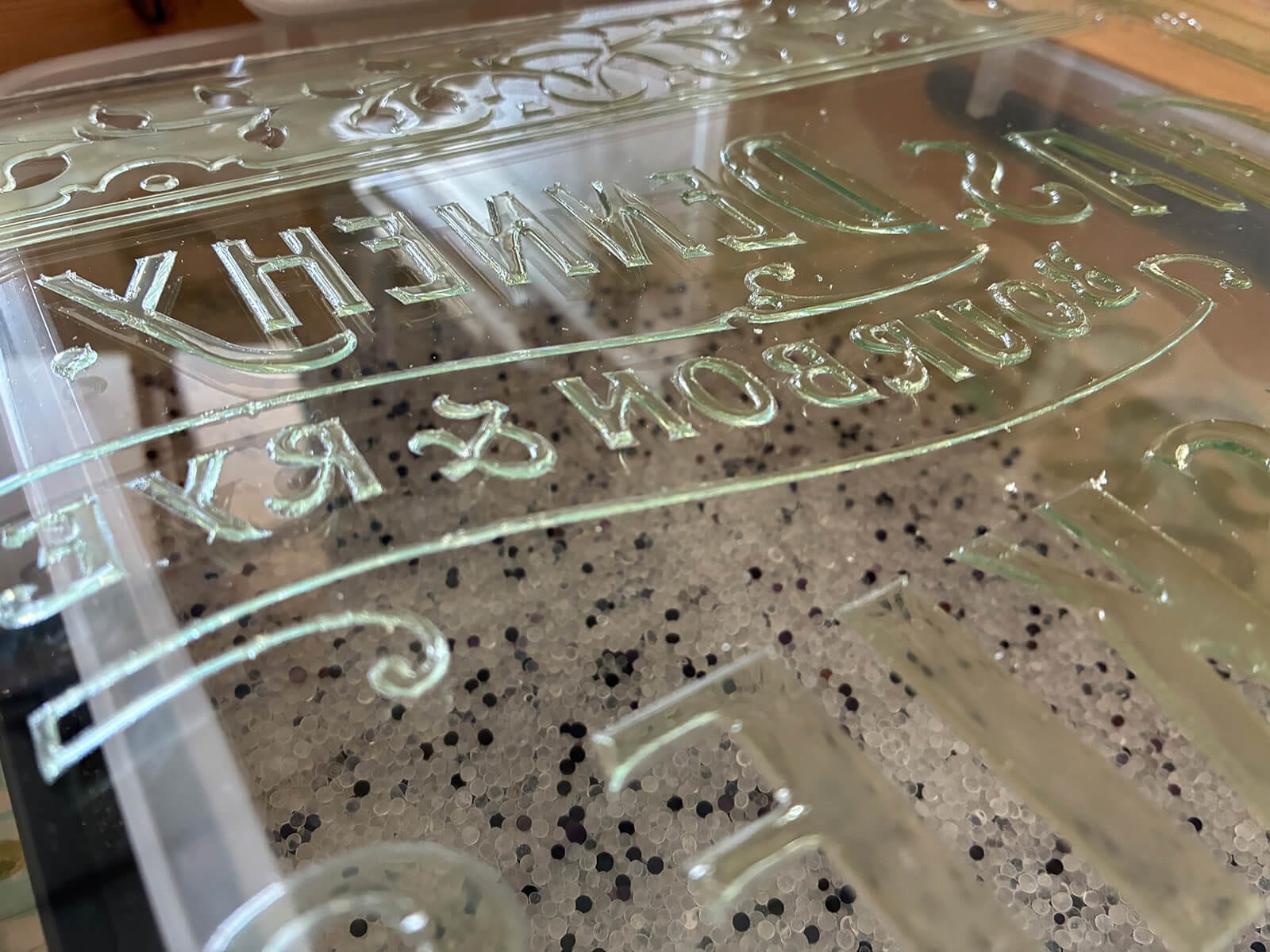
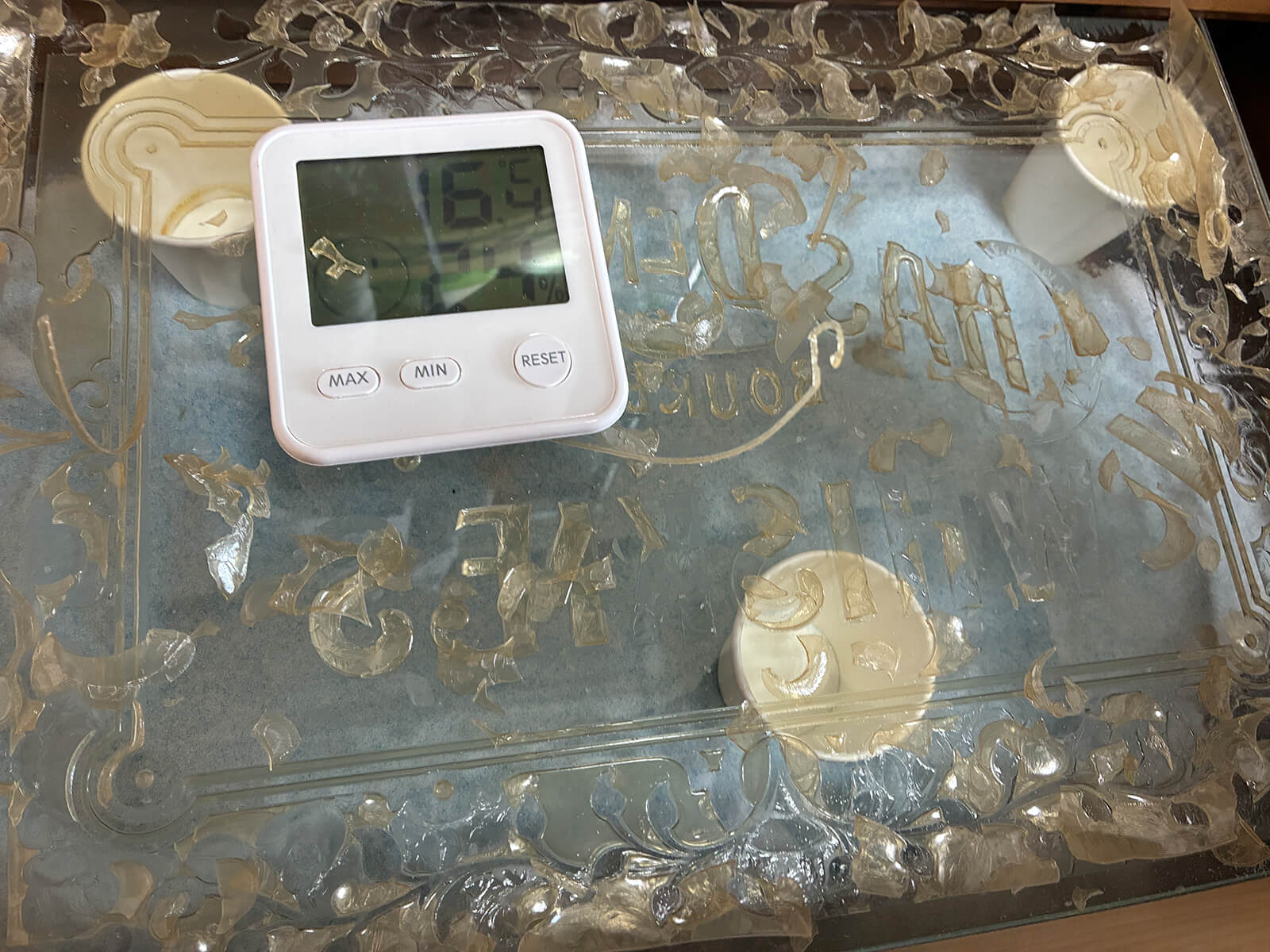
The gluechipping process requires considerable skill and experience. Sayumi continually experiments with different techniques and settings to refine and optimise the process.
You eventually visited David A. Smith, the renowned sign painter and glass gilder in the UK, much later. How did that come about?
I had wanted to go to Dave’s workshop since 2020, but because of COVID it didn’t happen. After that, I went to Kyoto, worked there for a while, and later came back to my parents’ house. I was just about to start my own sign business, focusing on gilded glass signs, when I became very sick and couldn’t work for a long time. I had to pause everything. For a couple of years, I didn’t do much at all. But finally, last summer, my health improved, and I was able to go to the UK.
I chose David A. Smith because, for glass gilding and glass signs, he is the best. I had looked at his website many times and was absolutely sure: he is the best in the world, in my opinion. I also met someone who had been to Dave’s workshop four times, and he told me: “If you want to learn gilding, you definitely have to go there.”
The first time I booked his workshop, I didn’t really know anything about gilding. I had some sign painting skills, but I wanted to learn glass gilding. In the end, I’m glad it took so long before I could go. Before going to the UK, I took a gluechipping class and an online gilding class, so I already knew the basics.
That was very important. If I had gone without that knowledge, I probably wouldn’t have understood what he was doing. The workshop was only four days, and there were so many complicated techniques and processes. Most of the people there were already working as sign painters or knew the basics of gilding. I was really glad I had prepared.
“Sayumi travelled across the world to me to take my in person workshop. Her ability to gild on glass was excellent, her finished pieces really stood out with wonderful colour choices and clean hand painted line work. Since taking my class she has gone on to create stunning works of reverse glass work and everytime she posts her work on social media it really is a joy to see where she has taken this artform. Sayumi has a golden future ahead of her and look forward to watching her journey.” — David A. Smith
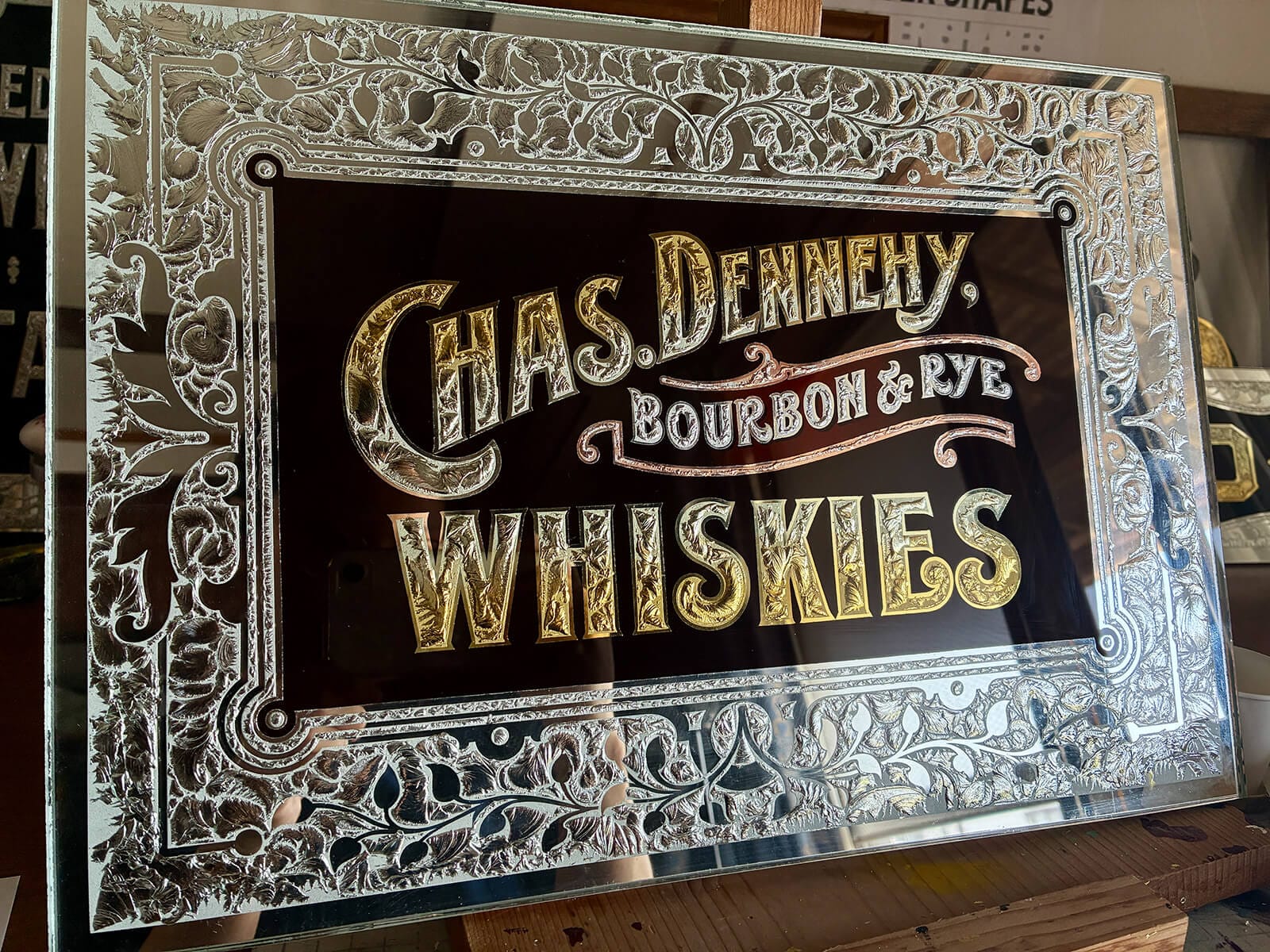
What makes the process so difficult? Is it mainly the chipping itself, or also the gilding afterwards?
Chipping itself is so difficult. In Japan, I use a traditional Japanese glue called wa-nikawa. It is different from American hide glue, but I use a similar strength.
For gluechipping, the strength of the glue is very important. I tried many kinds of glue I could find here, but if it’s too strong, it chips too big. If it’s too weak, it won’t chip at all. And the Japanese glue I use is slightly stronger than the American one, so I need to be more careful about the glue thickness when I apply it.
Also, the weather here is different from the US, so it often affects the patterns and can result in an uneven chip.
When you do gluechipping, you need to create the best environment for the glue to help it dry properly, which is the hardest part.
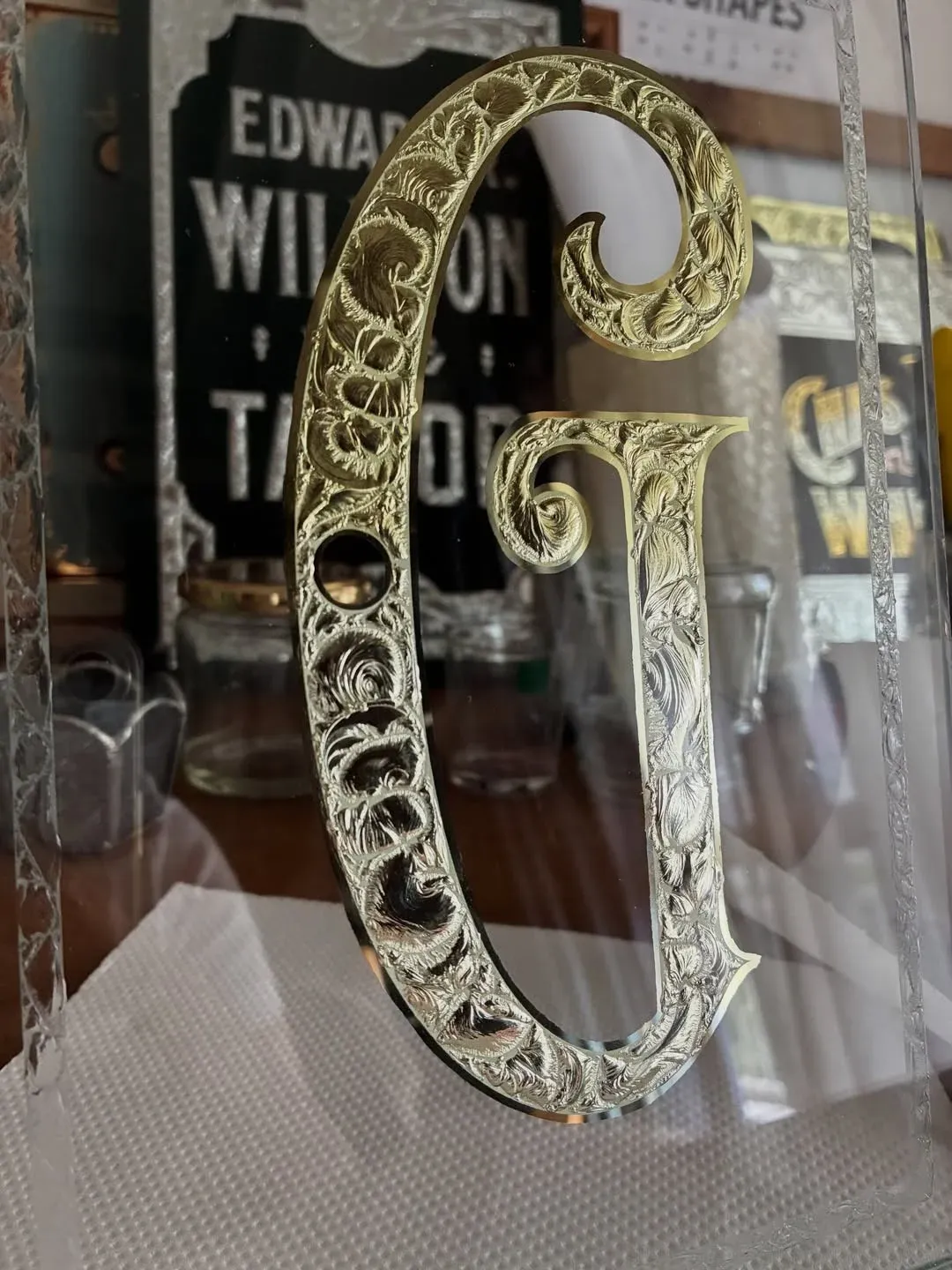
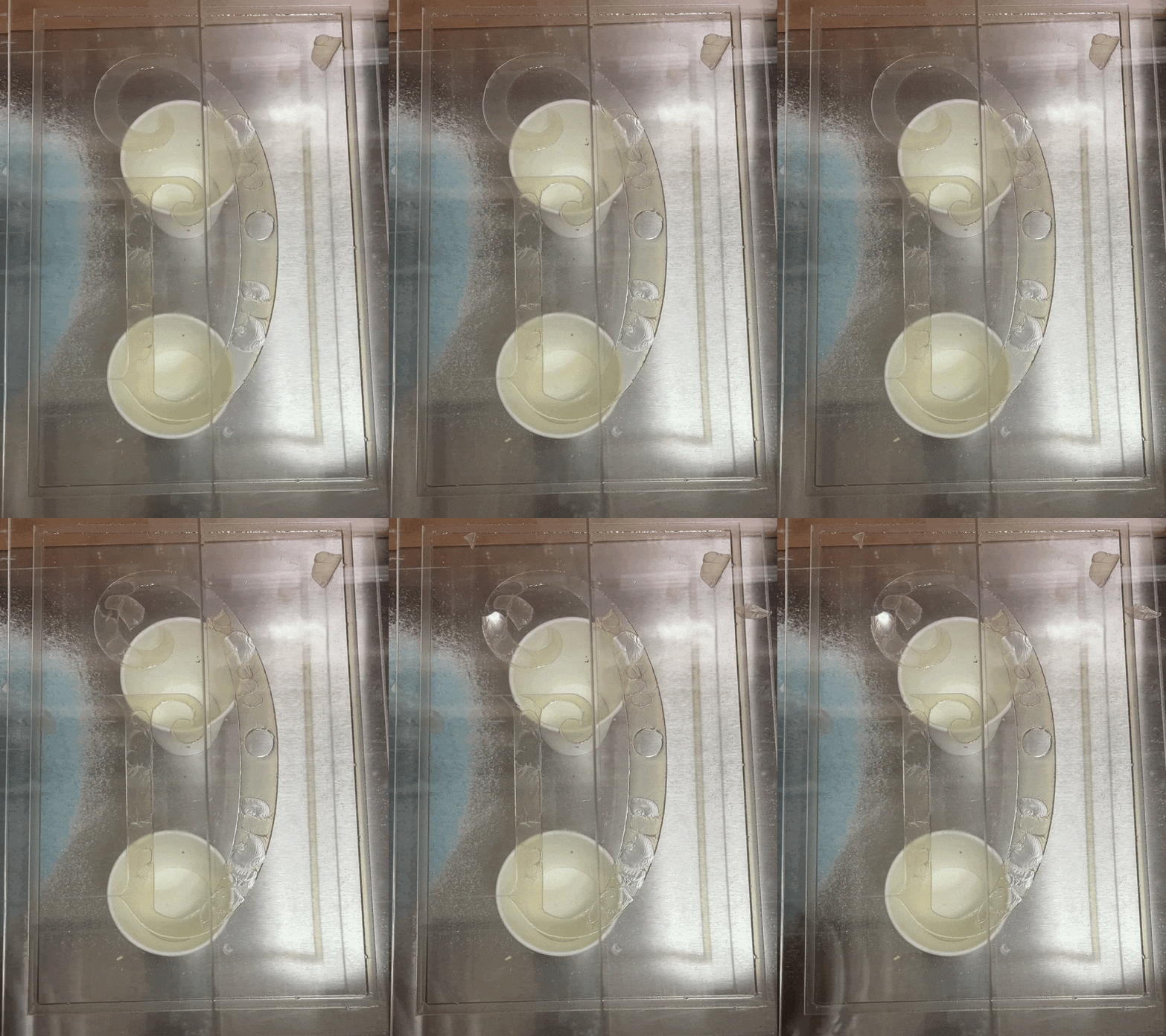
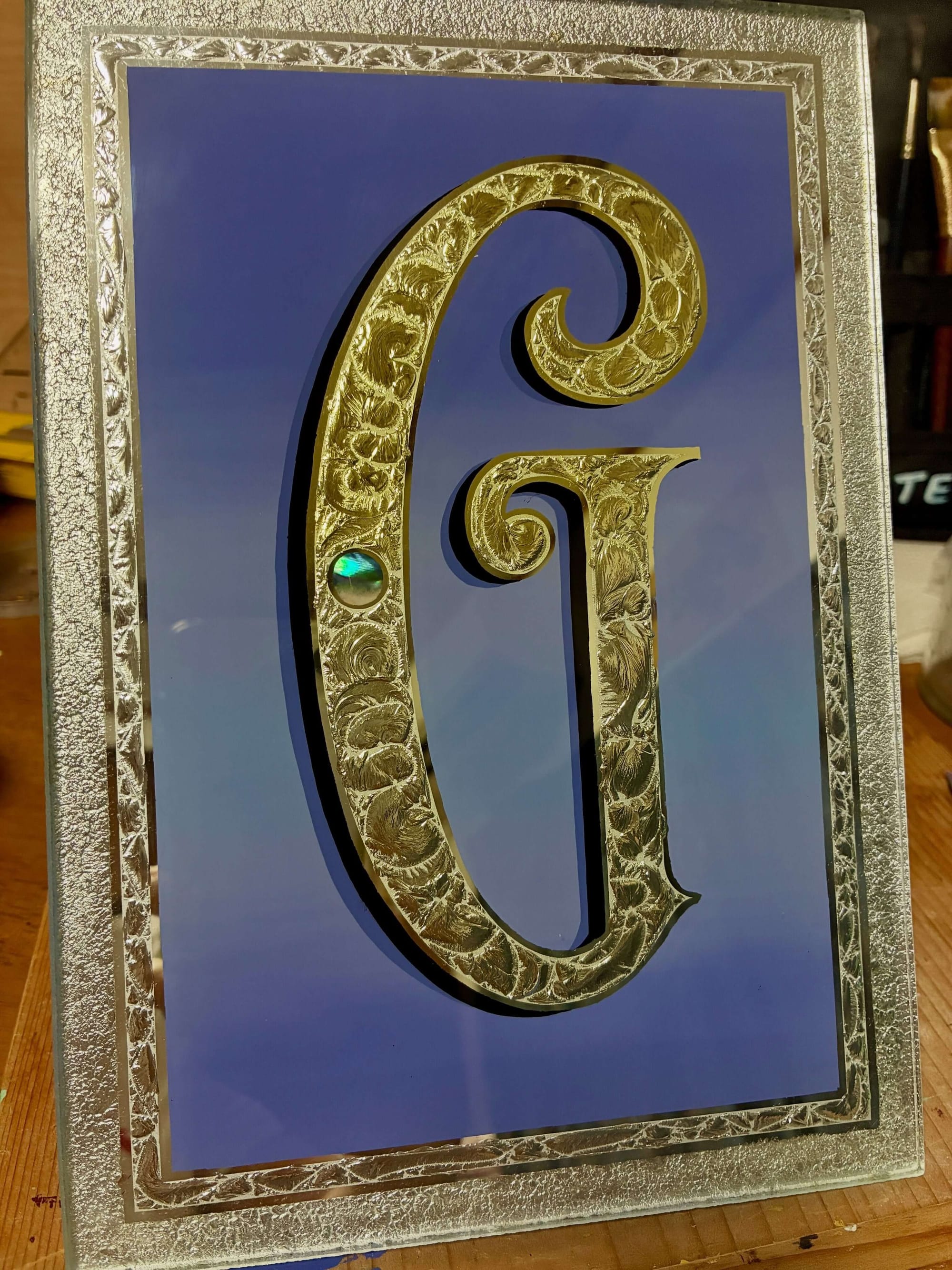
From left: The letter G as single-process chipped glass; timelapse of the chipping process; and the finished piece. Photos: @sayumihandpaint.
That brings me straight to my next question. You recommended a temporary exhibition to me about old Japanese shop signs, and Showa Neon Co., Ltd. is presenting the valuable collection of its founder in permanent exhibition rooms. Japanese sign painting seems to be well documented. And yet, contemporary sign painters appear to look mainly to Western references, especially American sign painting. Why do you think that is?
I think there is a difference in Japan between sign painters and kanban shokunin — traditional sign craftsmen or sign makers. They are basically doing related things, but for Japanese people they are not seen as exactly the same.
Traditional Japanese signs are very beautiful. I love old Japanese signs. The designs are often bold and beautiful at the same time. In the exhibition, there were many old cigarette signs, gilded glass signs and wooden signs with carved letters and gold leaf. They were really amazing.
But if someone in Japan wants a traditional Japanese-style sign, they would probably ask a kanban shokunin, not a sign painter. Sign painting, as we use the term today, feels more connected to Western culture here — especially American sign painting, the Letterheads scene, and the kind of work people now see on Instagram.
It is not that Japanese sign painters are not interested in traditional Japanese signs. We are interested in all kinds of hand-painted signs and traditional skills, whether they are Japanese, American or from somewhere else. But many clients who come to sign painters today want a Western-looking sign. They like that culture and that atmosphere.
For many Japanese people, traditional signs mean something different: wooden signs, carved signs, lantern signs, things like that. Sign painters and kanban shokunin may be working in a similar field, but they belong to different traditions and are perceived differently.
When reading statements by Japanese artists and craftspeople, regardless of the discipline, I often come across phrases such as “I will keep trying” or “I will continue to work hard to improve”. In Japan, there are concepts such as ganbaru (頑張る) — to do one’s best, work hard and persevere — and kaizen (改善), the idea of continuous improvement. Would you describe these as very Japanese virtues? And do they also shape the way you work?
Yes, I think that is very Japanese. It is part of the Japanese spirit, or maybe the craftsperson spirit.
You are never completely satisfied with the work you have just done. You always think: I can do better. I can improve this technique, this skill, this process.
That is why techniques and skills in Japan have developed so far in many different fields of craft and art. People keep improving. They keep trying.
For me, it is the same. I feel that I am still at the beginning. I have to keep researching, keep learning and keep practising. I think that continues for a lifetime.
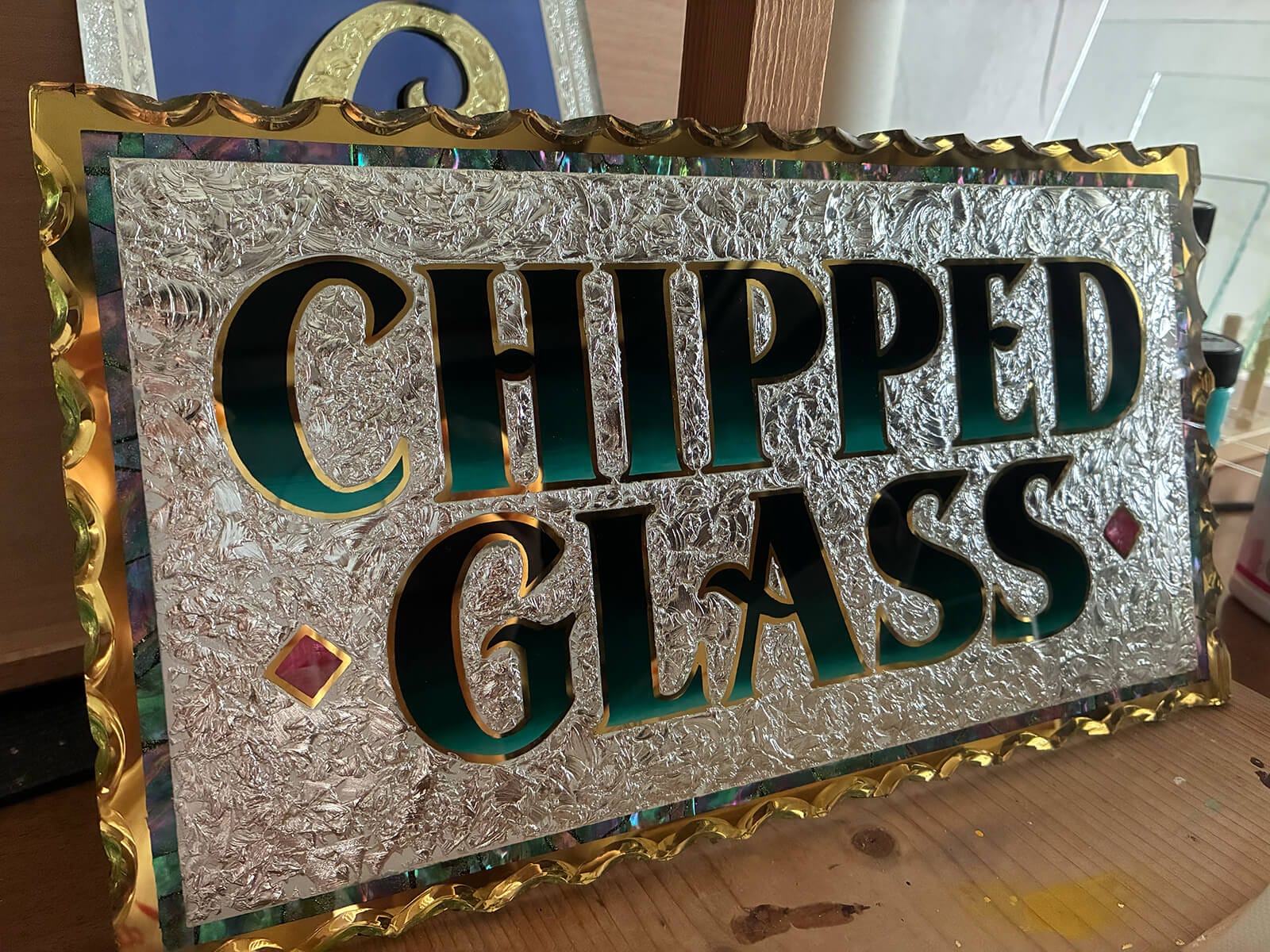
You are now teaching what may be the first gluechipping workshop in Tokyo. What do participants learn in those two days?
As far as I know, it is the first time someone has taught gluechipping in Tokyo — perhaps even in Japan. It is not a very common craft here, and most people don’t know much about it. I want to show my work and give people an introduction to the technique.
The workshop lasts two days, which is not enough time to go through the whole process on one piece, from sandblasting to gilding. So I teach the gluechipping part and the gilding part separately. I prepare two glass pieces. One is only sandblasted, and the other one is already chipped. On one piece, we apply the glue and watch the drying process. On the other, we work on the gilding.
The workshop was announced with the help of Modern Twist Signs, and it was fully booked very quickly. The students had already taken part in sign painting workshops before, and they all had an interest in craft, art, or graphic design.
What they can expect is an overview, an introduction to the technique. After that, it is really about trial and error. That is the main thing they have ahead of them.
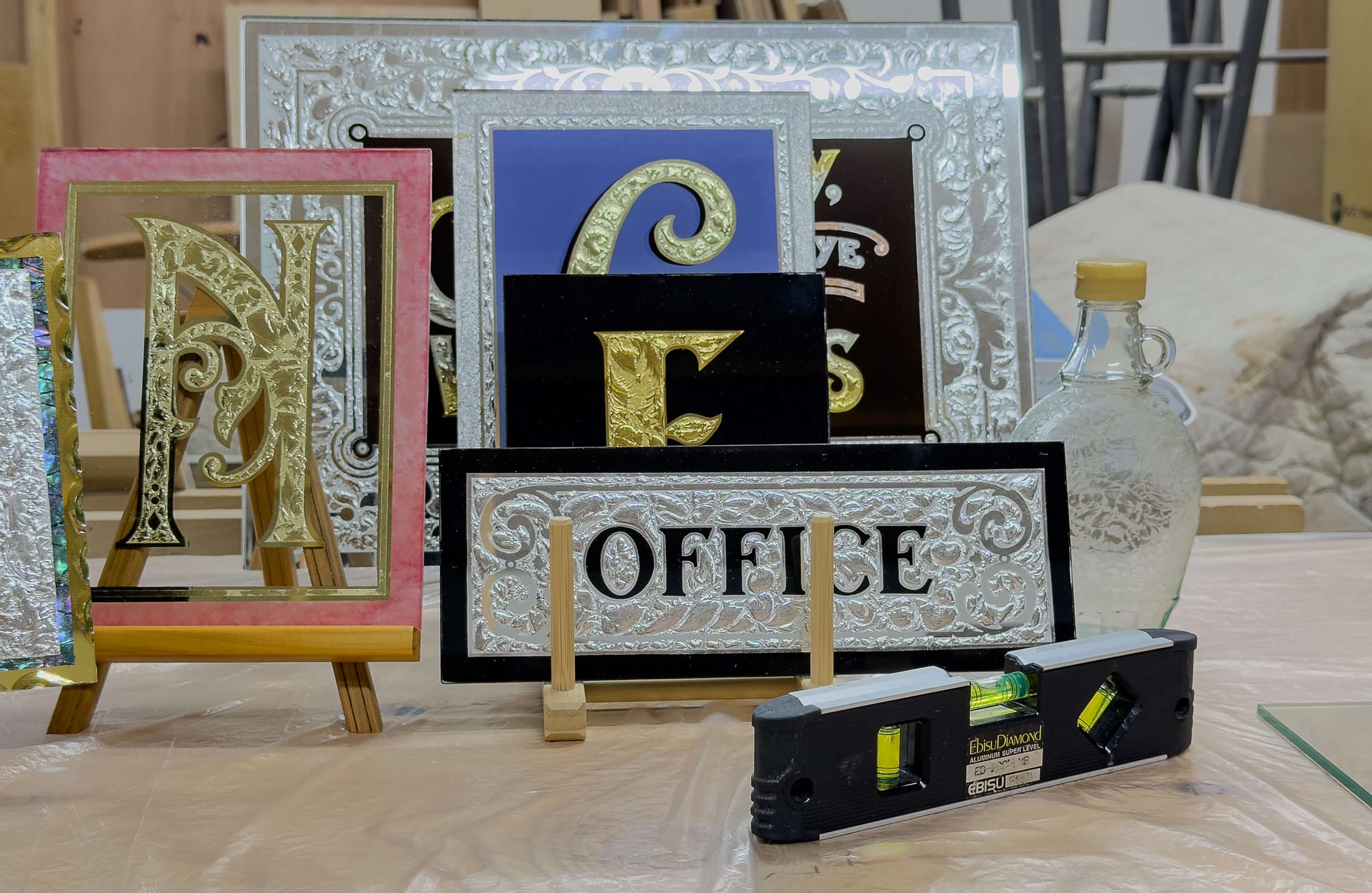
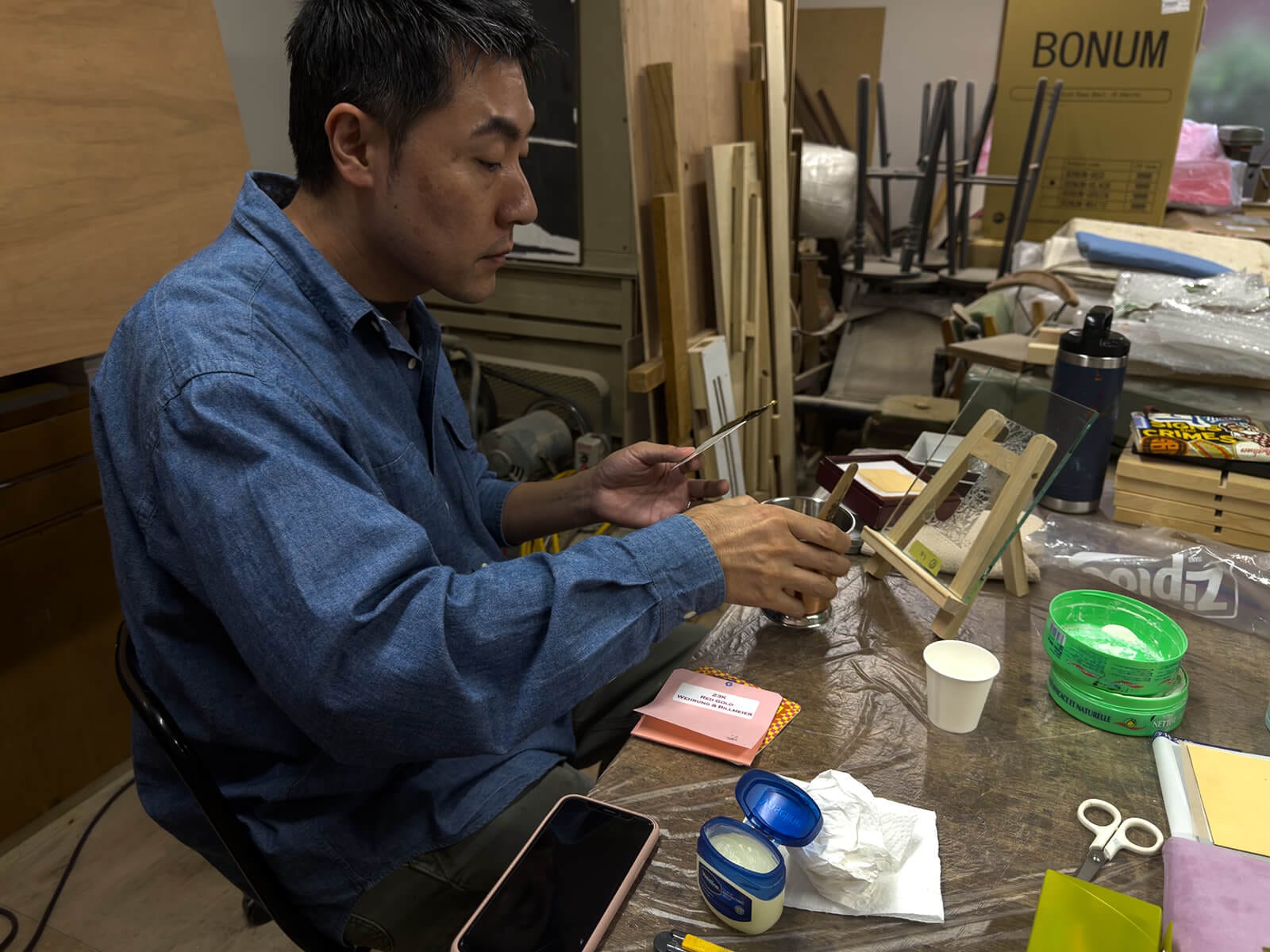
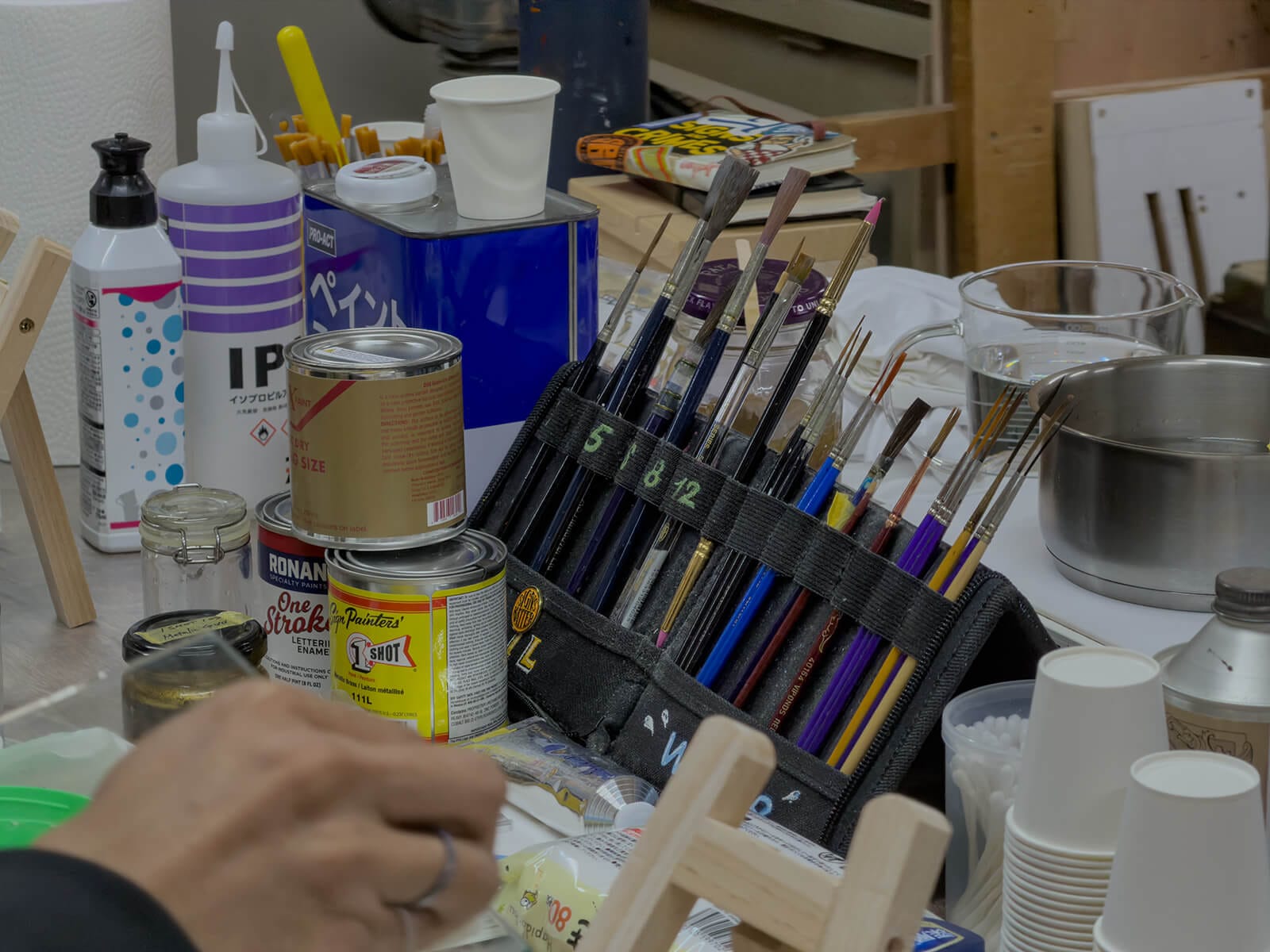
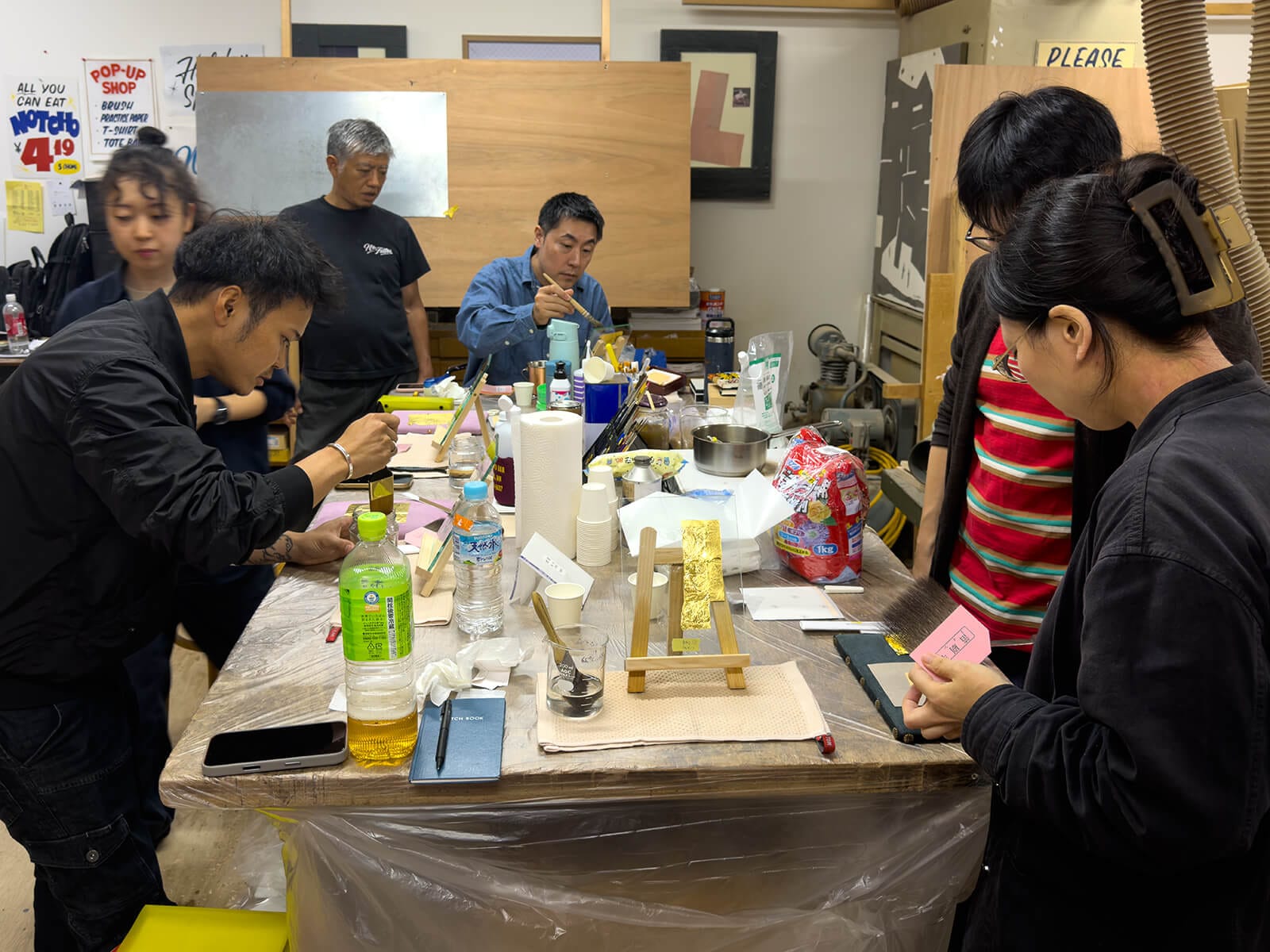
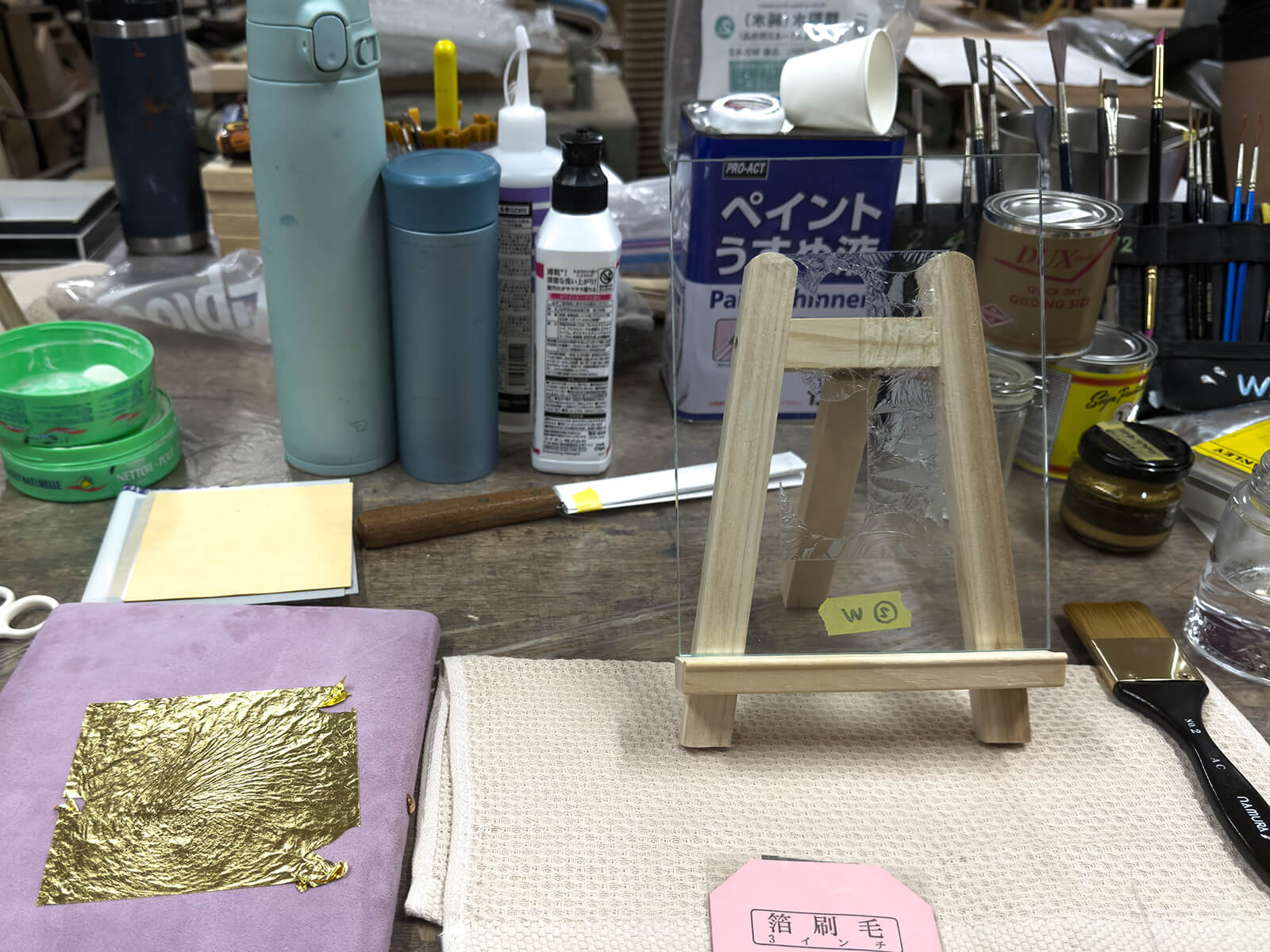
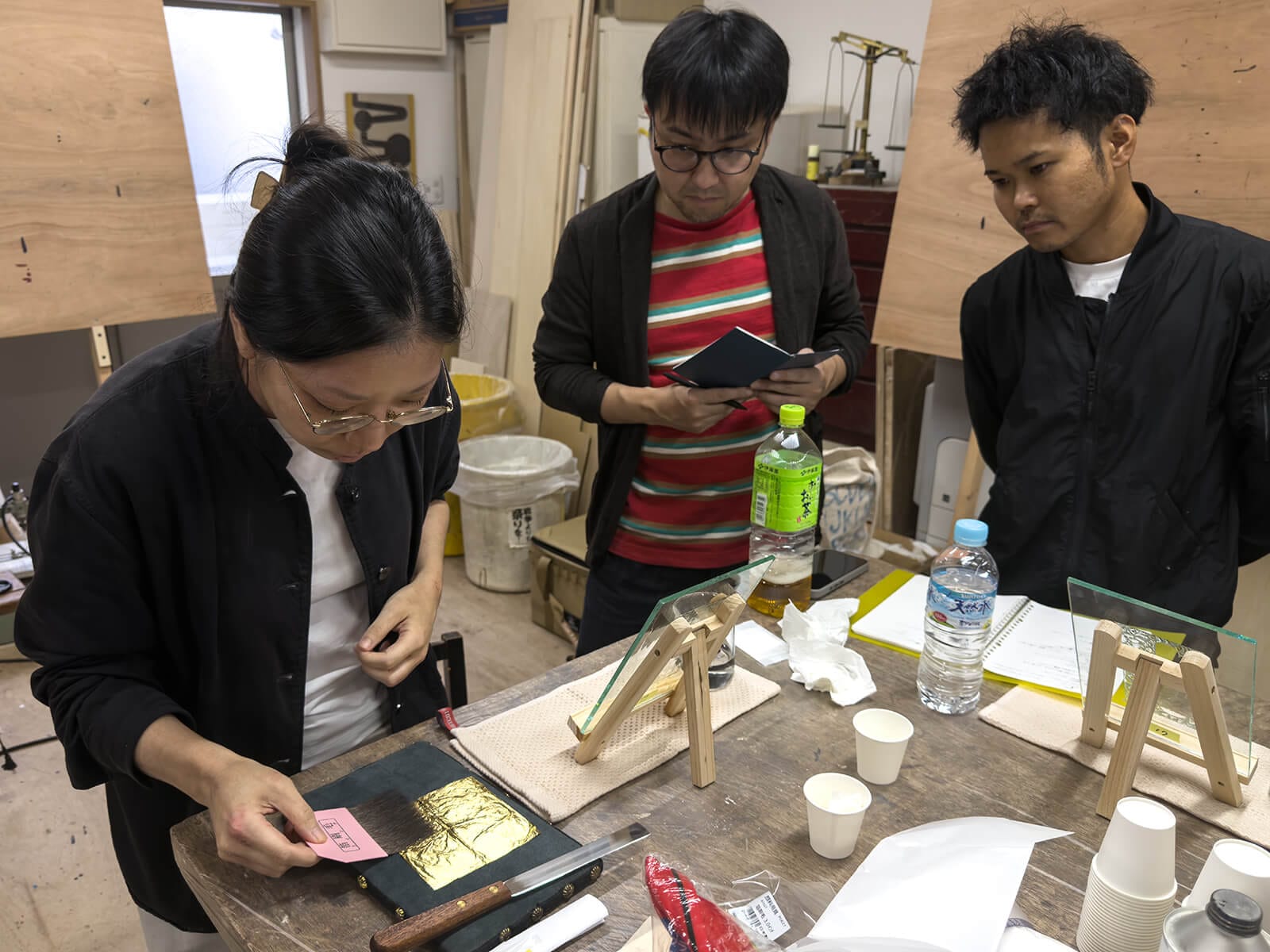
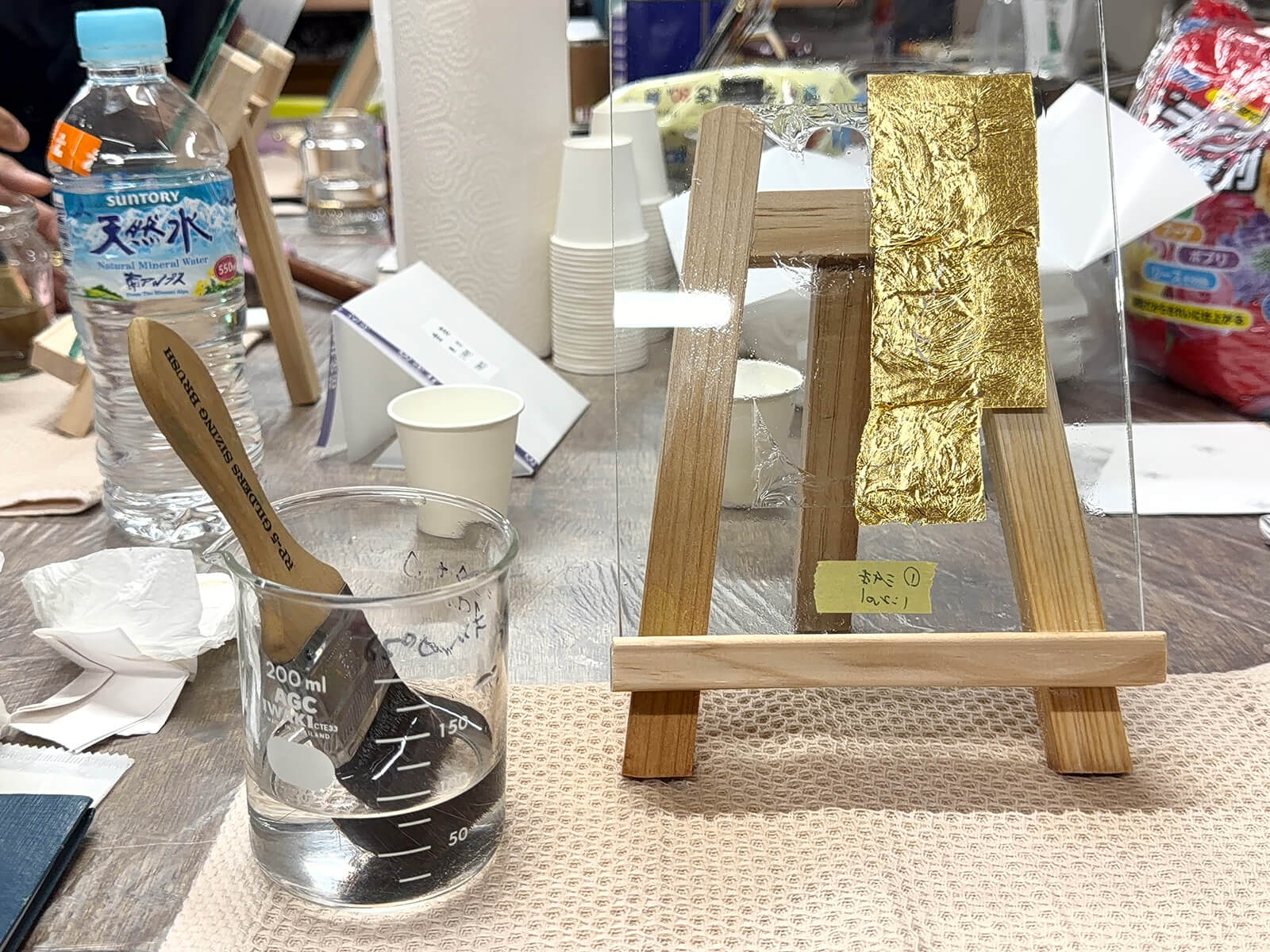
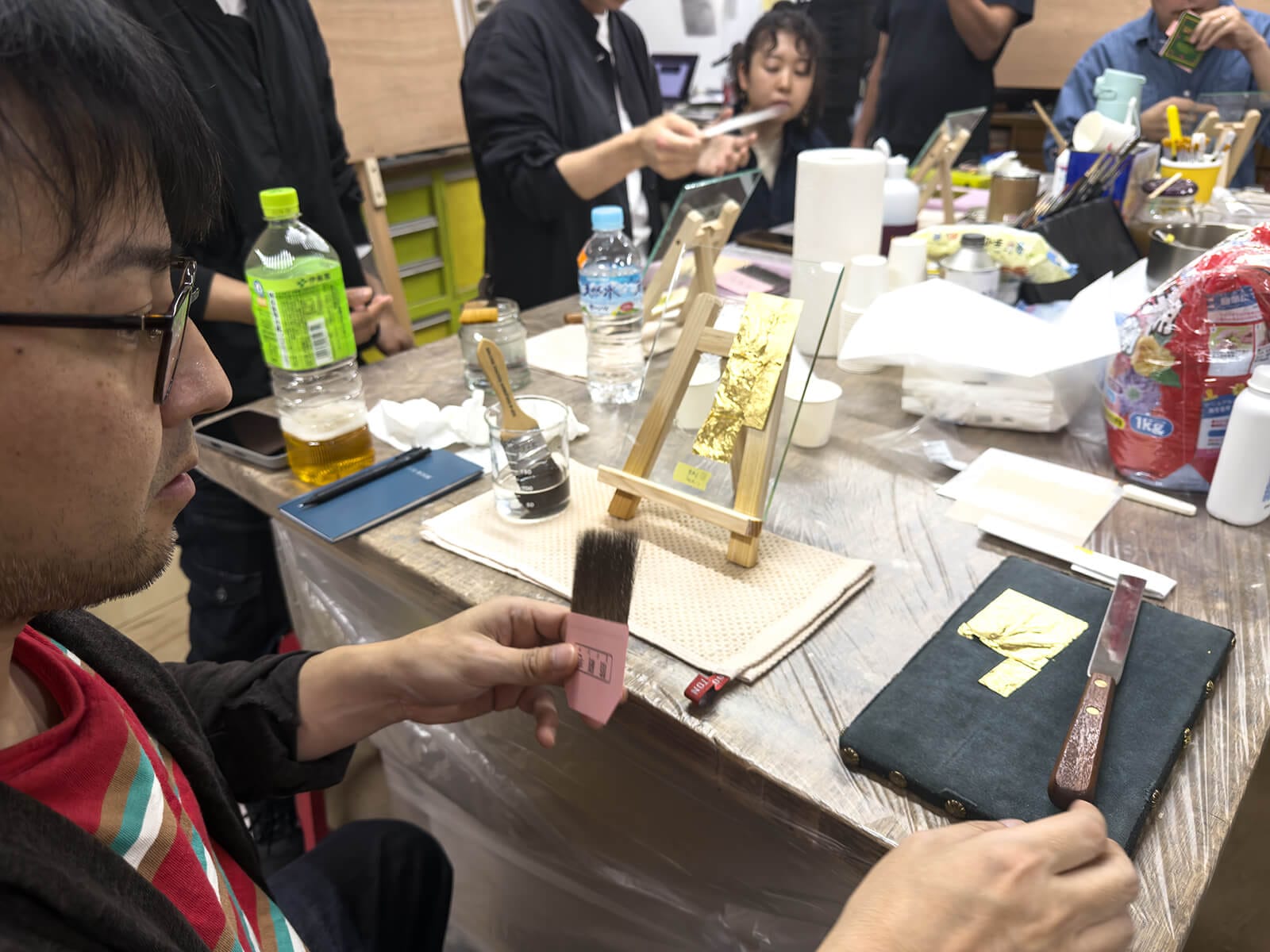
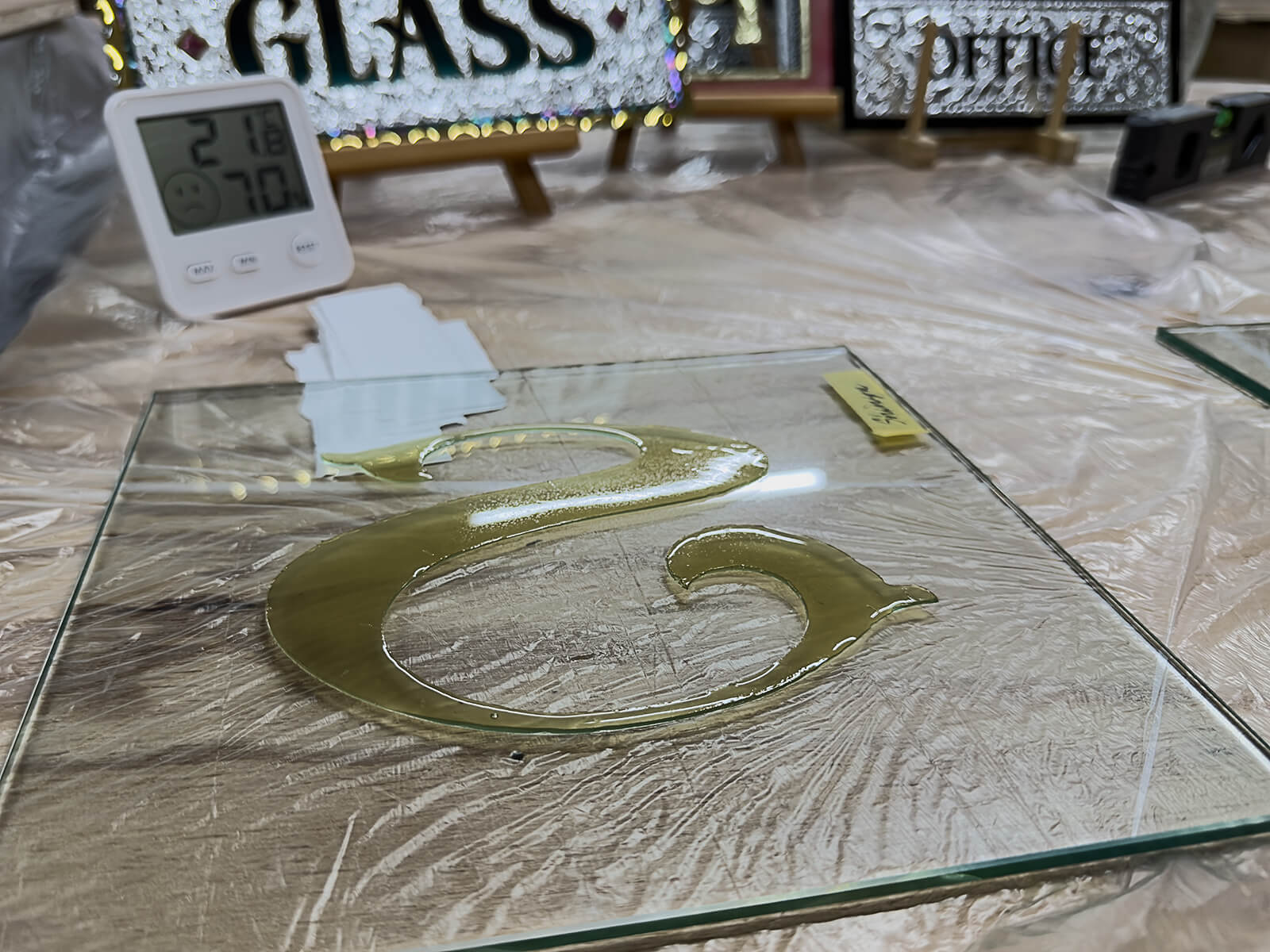
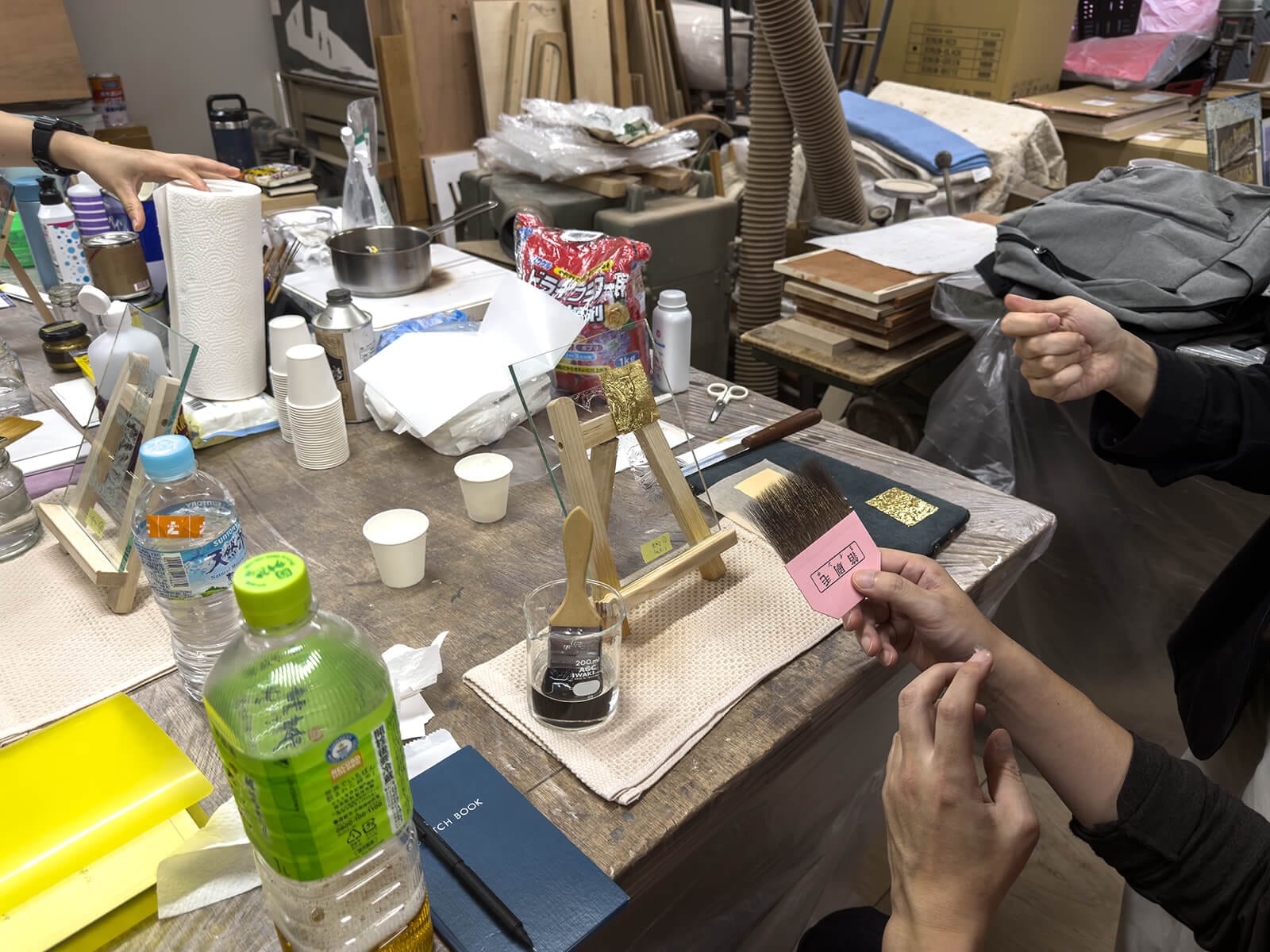
Impressions from Sayumi’s workshop in September.
Beyond this workshop, what are your plans for the future? Do you see yourself as preserving a technique that almost disappeared in Japan?
That is a tough question. I don’t have a very clear plan yet, but I want to keep the craft alive. Gluechipping disappeared in Japan once because no one taught it to the next generation. I don’t want that to happen again.
I want to show the technique and teach it to the next generation, especially to people in Japan. In that sense, yes, I feel I am bringing back a technique that was once adopted by Japanese craftsmen, used for a short period and then almost disappeared.
But it doesn’t always have to be a sign. It can change into other things. In the UK, you have pub culture and those big glass signs. In Japan, we don’t have that same pub culture, so it cannot be exactly the same.
I think Japanese craftspeople have always been good at adapting techniques and making them more familiar. The old craftsmen did that too. They took Western techniques and changed them into something that fitted Japan.
So gluechipping can survive in a different form here — not only as signs, but also as smaller objects or everyday pieces. I know a Japanese woman who makes gluechipped glass cups. They are not signs at all; they are for drinking alcohol. But she is keeping the skill alive. That is the kind of thing I want to do.
I ask all my interviewees this final question: Can you tell me about a place in Tokyo that is special to you, one that either inspires you or holds particular significance for you?
One place that is very special to me is Shikin Hanten, a Chinese restaurant near Harajuku. There is a wall sign there that I painted when I was working at the sign shop in Tokyo.
It was the first time I had done sign painting using the actual process: making the pattern, pricking holes in the paper, transferring it to the wall and then painting it. Before that, I didn’t really know how to do it properly, so I researched a lot and tried to understand how to make the work both fast and beautiful.
The design itself was not mine — it was a client job for the company — but I painted the main letters. For me, it was my first real sign painting work on a wall. Shops and restaurants in Tokyo change quickly, so signs are often short-lived — but this one has been there for a long time, and that makes it special to me.
And the food is good too.
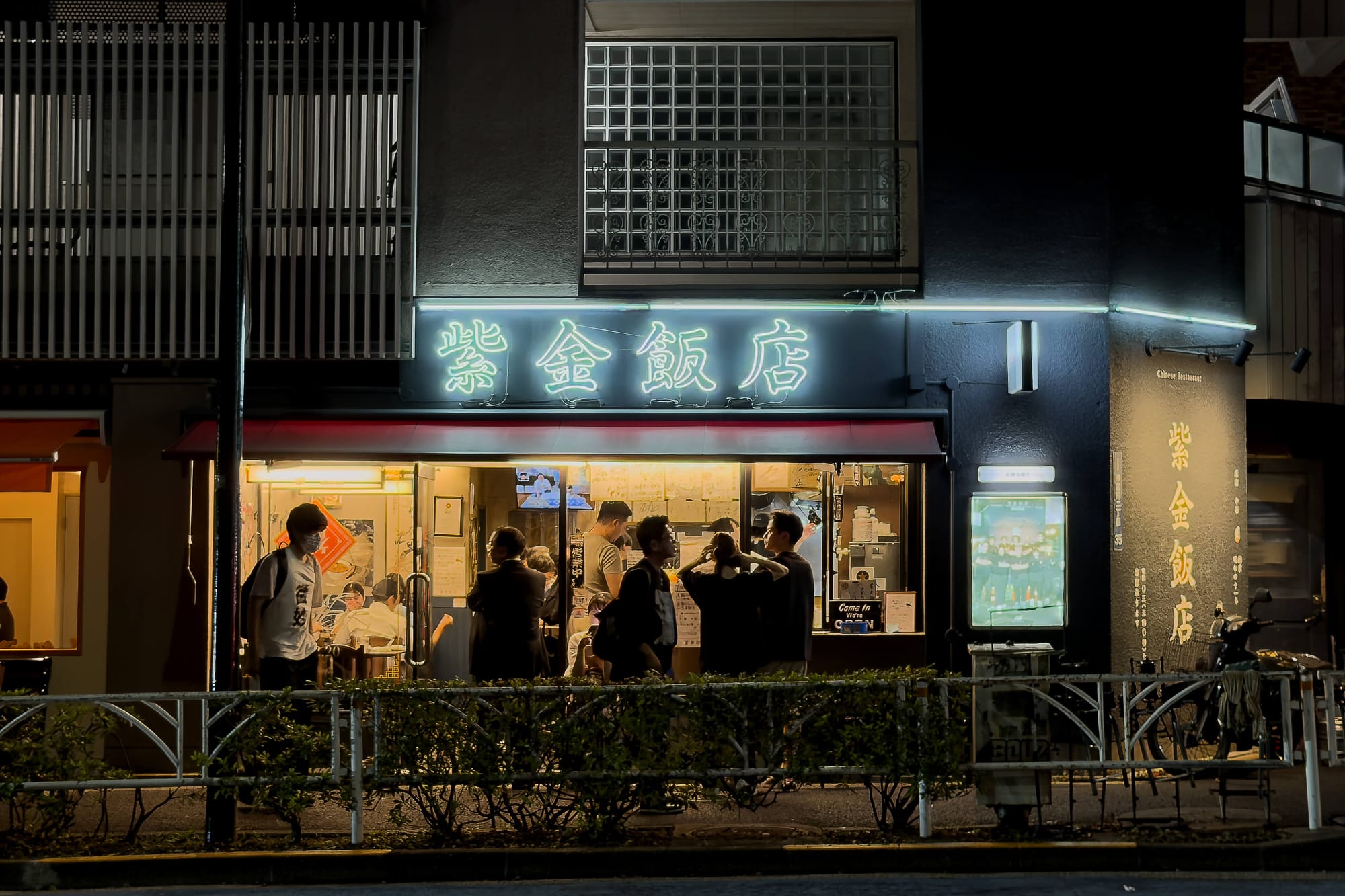
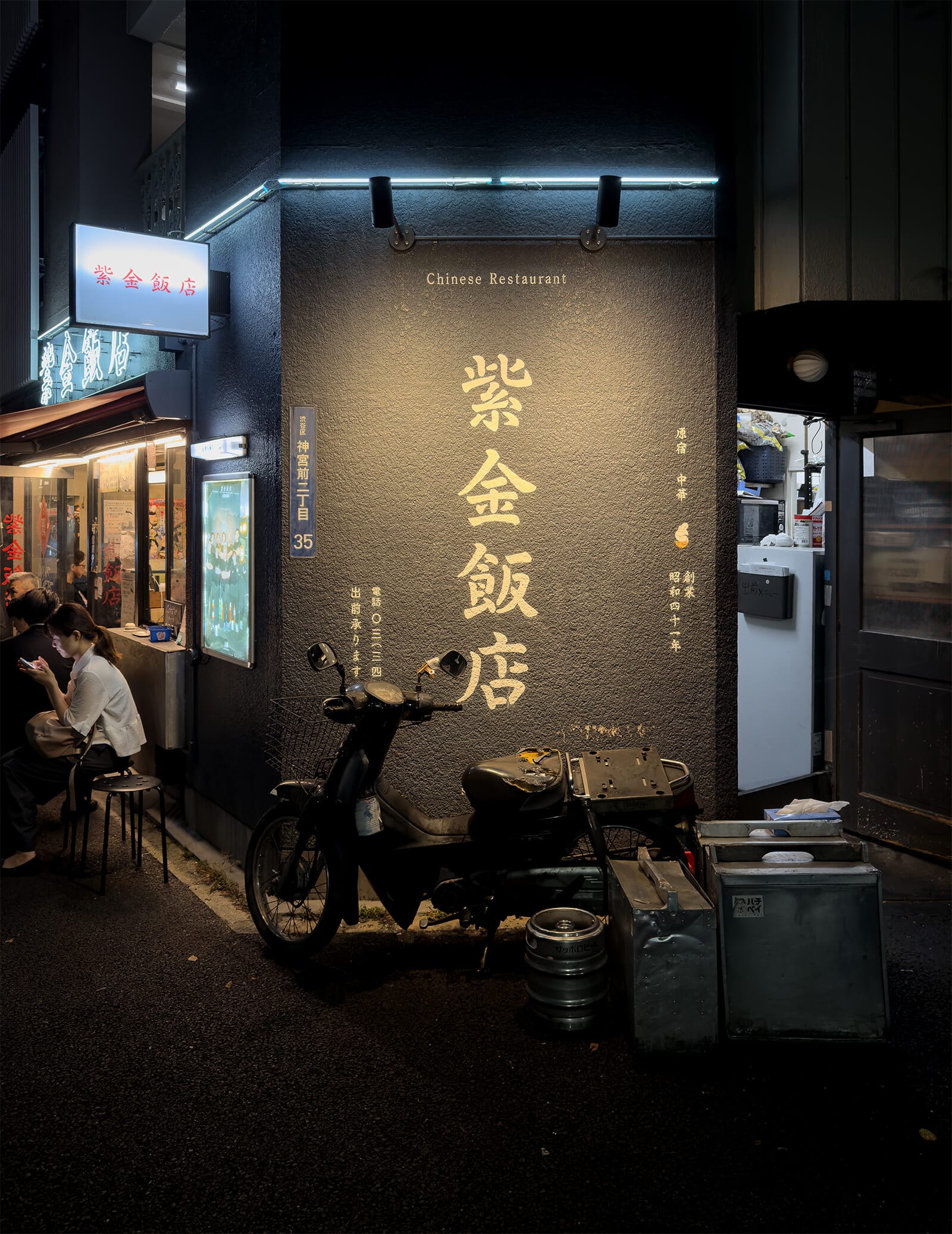
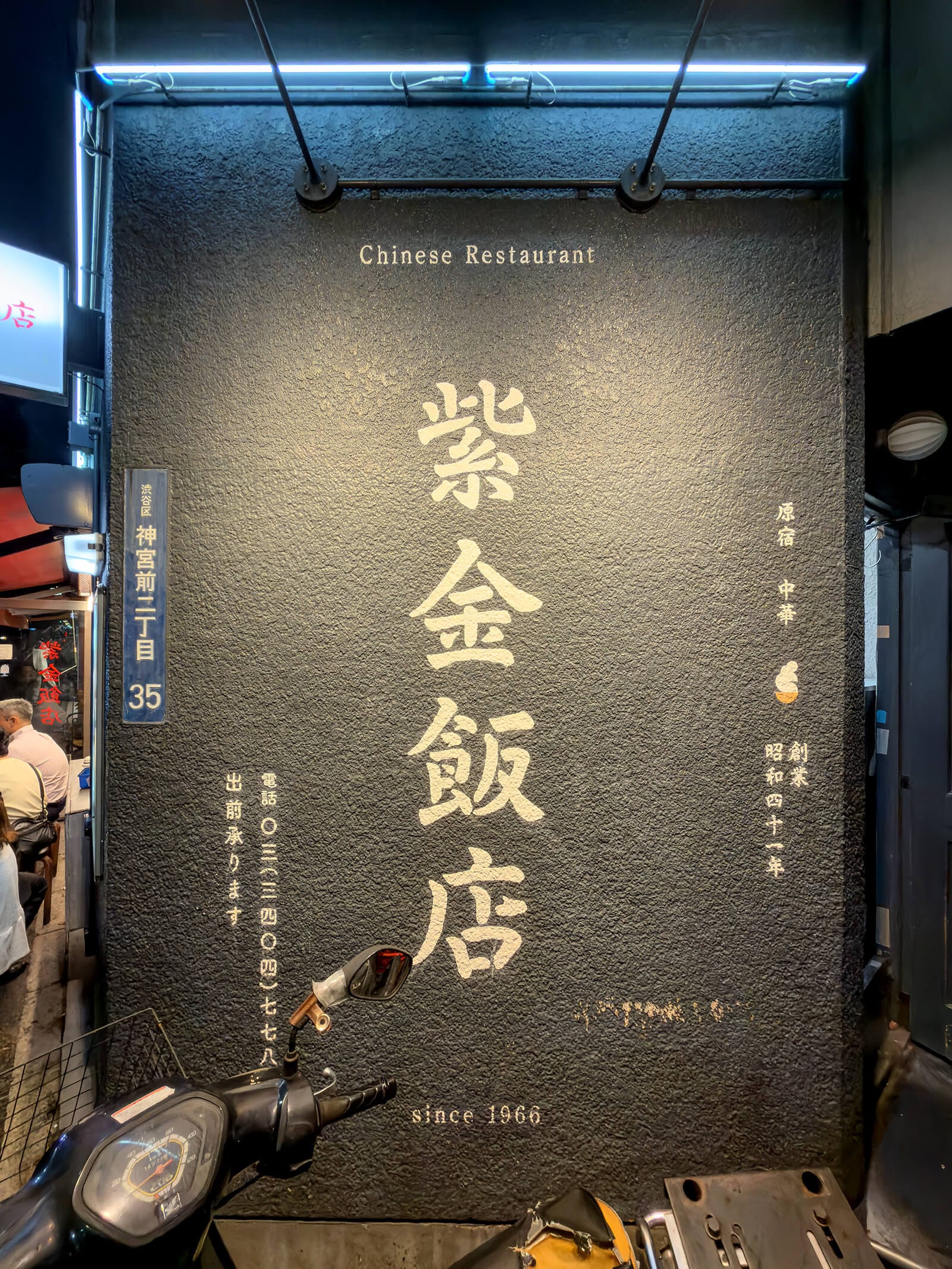
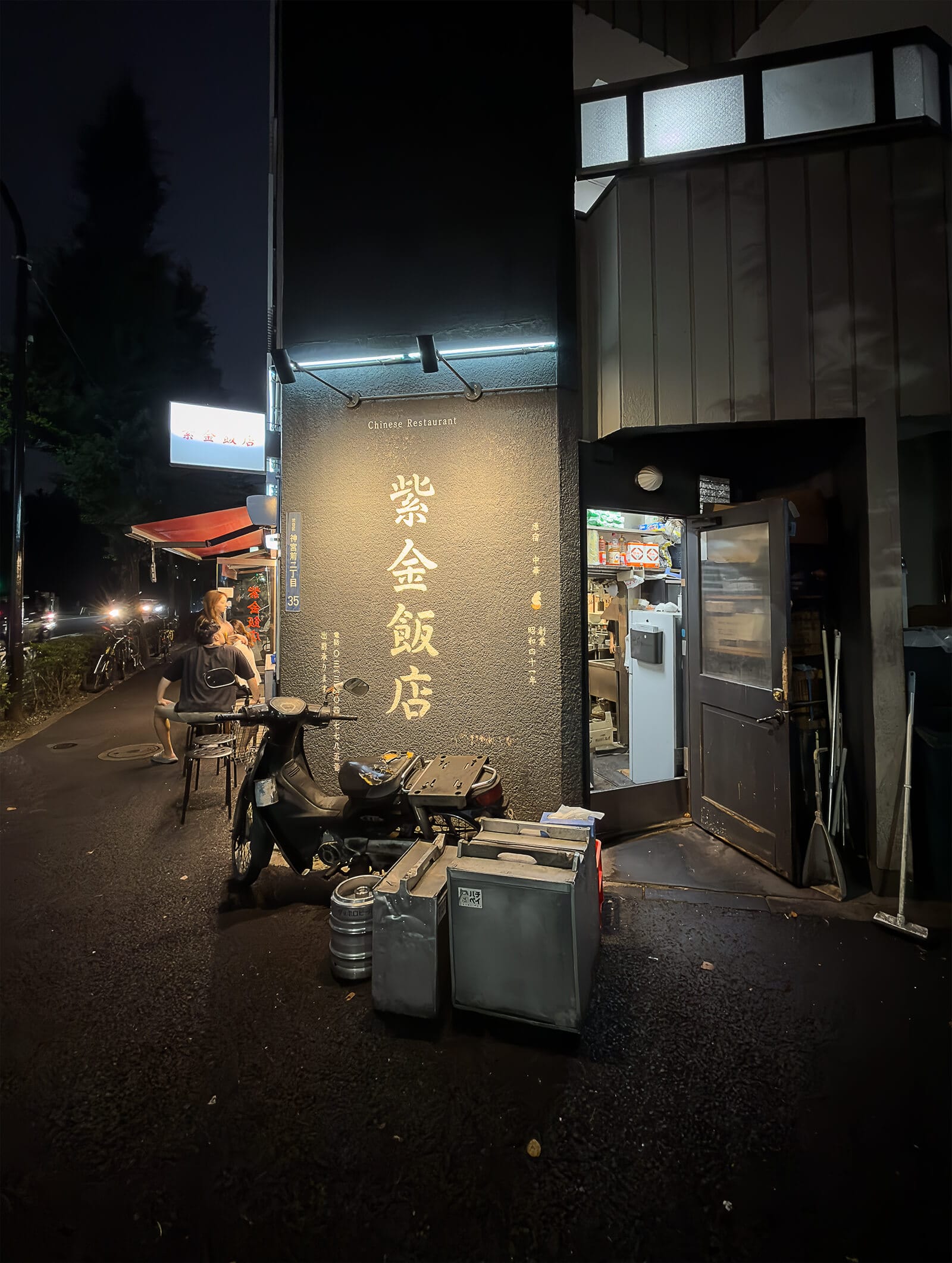
The mural sign that Sayumi painted on the corner wall of the restaurant.
Further Reading
- Japanese Sign Painters in BLAG Field Notes.
- Kanban — Shop Signs of Old Japan on the Lost Art Press Blog.
- The Showa Neon Takamura Sign Museum (in Japanese).