Getting Into It Again in 2026
Six sign painters share their journeys into the trade and their advice for those just starting out.
It’s now traditional that the first post in January adds to the ‘Getting Into It’ series, started by Lauren Kerbel in 2024. Read on for this year’s featured sign painters as they share their journeys into the trade and advice for those just starting out.
If your resolution for 2026 is to pick up the brush, and you feel inspired by the wise words below, then make sure you get a copy of the Sign Painting book, and check out the various opportunities to learn the craft in-person and online.
 Better Letters
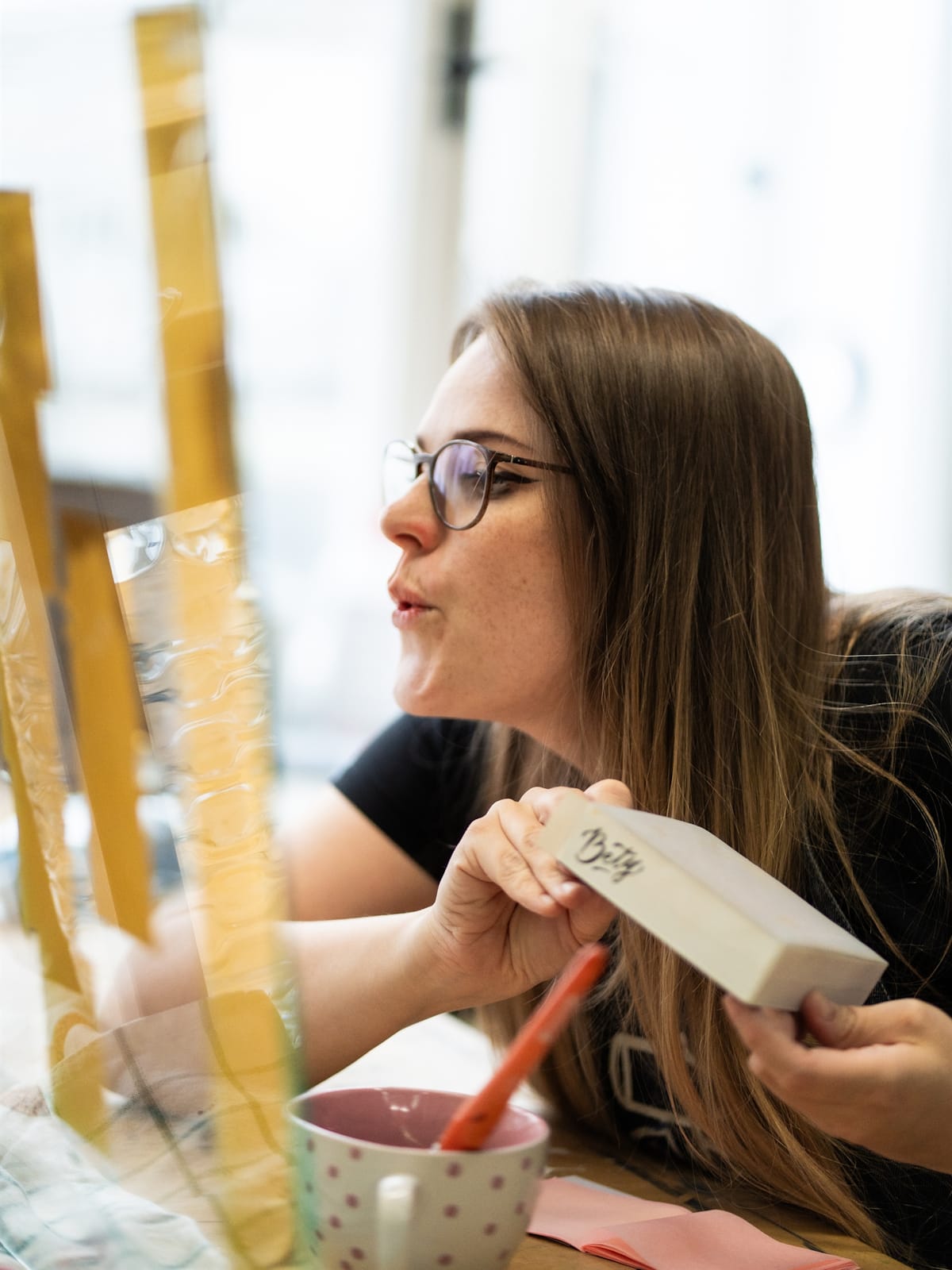
Bety Vachelová
Location
Czech Republic
Training
- Self-directed learning via social media and the sign painting community.
What are your creative interests and passions? How did they lead you to sign painting?
I’ve always been a creative person and I’ve always loved making things with my hands — whether digitally or in the physical world. I studied at a technical secondary school of construction and later Architecture and Building Engineering at university, so creating something real and tangible has been part of my life for a long time.
I’m also deeply inspired by old photographs from the late nineteenth and early twentieth centuries. In many of these historical images from my city (Pilsen), you can see beautiful hand-painted signs that gave the streets their unique character. Seeing how much of that has been lost today motivates me to contribute, in my own way, to a more thoughtful and crafted visual culture.
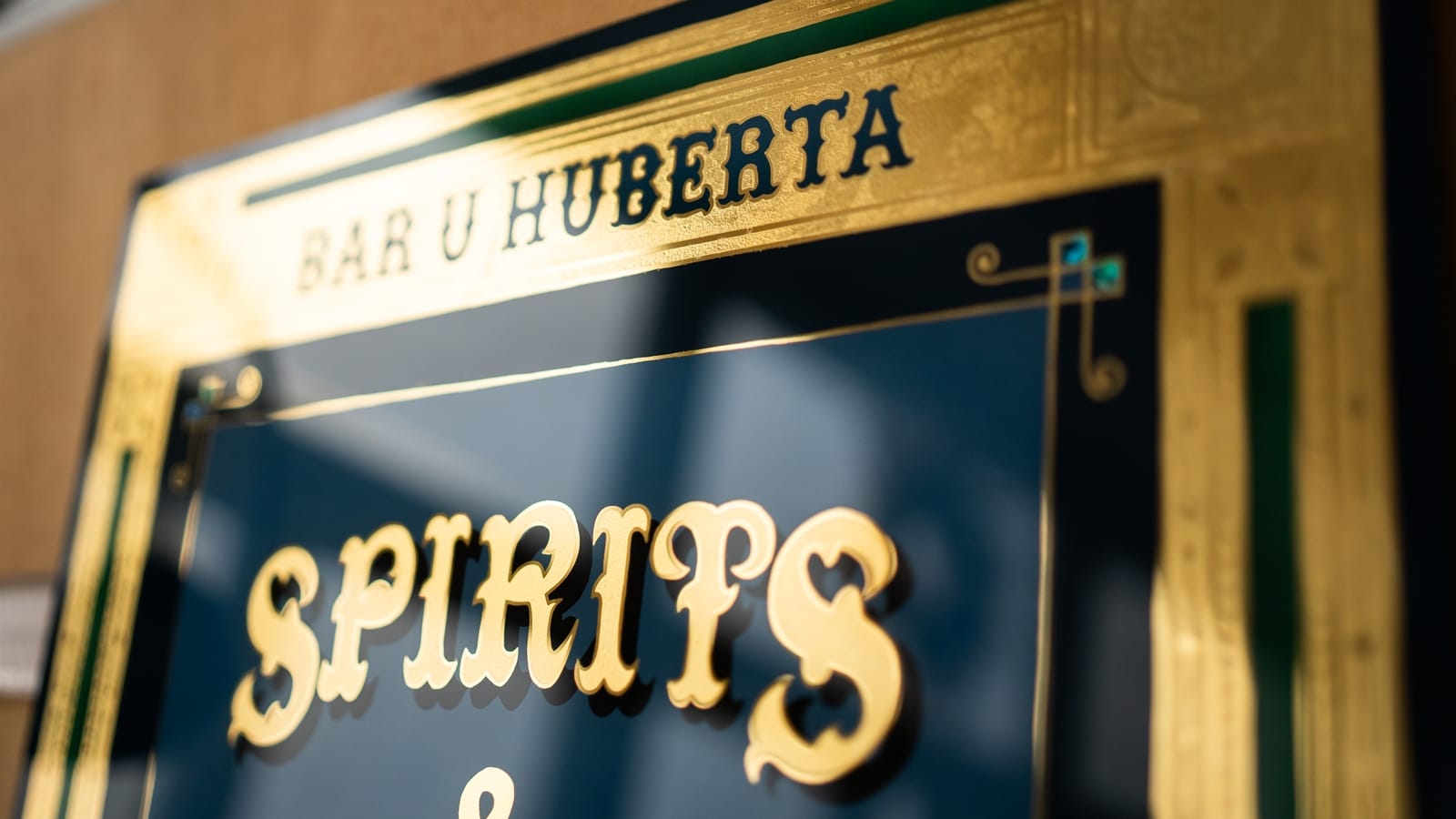
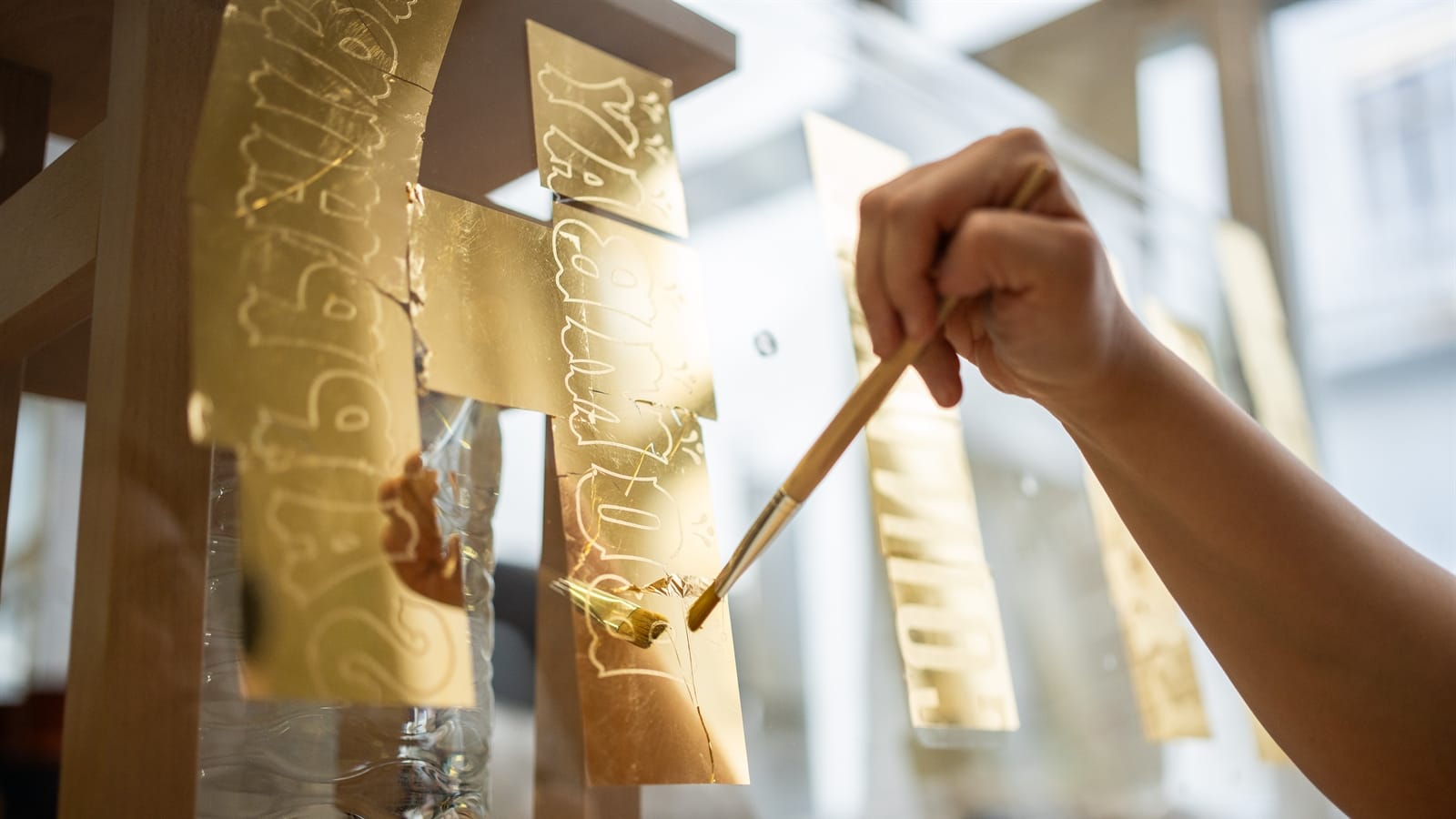
Work for Prague’s U Huberta bar.
What kind of training have you had?
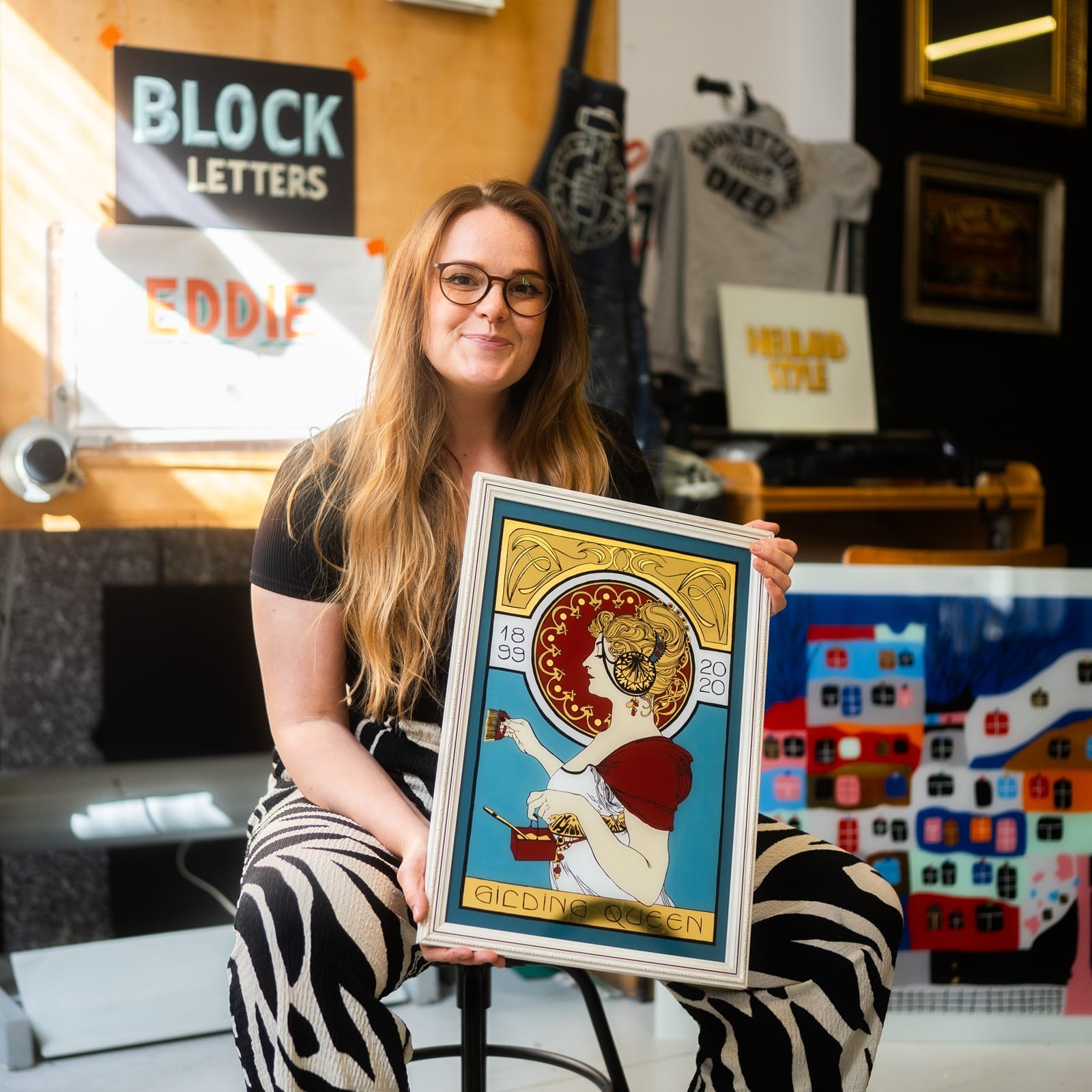
When it comes to sign painting and glass gilding, I’m completely self-taught. I first experimented with modern calligraphy, but soon I fell in love with traditional lettering and gilding. I learned simply via photos and videos on Instagram and Pinterest, and by reaching out to sign painters and gilders around the world. Many of them were incredibly kind and shared their tips, materials, and techniques with me. They became my teachers, even though we never met in person.
Now I try to give back in the same way. When beginners ask me how I do something, I’m always happy to share what I’ve learned.
What barriers or challenges have you faced while trying to get into or working in the sign painting trade?
My biggest challenges were simply not knowing what materials to use or how different techniques really worked. I had no idea which brushes or paints to buy, how certain products reacted together, or how to avoid the mistakes that come with inexperience. So, naturally, I had plenty of ‘failures’ along the way.
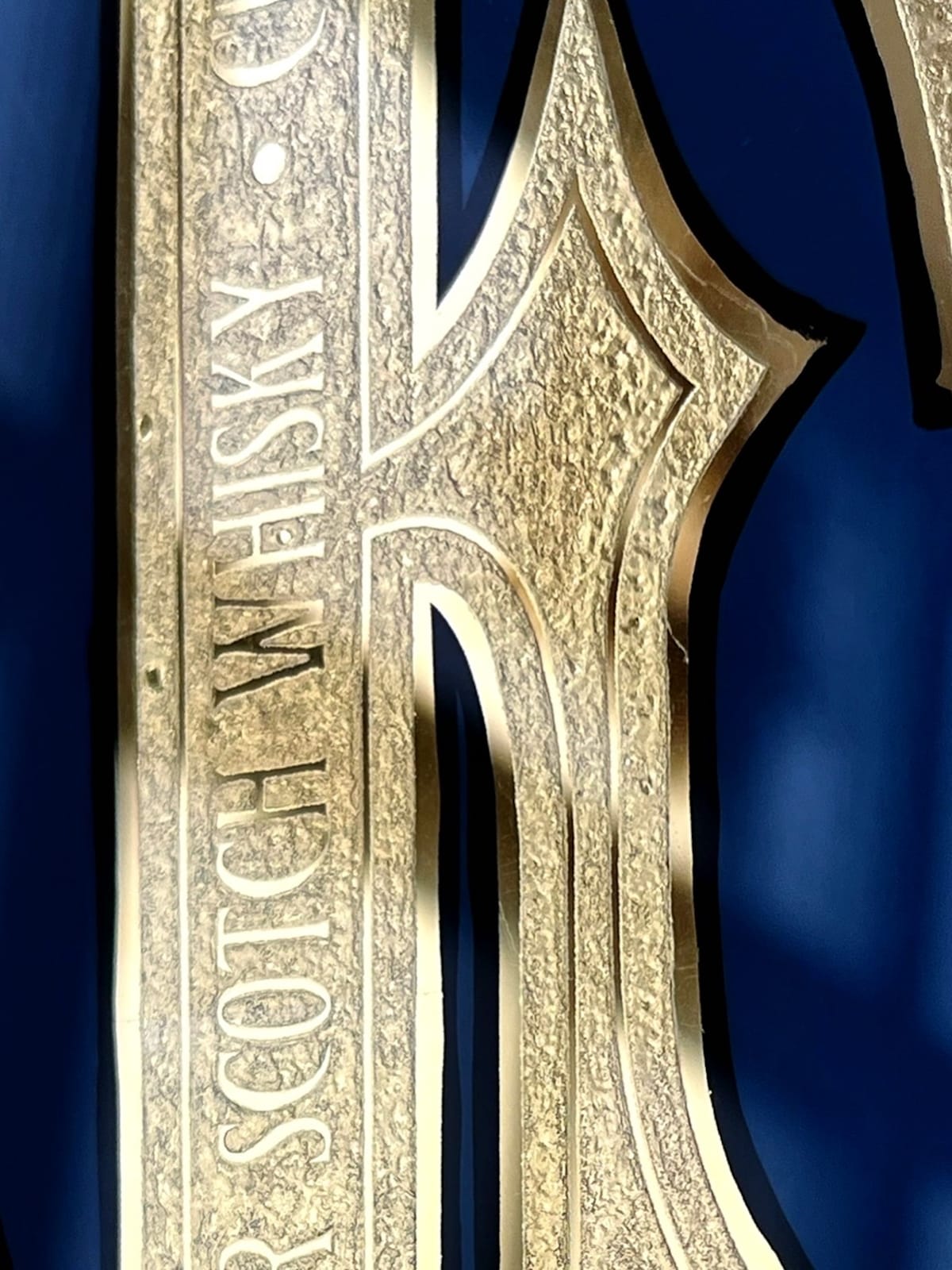
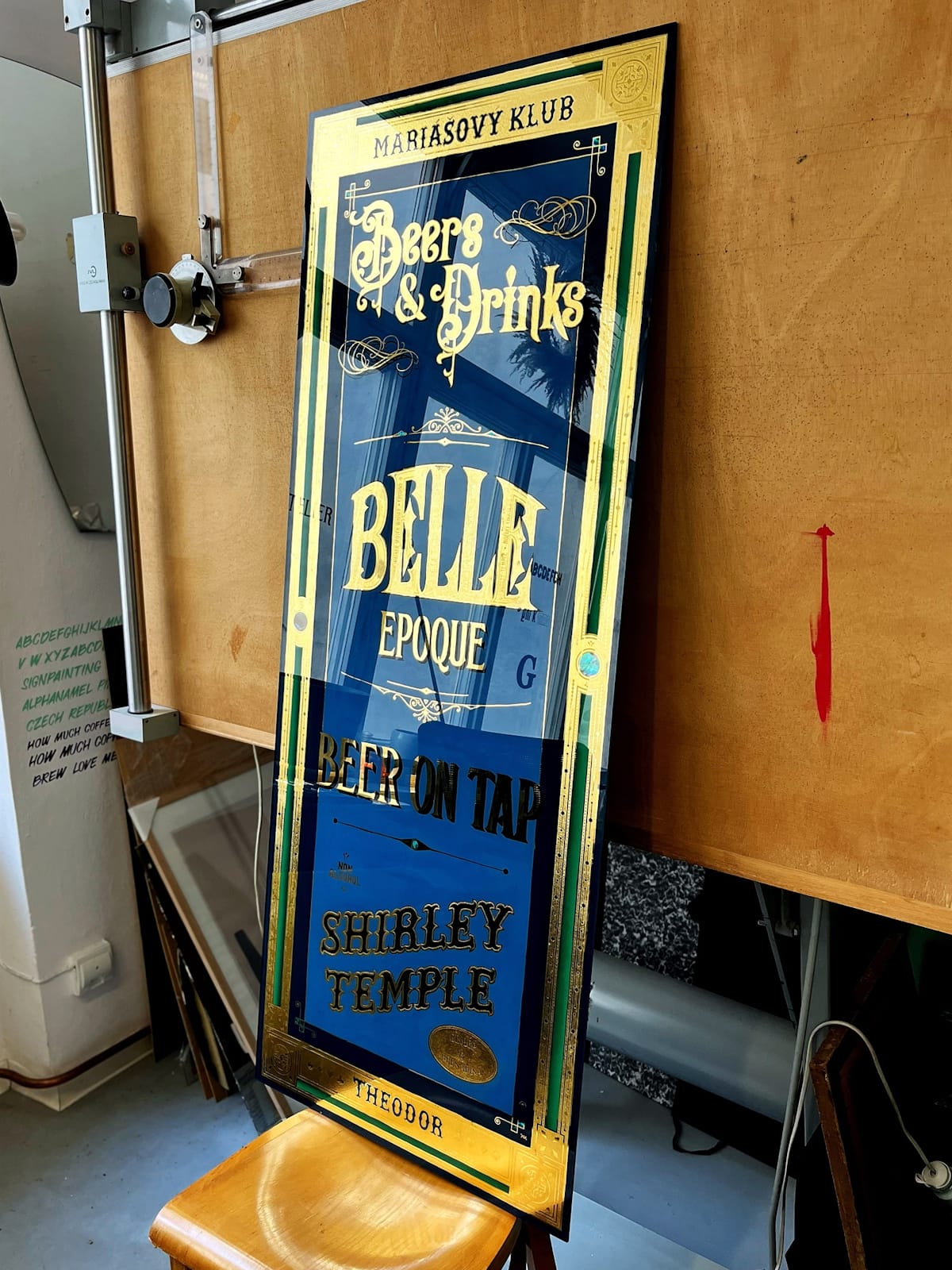
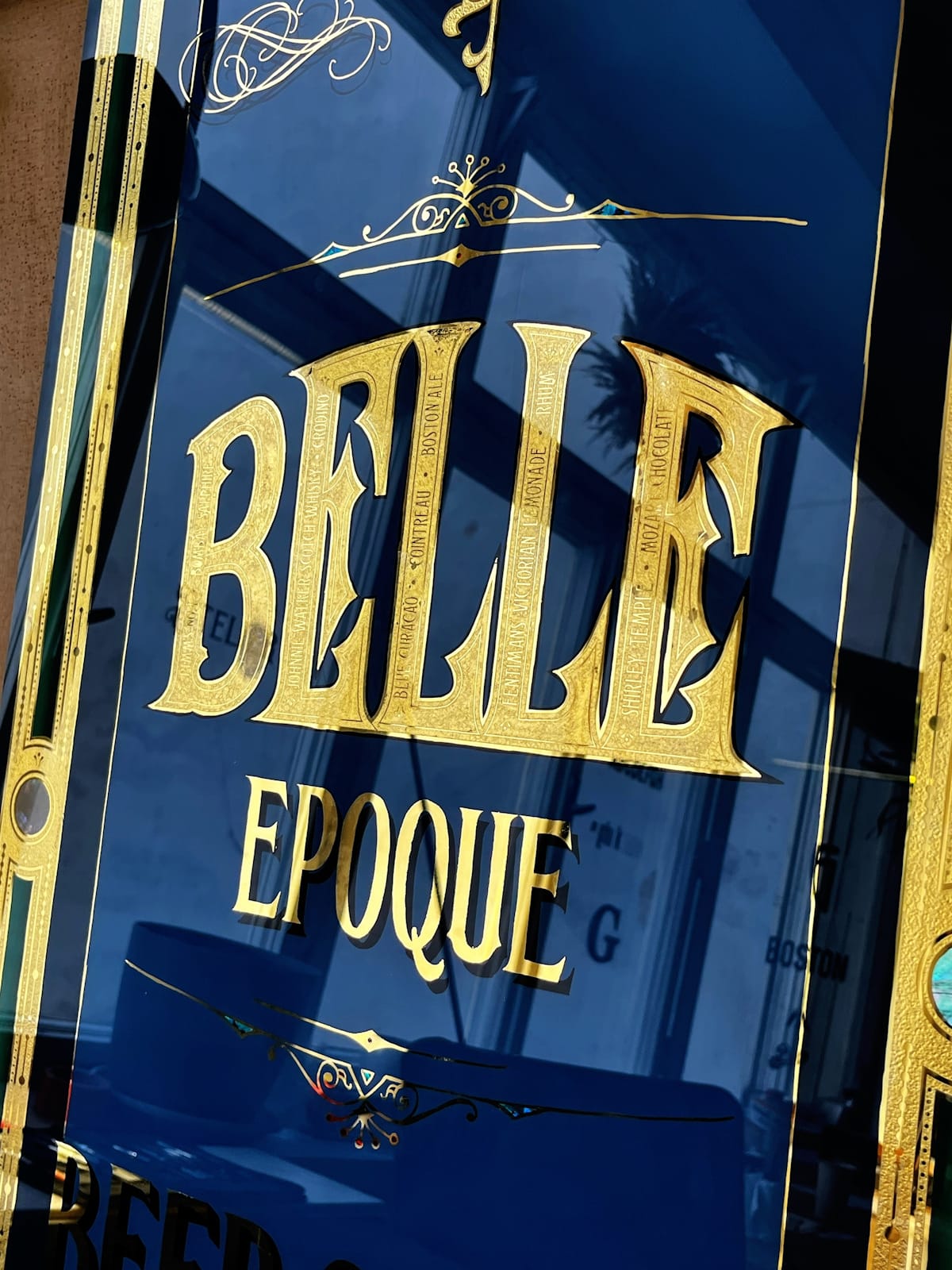
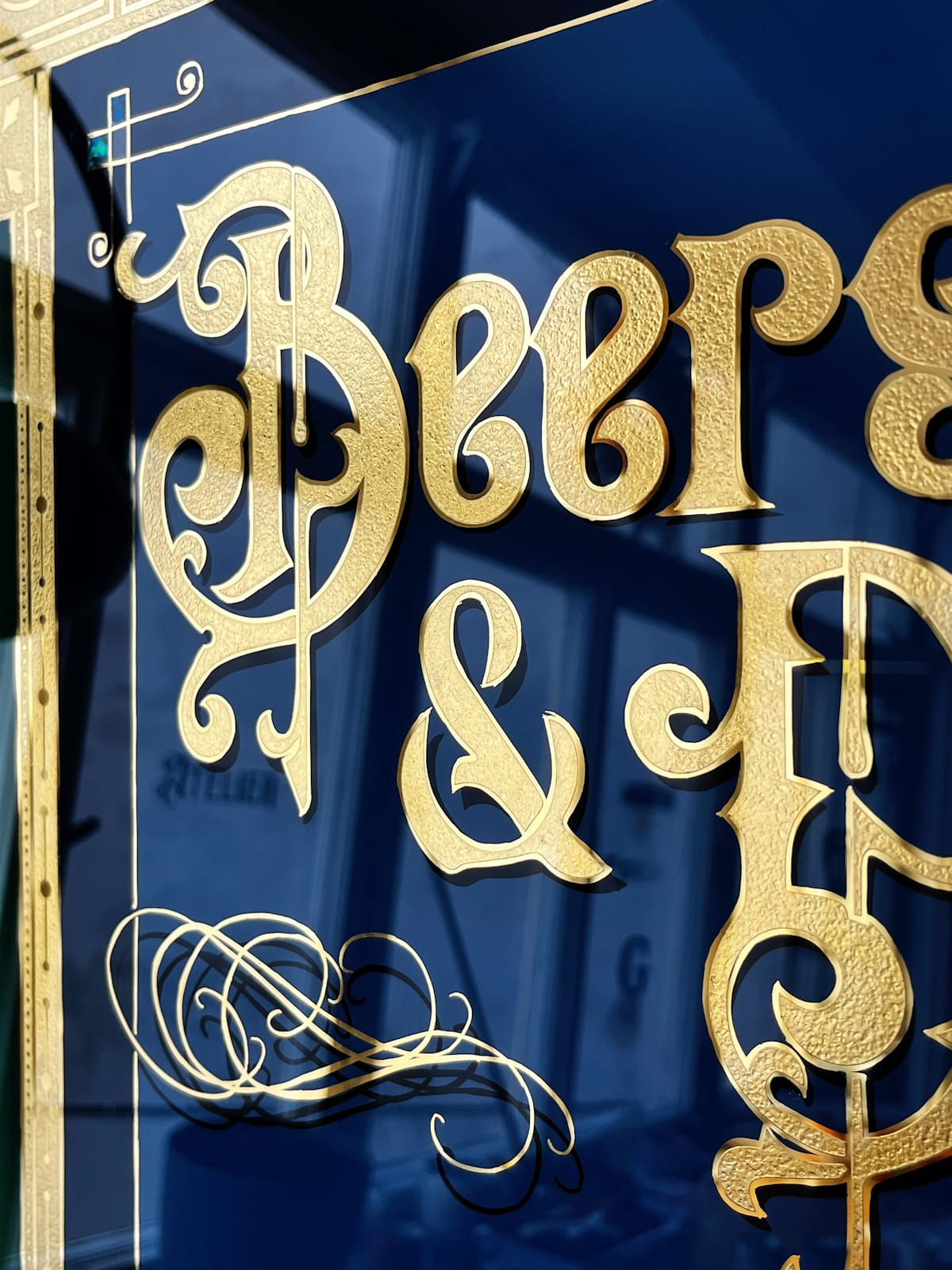
Another U Huberta glass piece.
But that’s part of learning as a self-taught artist. My process is often trial and error, and I’ve learned to embrace it. I always assume there might be a little setback somewhere, but almost everything can be fixed or redone. And each mistake teaches me something valuable and helps me grow.
Also, don’t be afraid to ask more experienced artists questions. The sign painting and gilding community is incredibly generous and people are often happy to share tips, materials or processes. And then it’s just practise: small ‘drawer projects‘, experimenting with techniques, and building confidence.
Jaclyn Le
Location
USA
Training
- BFA in Visual Communication.
- David Smith gilding workshop.
- Conferences, including Typographics.
Tell us about your route into the world of sign painting.
Growing up, I was always drawn to letterforms. I would draw out the alphabet in different styles and collect books on decorative alphabets and initials. I was particularly drawn to Gothic and Edwardian scripts and in high school classmates would ask me to tattoo their arms in script using Bic pens. I then chose to study Visual Communication where assignments were mostly computer-based using design programs and fonts. However, I was stubborn and did as many as I could by hand, even though it took longer.
After graduating, I worked as an Art Director & Graphic Designer at an advertising firm but quickly burnt out cranking out soul-sucking ads. I started a series for fun called Lettering Lyrics, where I illustrated song lyrics and shared them on my Dribble. From that, I started getting requests for letter-based commissions which included murals, signs, and hand-drawn menus.
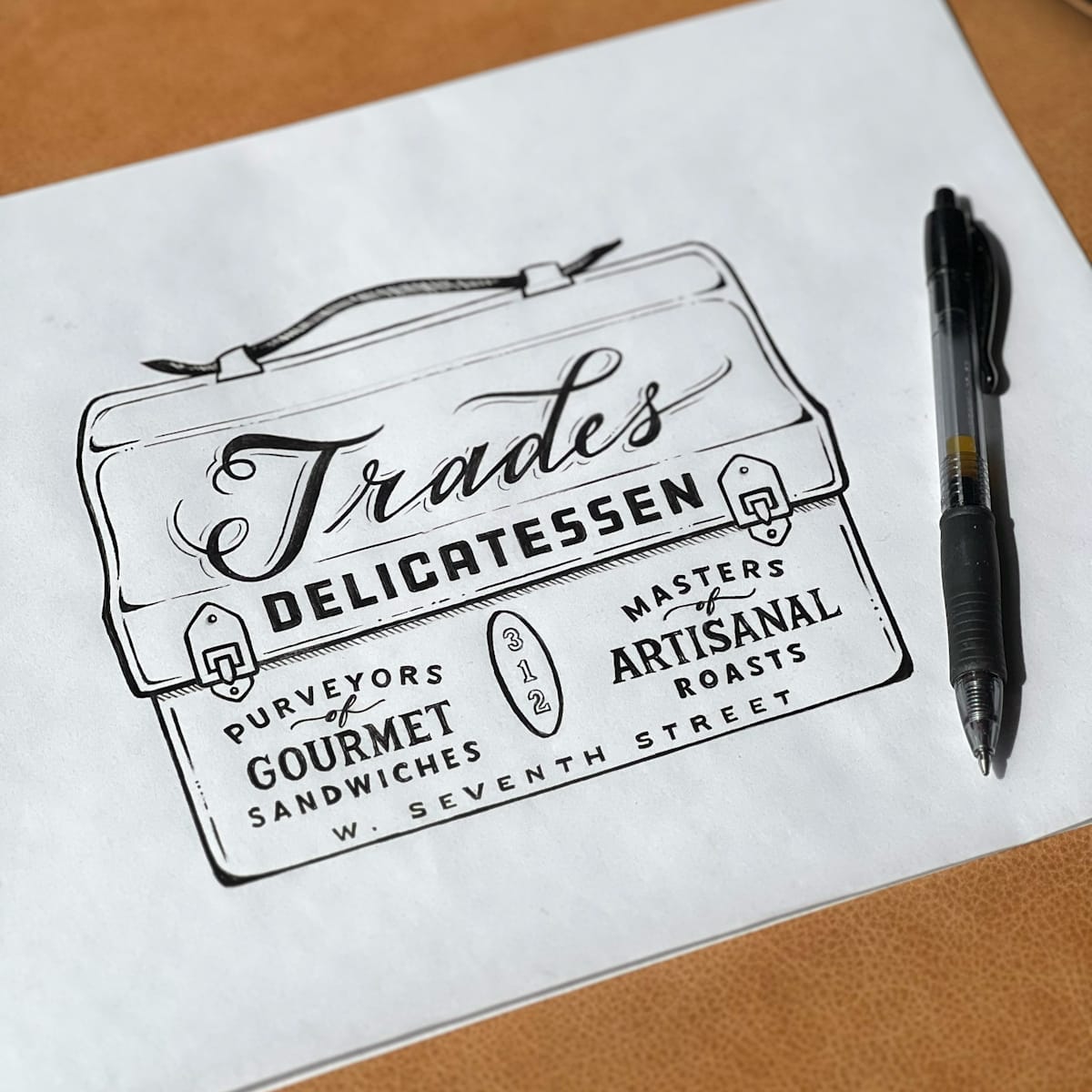
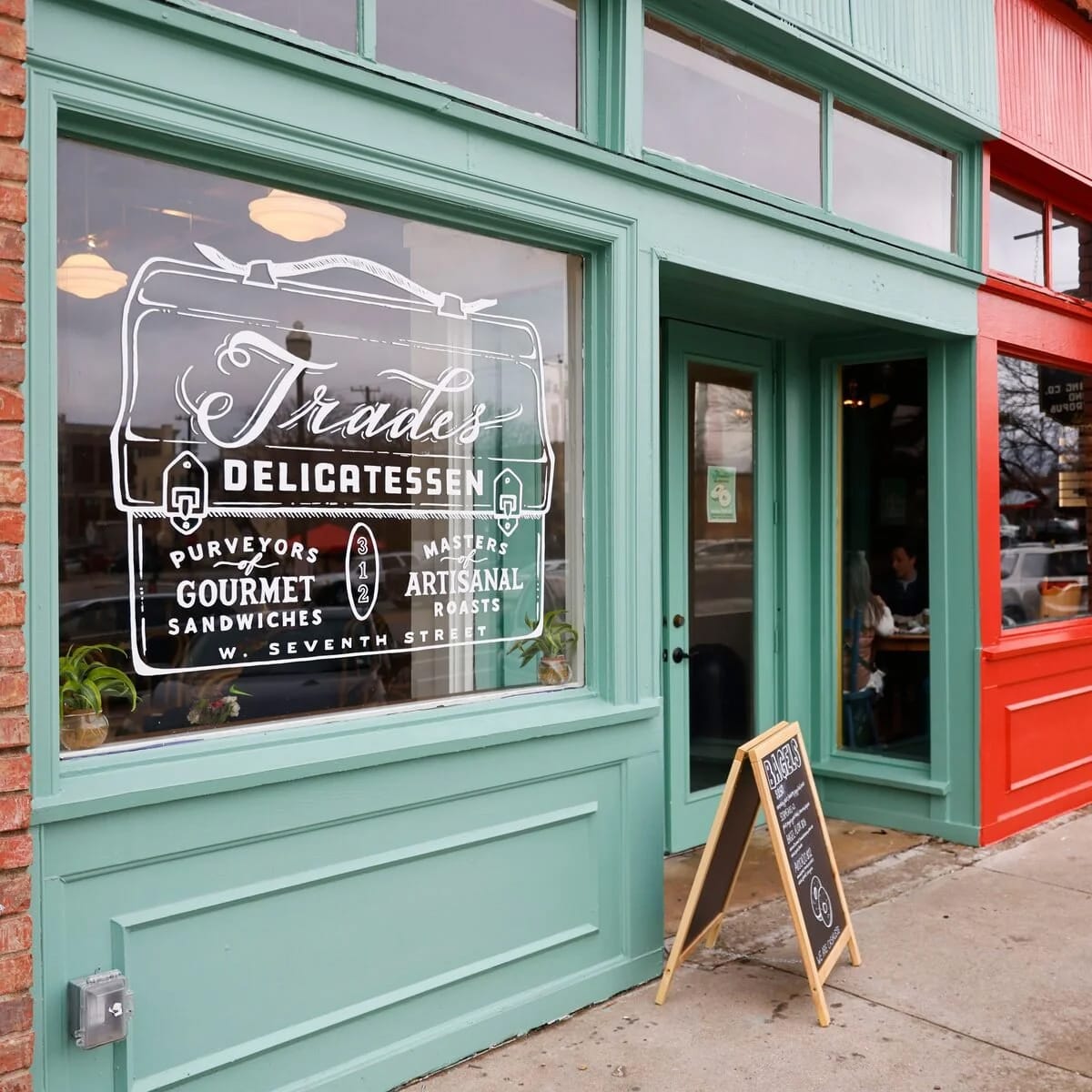
Identity design and finished window for Trades Delicatessen in Dallas, Texas.
I then took on the role of Exhibitions Graphic Designer at the Dallas Museum of Art. There I designed graphic identities, maps, scientific illustrations, and environmental graphics for over 75 exhibitions, while continuing to do small sign, mural, and chalkboard projects on weekends.
Eventually, a huge project came along that needed a handful of big murals. It would require at least six weeks to complete, and it was at that point that I made the tough decision to leave my role at the museum to divide my time equally between graphic design and hand-painted work. That was about three and a half years ago now.
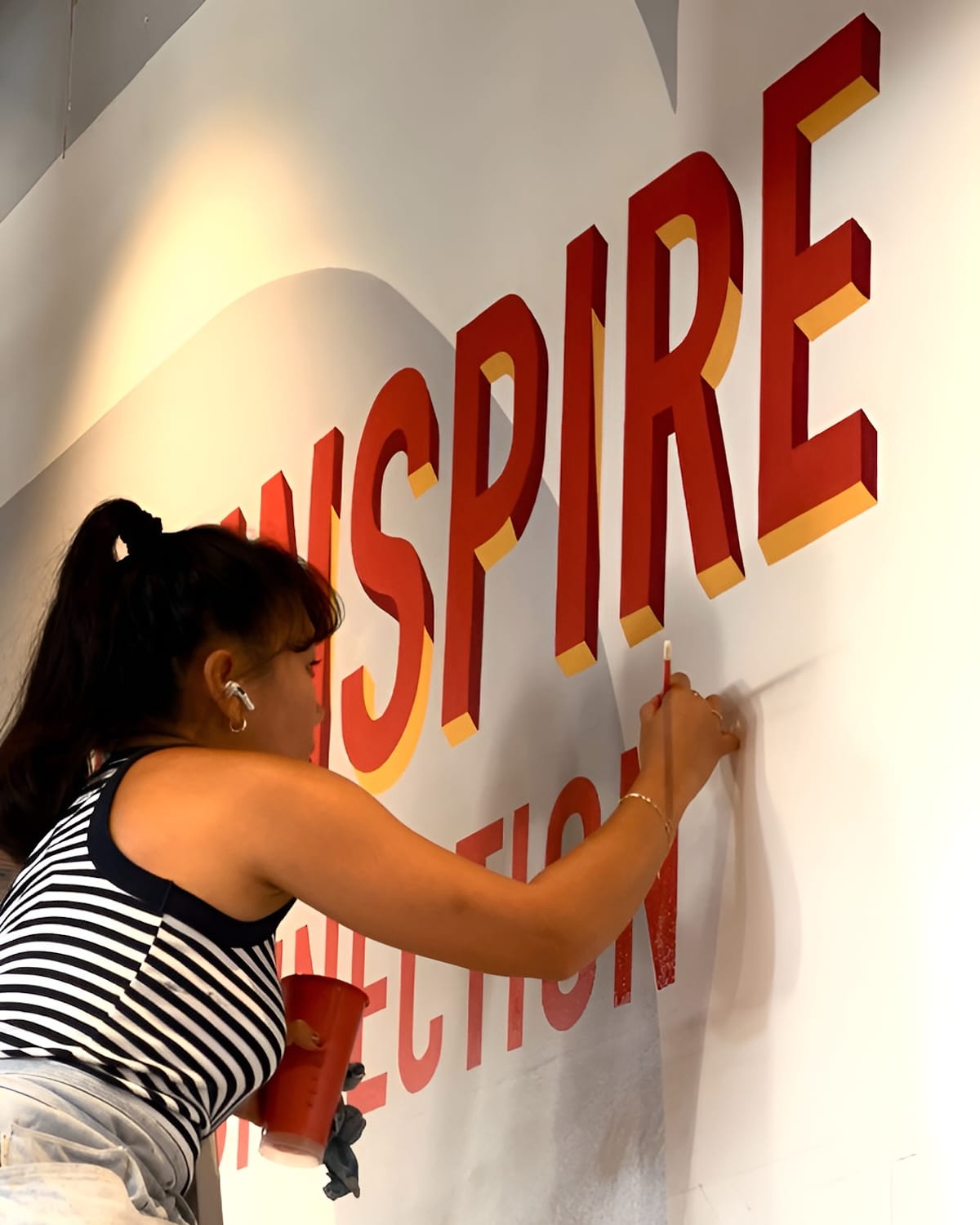
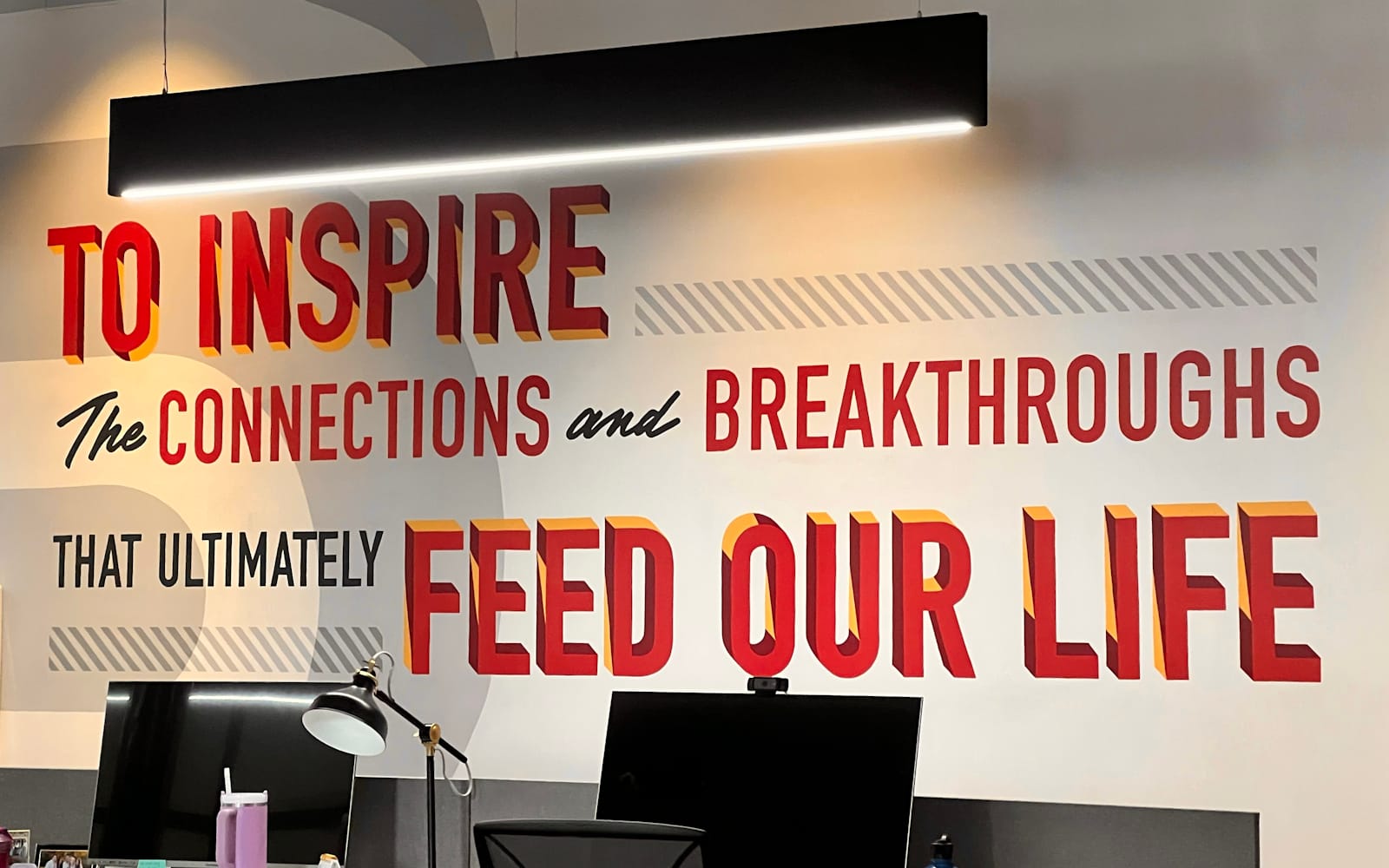
Work-in-progress and the finished mural for Standard Meat’s headquarters in Dallas, Texas.
What kind of training have you had?
I have a BFA in Visual Communication and have attended quite a few design conferences over the years, Typographics in New York being one of my favourites. I had wanted to study with David Smith for quite a while, and in the summer of 2025, I attended the 4-Day Glass Gilding Workshop at his studio in Torquay, England. It was such an incredible experience to learn directly from Dave, to witness his passion for teaching and working, and to be surrounded by a plethora of beautiful work over the course of those four days.
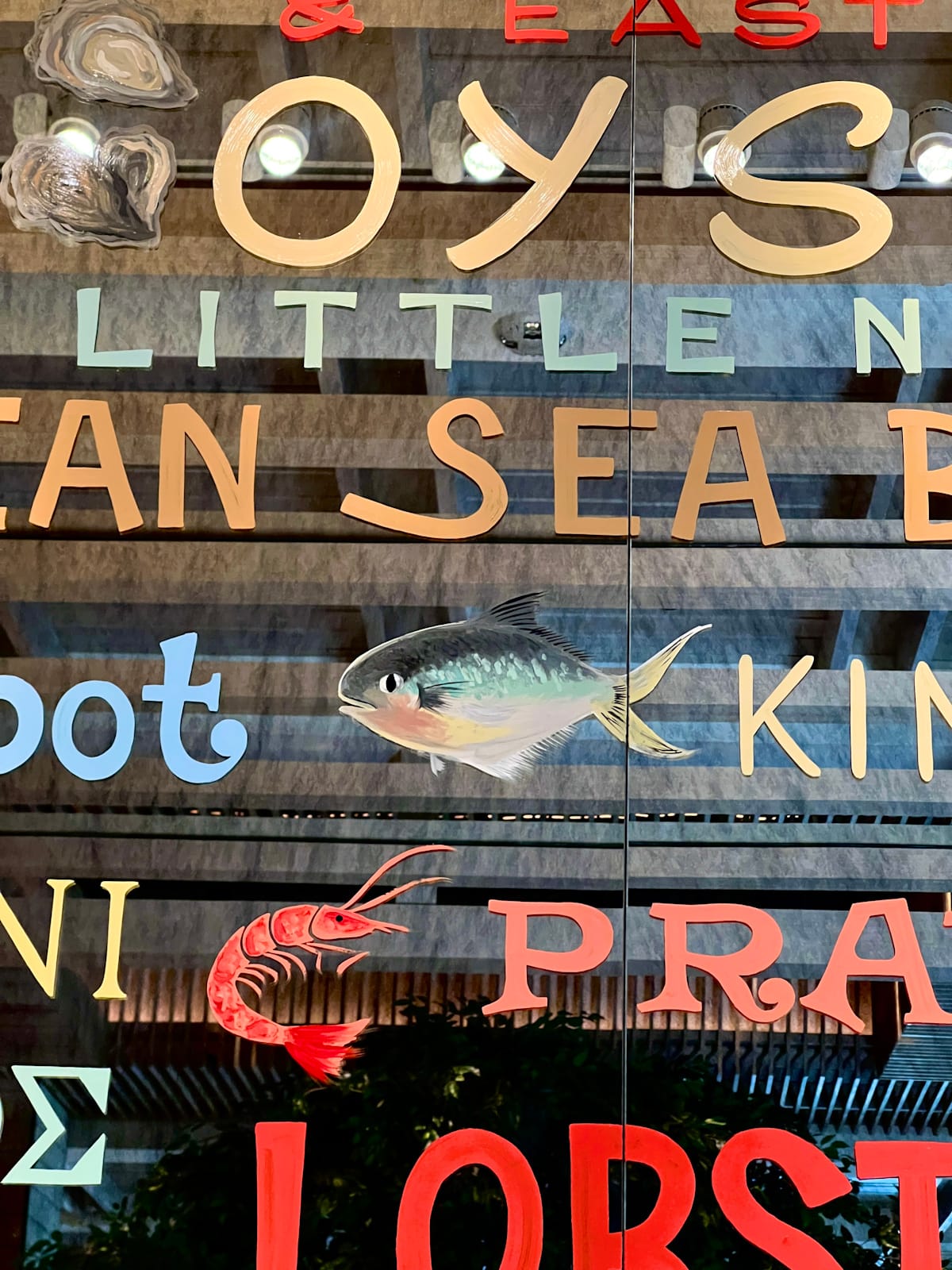
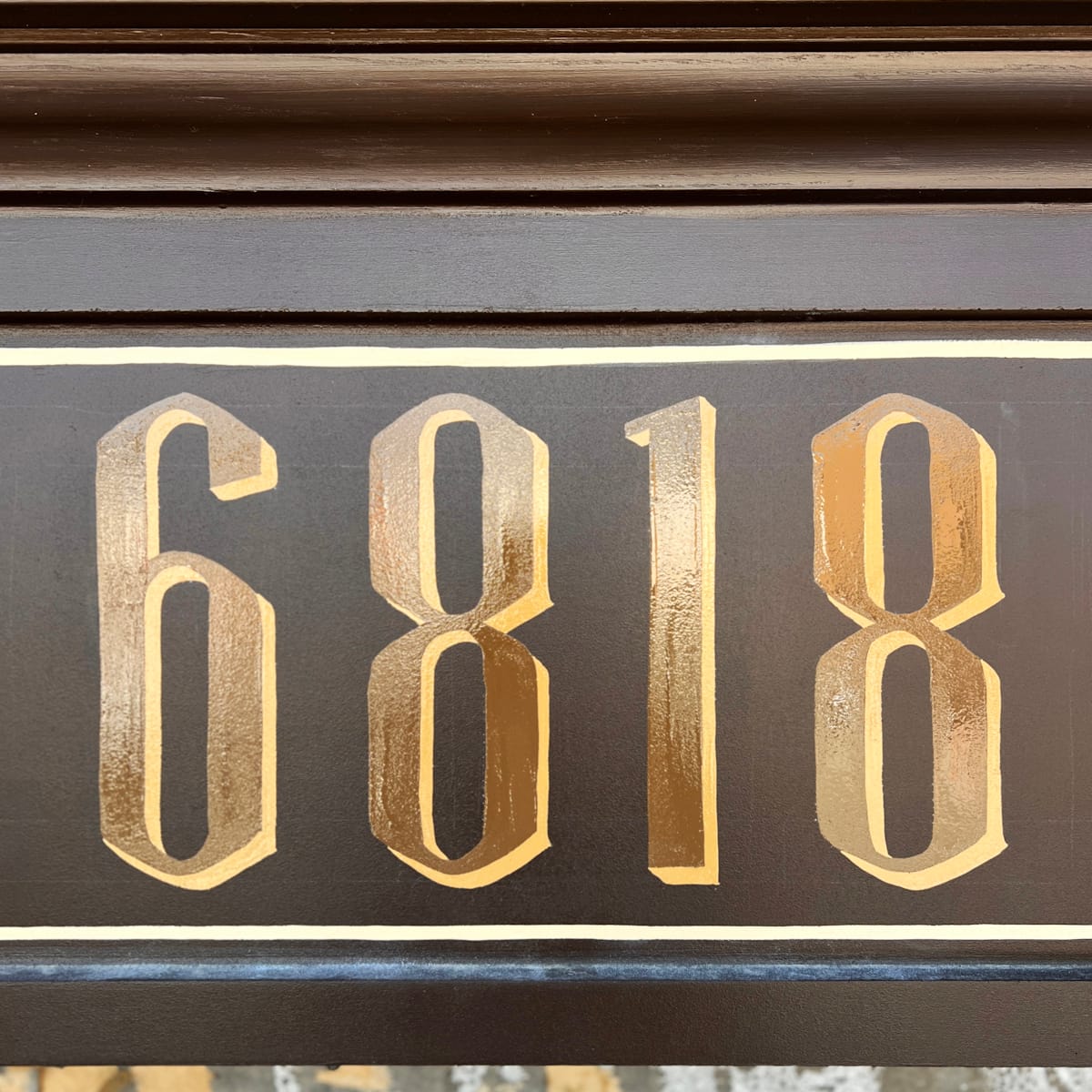
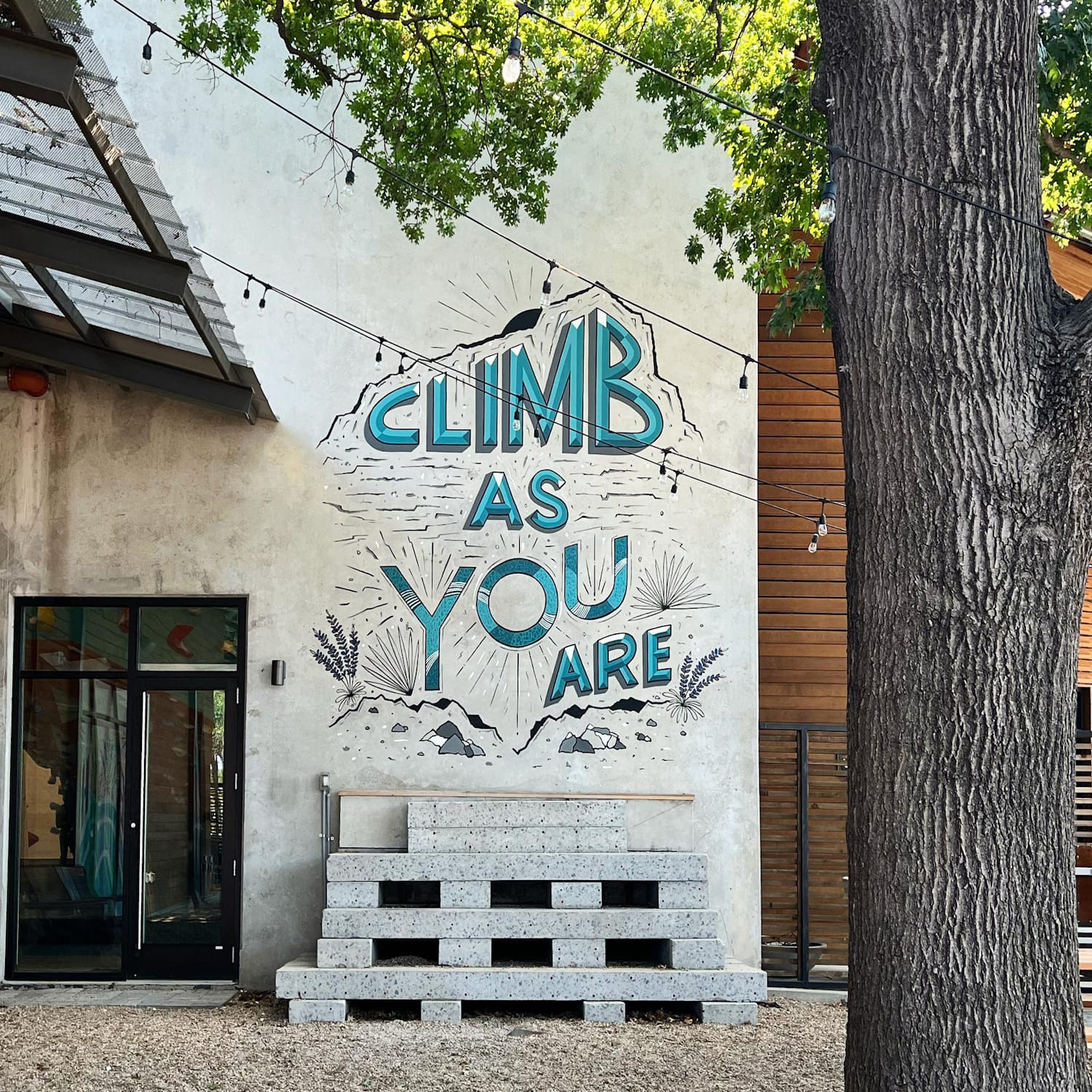
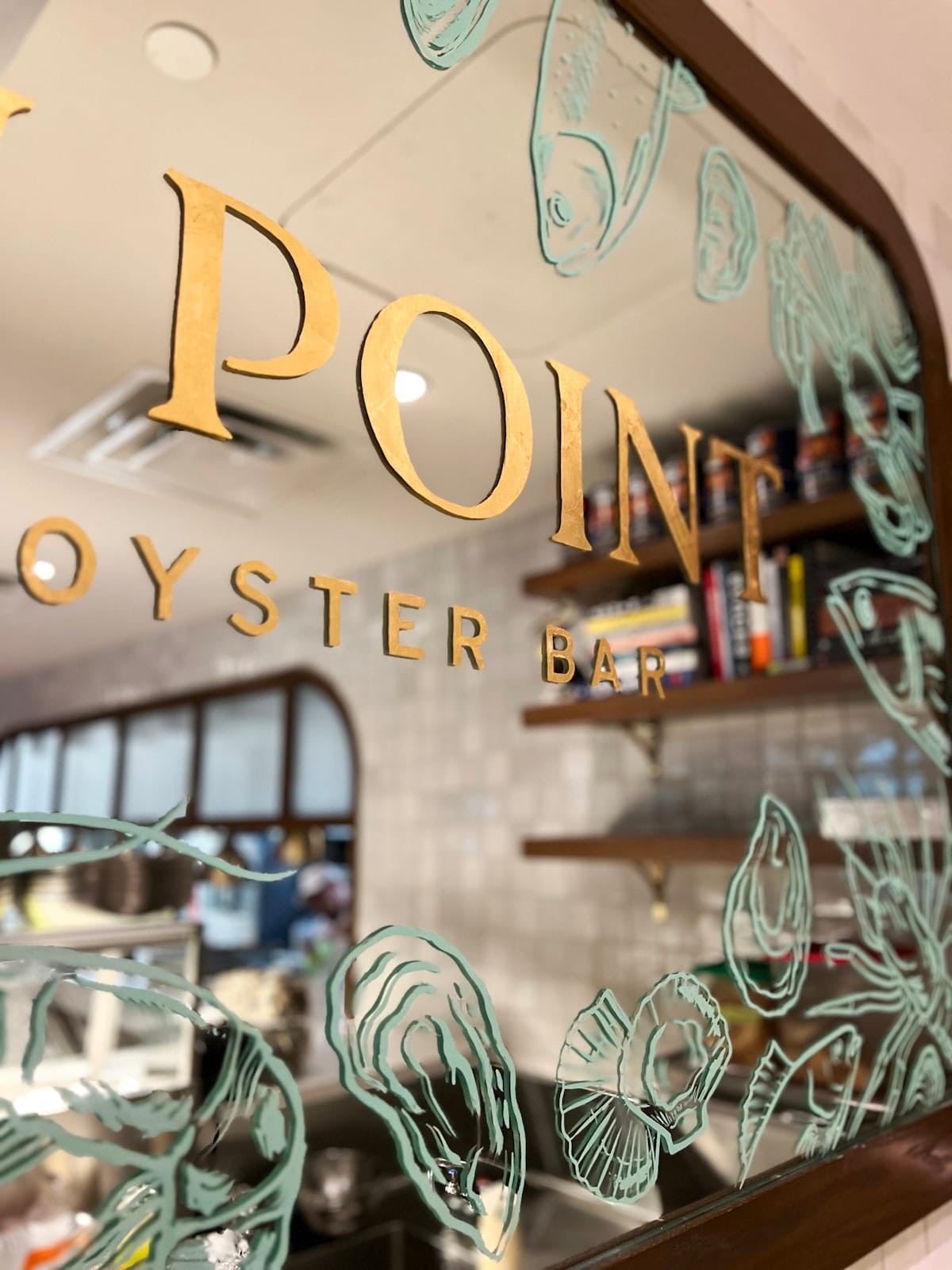
Projects for El Molino, AVRA Estiatorio, Movement Gyms, and Green Point Oysters.
What barriers or challenges have you faced while trying to get into or working in the sign painting trade?
Quoting sign painting projects was (and still is!) difficult, as I struggled with whether I was charging too much or not enough. I love painting and wanted to take on every project, but at the end of the day, I chose this to be my livelihood, so I had to learn how to be more business minded. When I started getting quote approvals and my client base began to grow, I felt I’d developed a reliable formula for charging.
However, some potential clients are shocked by the cost and time for hand-painted work. I have learned to say no to the ones that try to haggle or diminish the work required, and I am thankful to work with clients that respect and value the craft.
Samantha Redles (Human-Made Signs & Murals)
Location
USA
Training
- Multiple Walldogs and Letterheads meets.
- Workshop with Mike Meyer.
- Mentoring from John Long.
- Books, forums, and archive.org.
Tell us about your route into the world of sign painting.
My sign painting journey started in 2013 when I moved to Baltimore to attend the Maryland Institute College of Art’s Curatorial Practice graduate program. For my thesis I was required to select a topic to research for the next two years with the end goal of designing and installing an exhibit with a community partner. I had absolutely no idea what I wanted to dedicate my next two years to, but was then stopped in my tracks by a sign the size of a football field on an old brick wharf that said “Bond Street Wharf”. I had to find out who painted it and that was the moment I dedicated my life to sign painting.
My research carried me to the archive at the American Sign Museum, a Walldog meet, the Letterheads, and to the studios and shops of many talented sign painters. In 2015 my thesis exhibit ‘Not Yet Lost! The Art of Maryland Sign Painters’ opened at the Baltimore Museum of Industry. It was on display for nine months and included one of the painters behind the Bond Street Wharf sign: Brendon Brandon.
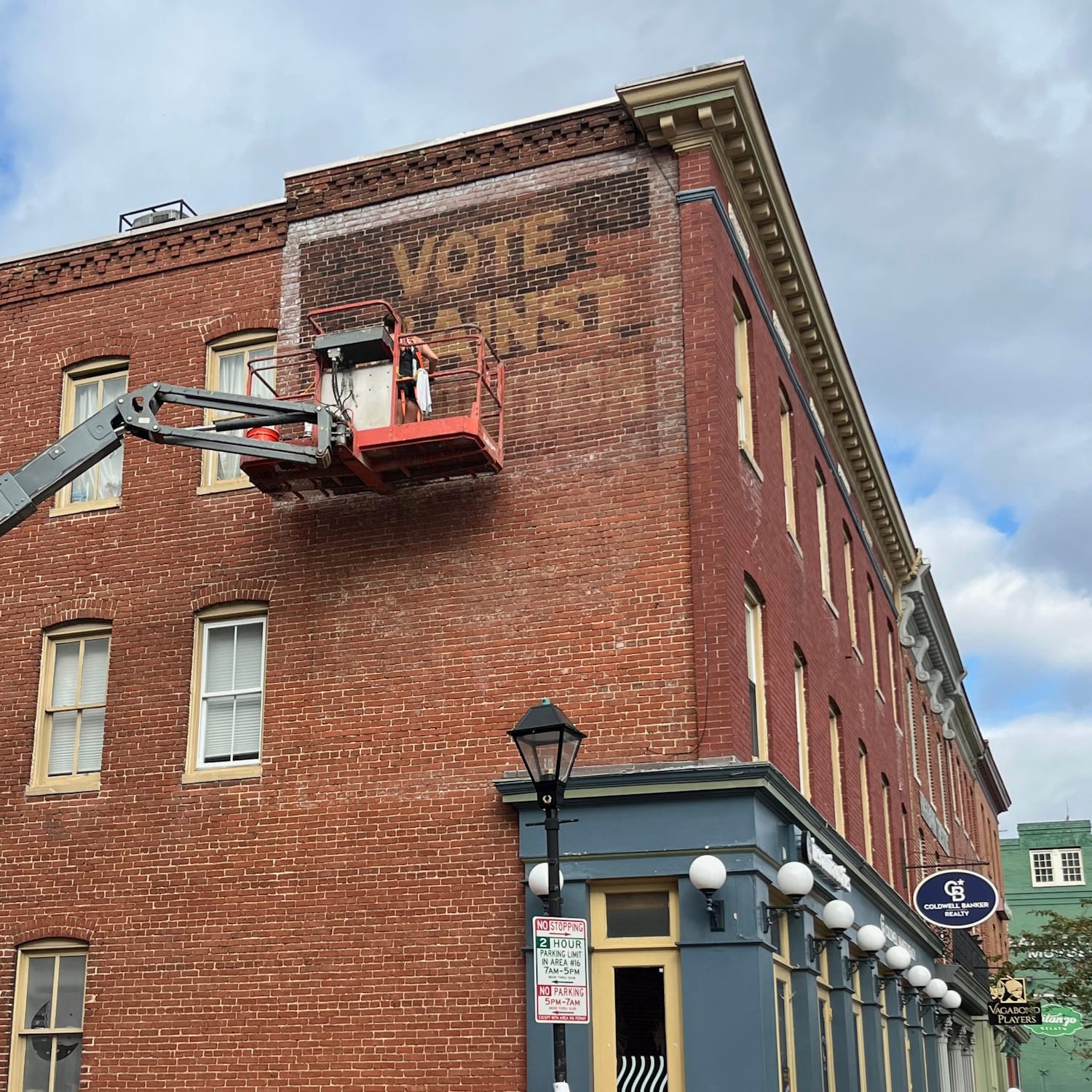
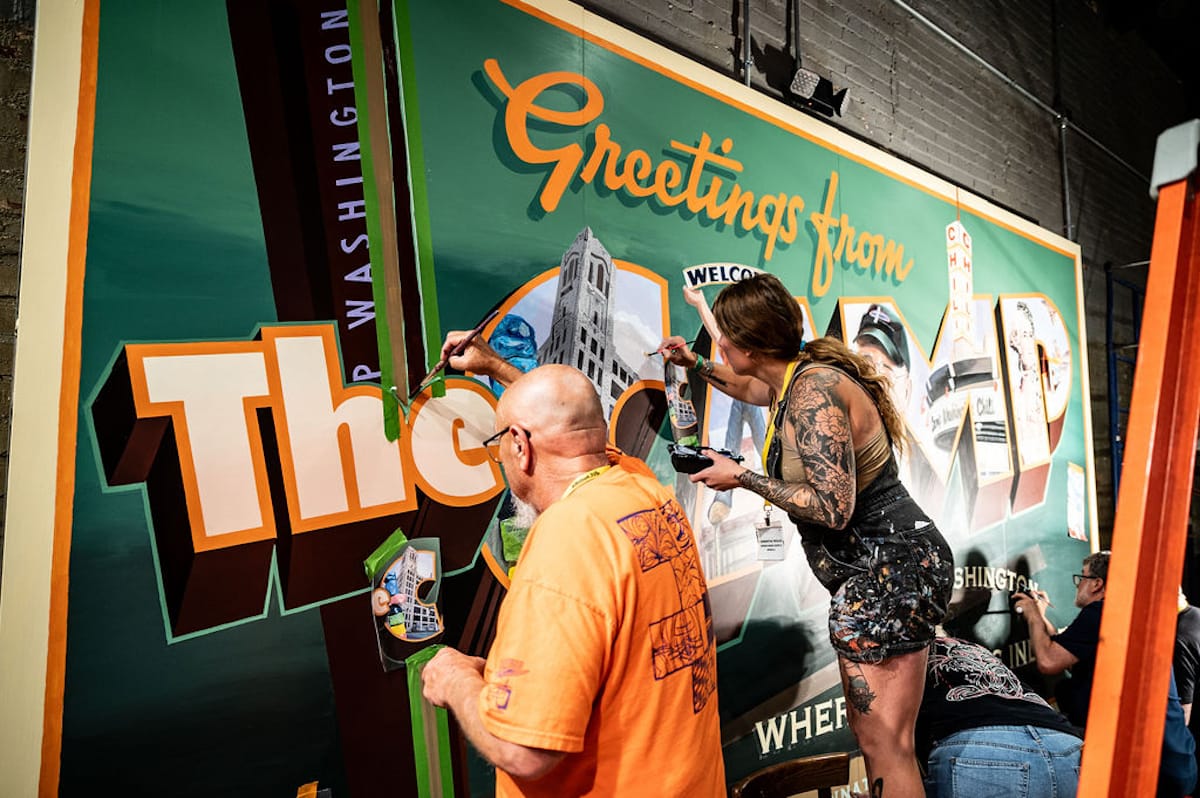
Rehabilitating a (ghost) sign of the times in Baltimore — “Vote Against Prohibition” — and on the brush at Letterheads 50 (photo: Natalie Grilli).
What are your creative interests and passions, and have they had any influence on your work and/or chosen career path?
Creativity is problem solving and perspective. For two years I taught STEM (Science, Technology, Engineering, and Mathematics) to children from kindergarten to 8th grade. Our focus was using the Engineering Design Process to make a variety of things, like robots that could draw, automata, things that could light up and turn on and off, etc., and how to use lots of tools. One of my proudest moments was having a class of twenty five-year-olds using hand saws, hot glue guns, and hammers during a building exercise.
That experience taught me that creativity is a mindset that involves constantly looking for ways to improve upon an idea and become better. Even in the midst of failure. It doesn’t matter what the passion or interest is because it is the creative part that adds value to it. Having this mindset has served me well on so many jobs where something didn’t go as planned or my first idea had some holes in it.
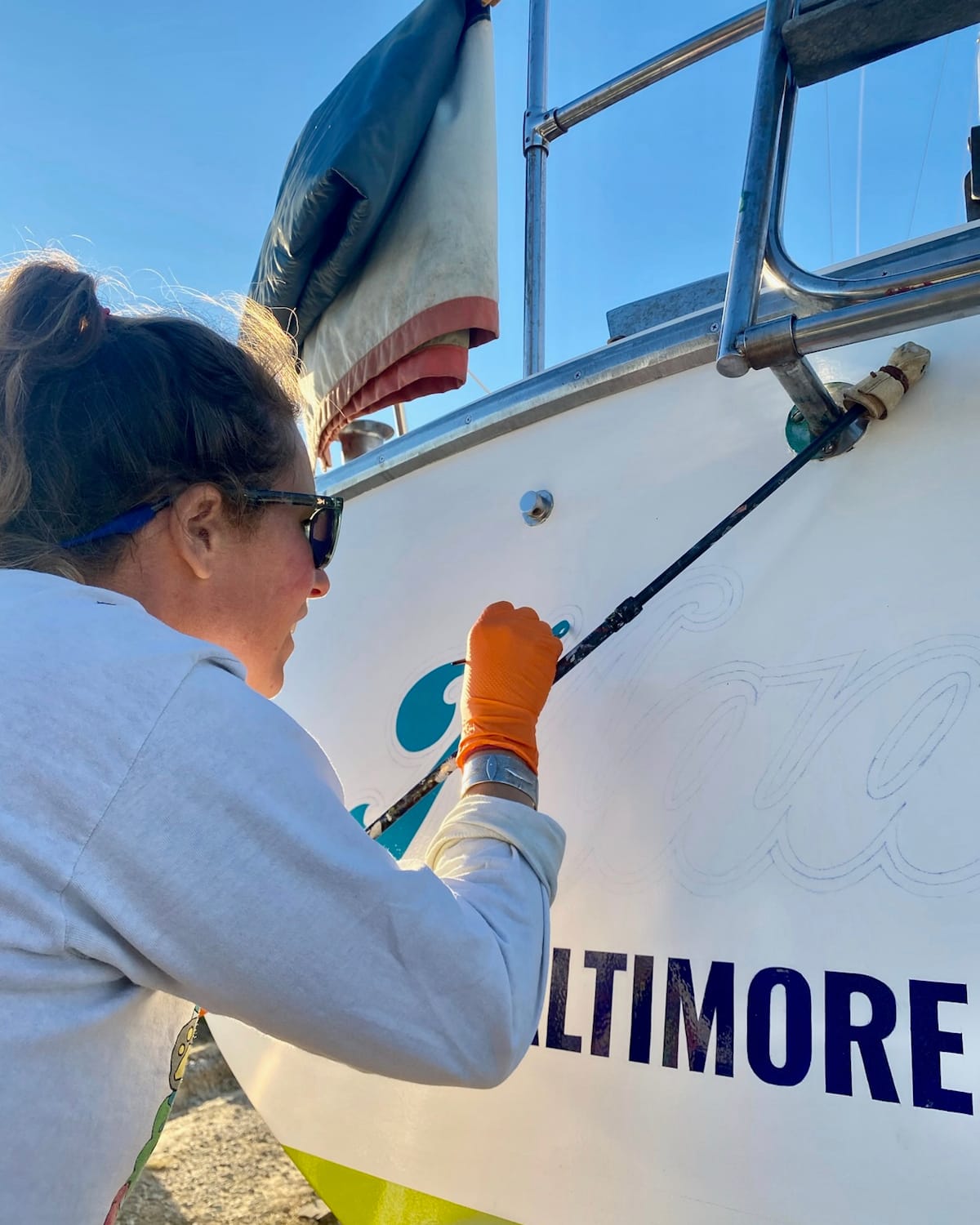
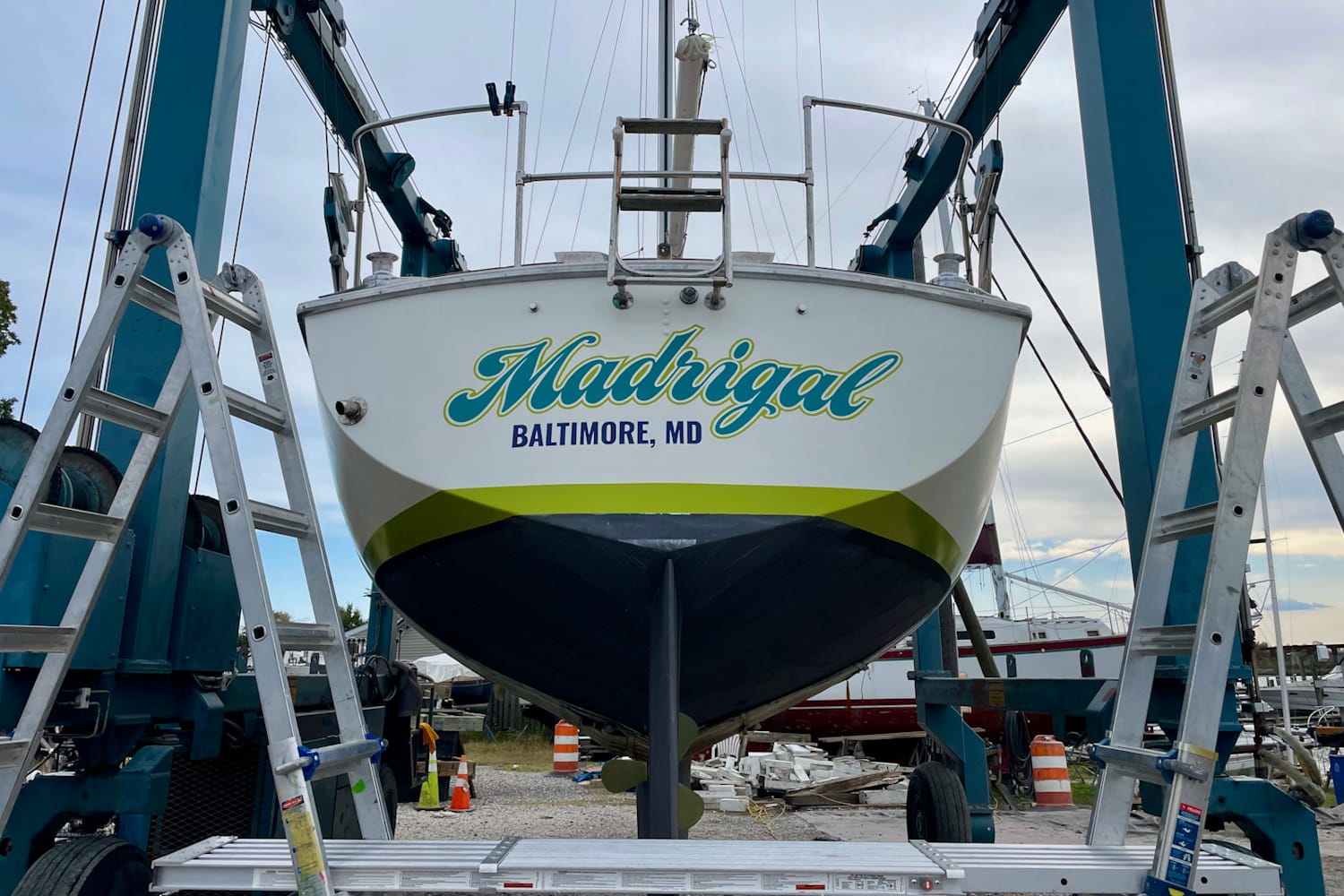
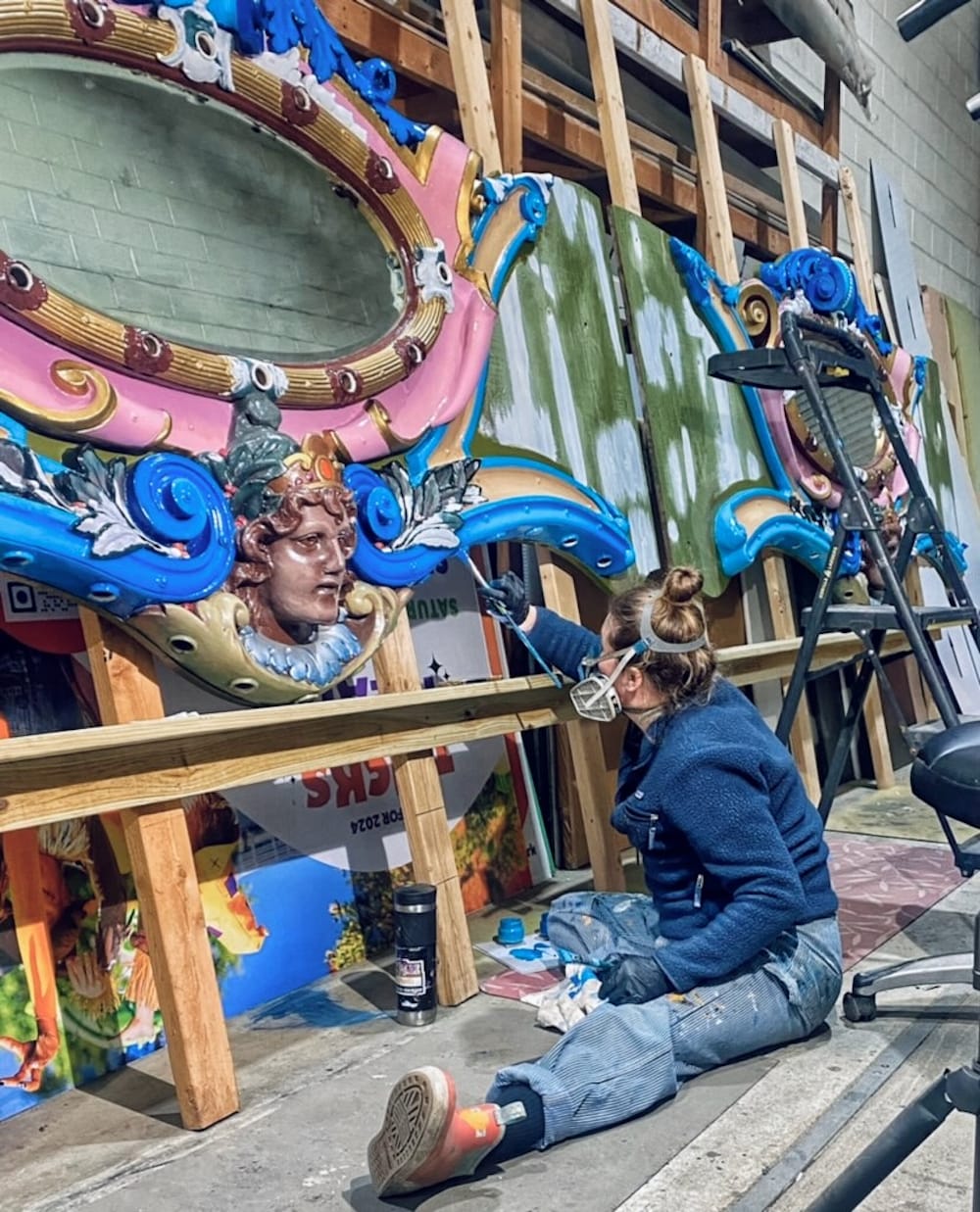
“I‘m a sailor and I love it when I get to paint a boat": work-in-progress and the finished work on a 1976 Gulfstar 37.
What barriers or challenges have you faced while trying to get into or working in the sign painting trade?
My latest challenge is trying to develop consistent business. There are always challenges, whether it is developing my design skills, overcoming my fear of heights, establishing a studio practice, imposter syndrome, and so on. Despite these challenges, there are also successes and the important thing is to ask for help, keep moving forward, and persevering.
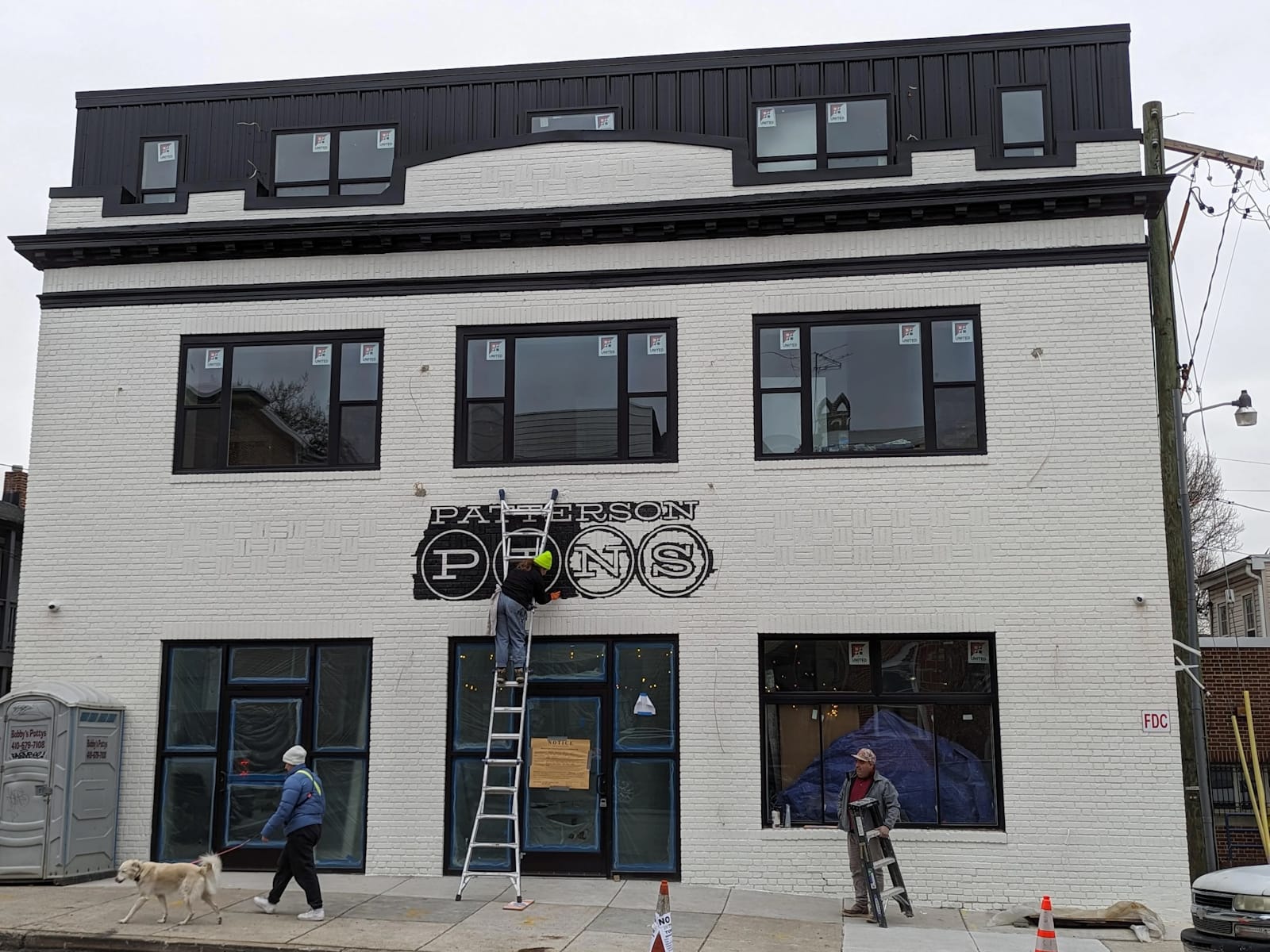
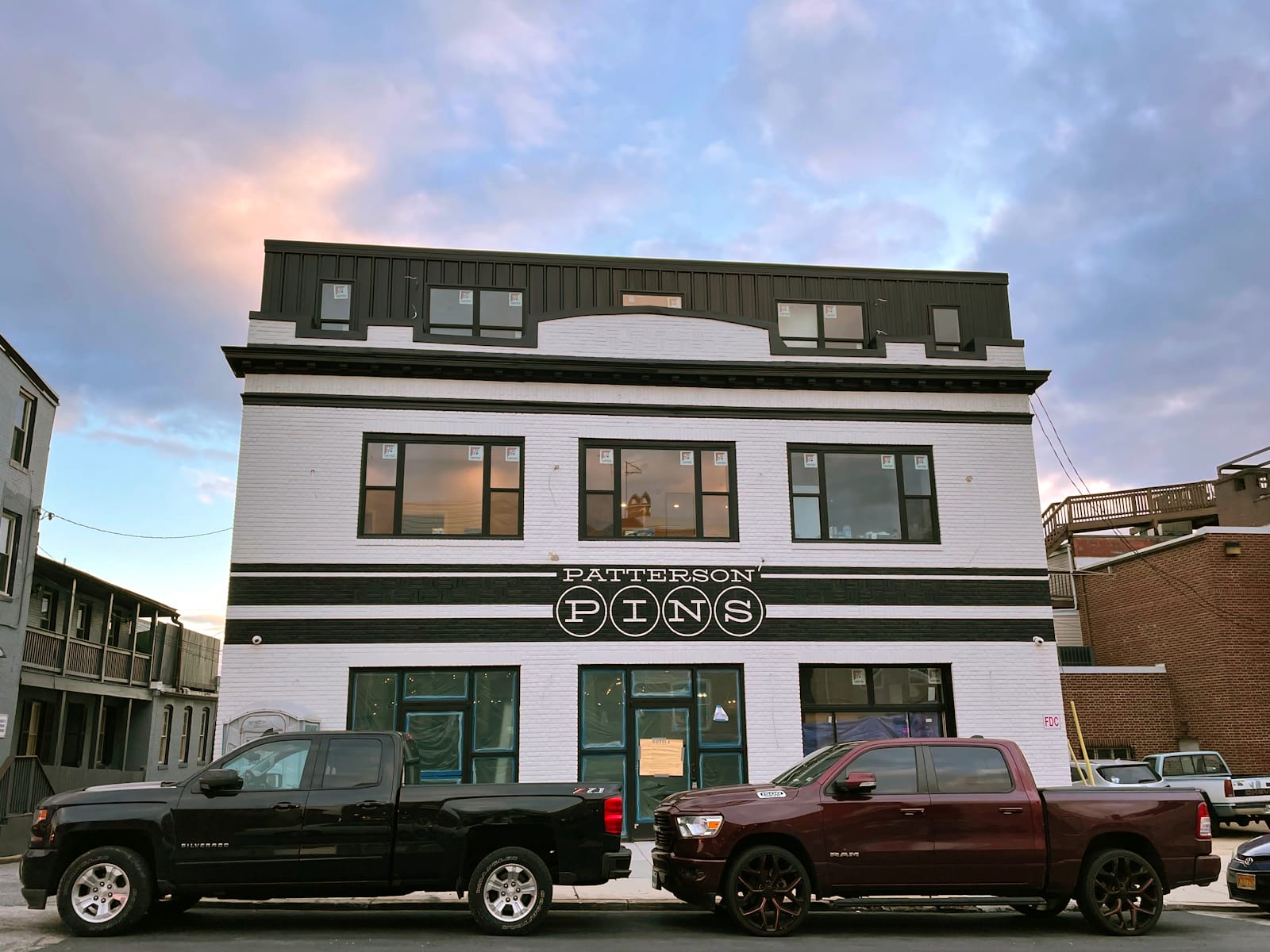
“In Baltimore these black and white banner signs were very common. They are basic yet impactful and easy to read.”
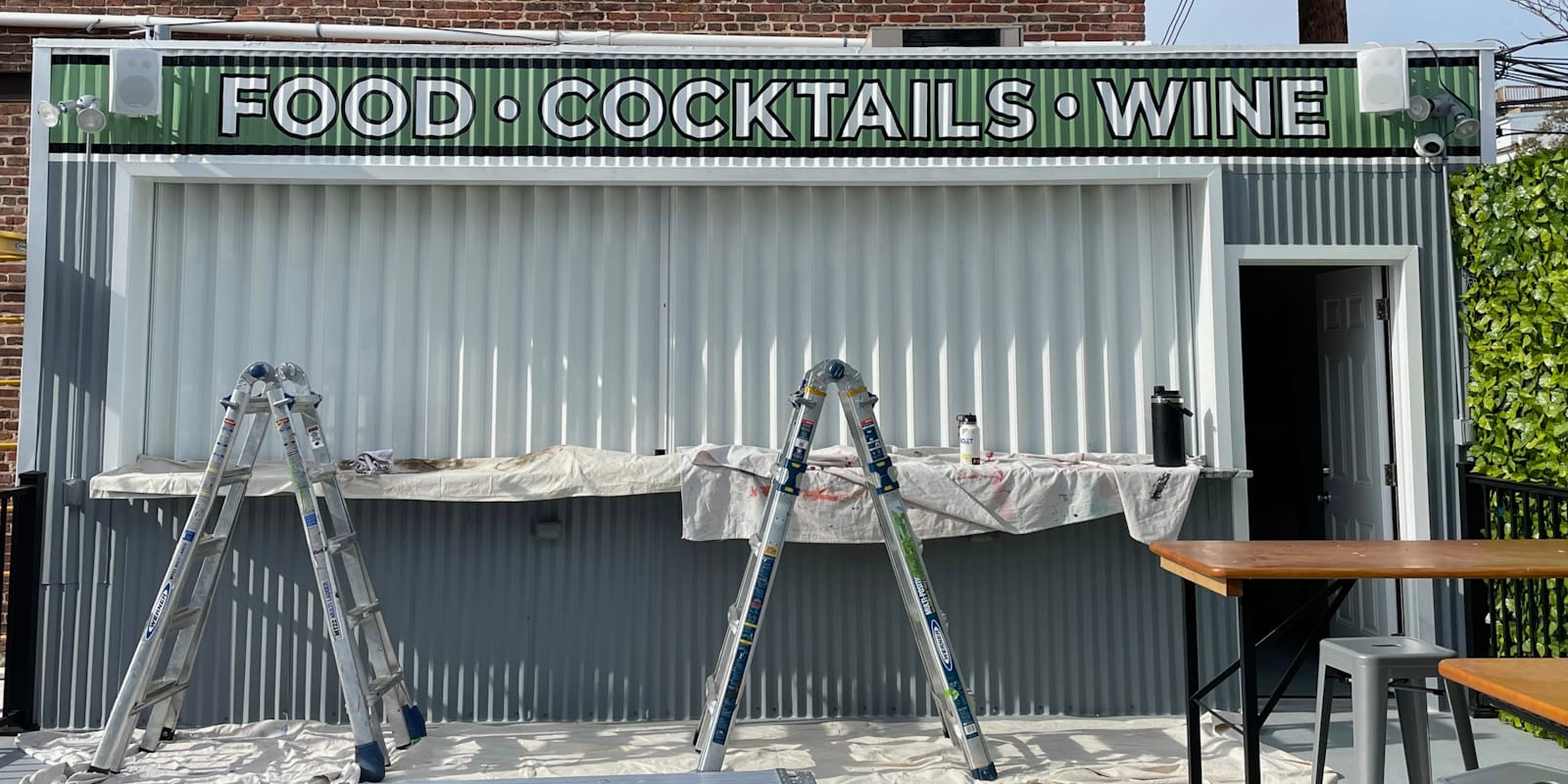
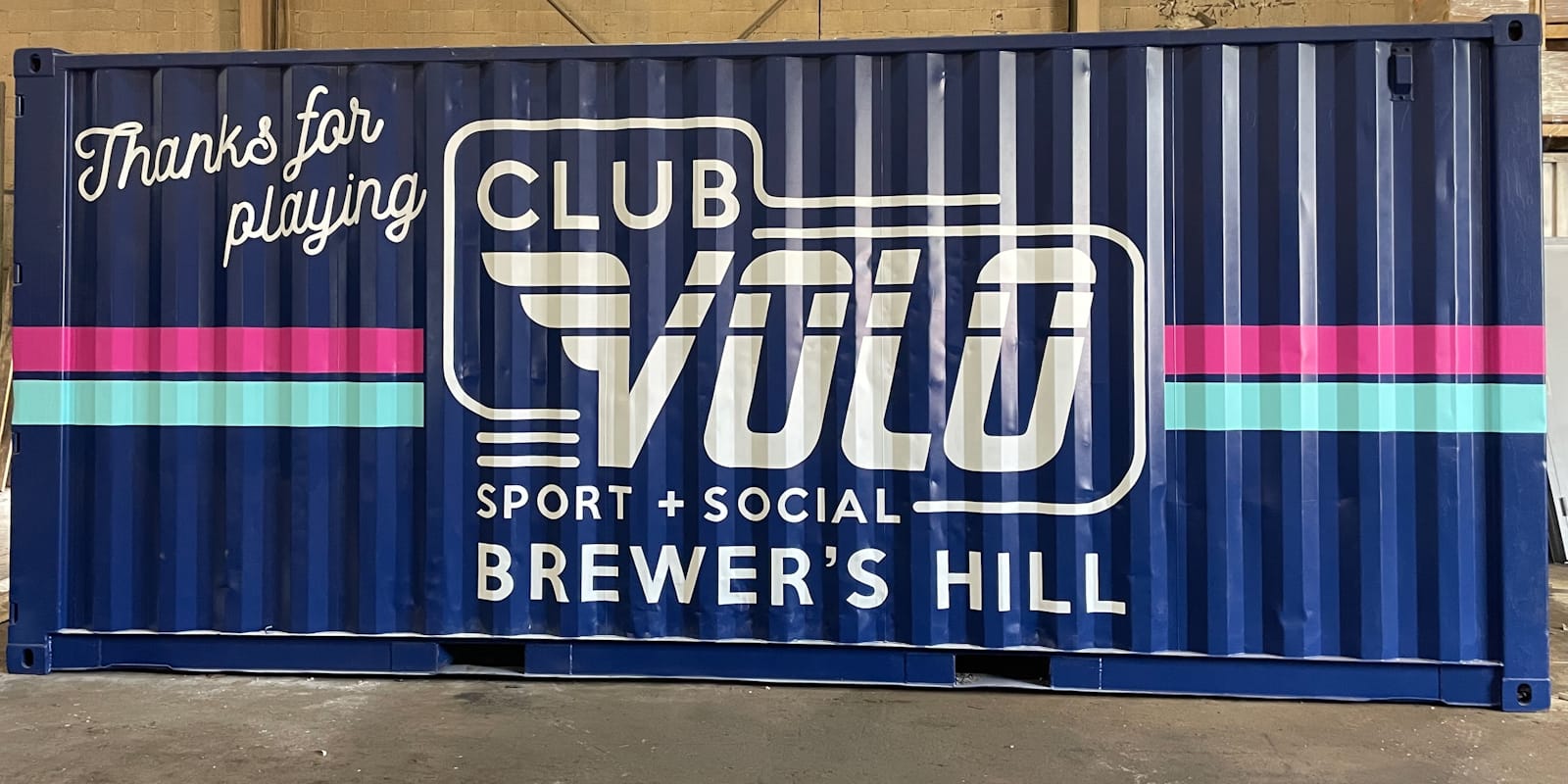
“I love and hate working on corrugated surfaces. I love the challenge of correcting the letters to work with the surface, but painting them is so tedious.”
What advice would you give to anyone just starting out?
Take what you like and leave the rest. There is so much information out there about how to paint a sign, the process, the materials, and the tools that it can be overwhelming. There are also plenty of people who feel that their methods are tried, true and absolute. It can be very easy to think that their way is the only way to do something. The beauty is, a lot of what we do has multiple approaches to it and it is up to you to decide what information, techniques, materials and tools work for you and your practice.
Nina Burras (Missing Chopper)
Location
UK
Training
- Working as a sign maker.
- Workshops with Mike Meyer and Joby Carter.
Tell us about your route into the world of sign painting.
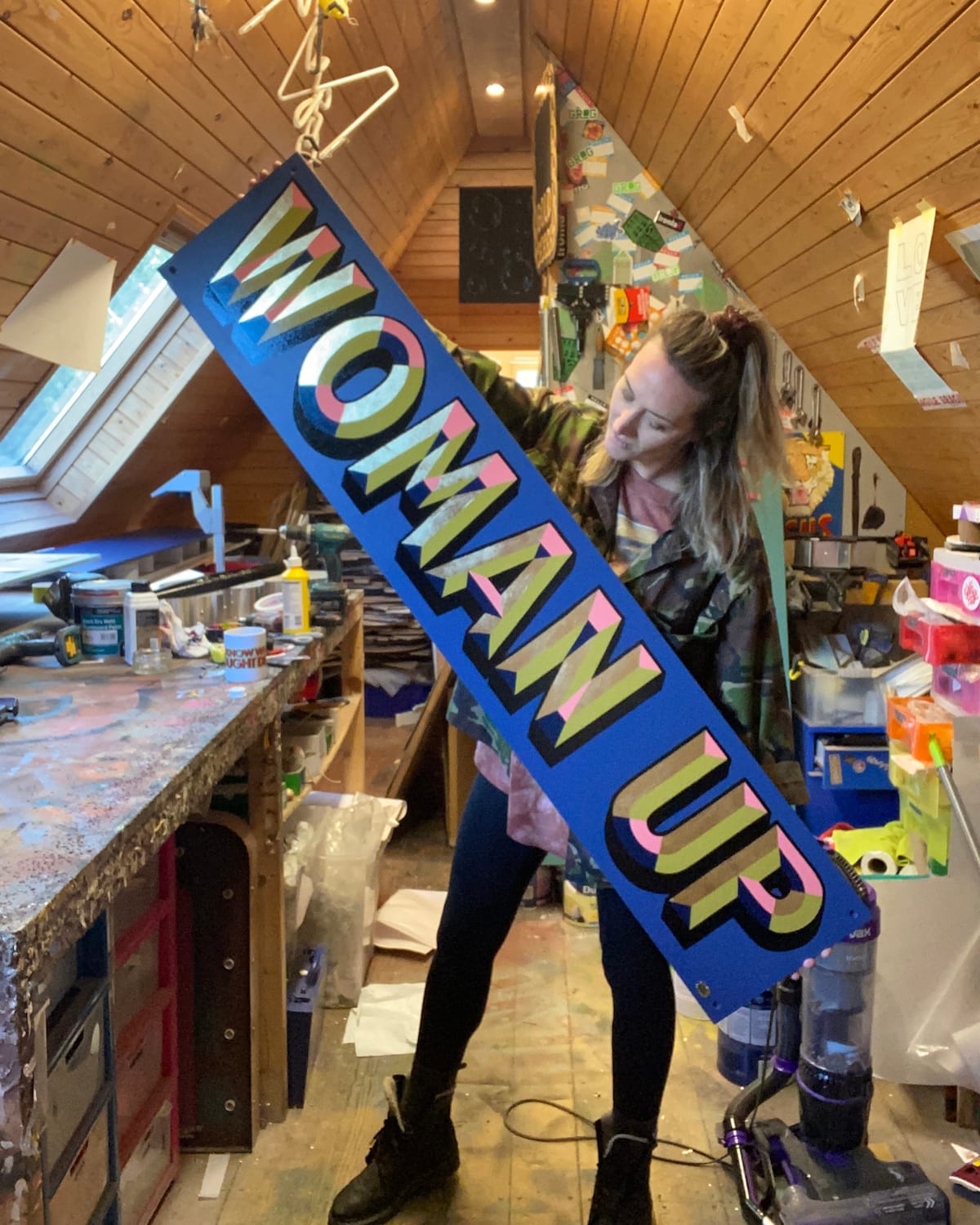
Funnily enough, that’s how I came up with the name for my sign crafting business. Here’s the story...
After college, I worked a summer season in Ibiza selling sunset boat trips. I rented the spare room from my boss Dave, who is what you would call a hoarder, with floor to ceiling junk in every room.
Under a pile of baskets and folding chairs on the balcony, I found the frame of a Raleigh Chopper — an original 1970s bike with a grab rail and three gears, with the gear stick in the centre of the frame. Dave told me I could have it and I thought all my Christmases had come at once.
The next morning, I went straight to the bike shop and ordered wheels, mud guards and gears for my new find. I gave it a lick of paint, a new seat cover (made from massive bikini bottoms) and, of course, a honker horn. I spent all the money I had fixing it up.
When the end of the season approached, I left the bike with friends I knew were staying in Ibiza over the winter as I would be returning the next spring.
Arriving back in Ibiza the following May, my bike wasn’t there. I only had one idea to get it back: make posters, like people do for missing pets. I put the posters in every bar, shop, restaurant and lamppost on the west of the Island. A few weeks went by with nothing, until one day I received a call from a number I didn’t recognise.
“Hello. Did you make the missing chopper posters?”
“Have you found my bike?”
“No. This is Nando’s. We are looking for a sign painter.”
“So you don’t have my bike?”
“No. Are you a sign painter?”
“Ummm... sure!”
So that was that. I painted the Nando’s restaurant in San Antonio, and by word of mouth I painted dozens of boards and signs for bars and restaurants around the island. I ended up working as a scenic painter for Manumission, a theatrical club night held in the biggest super club in the world: Privilege.
Working as a sign painter never felt like work to me; I would often work through lunch and do 14-hour shifts without realising it. That’s when I knew it was for me. I worked for Manumission for the next two years until at the end of 2008, when they announced their final show.
Sadly, I never did find my bike, but every cloud has its silver lining: “Missing Chopper” was the start of my career in the signage industry.
What kind of training have you had?
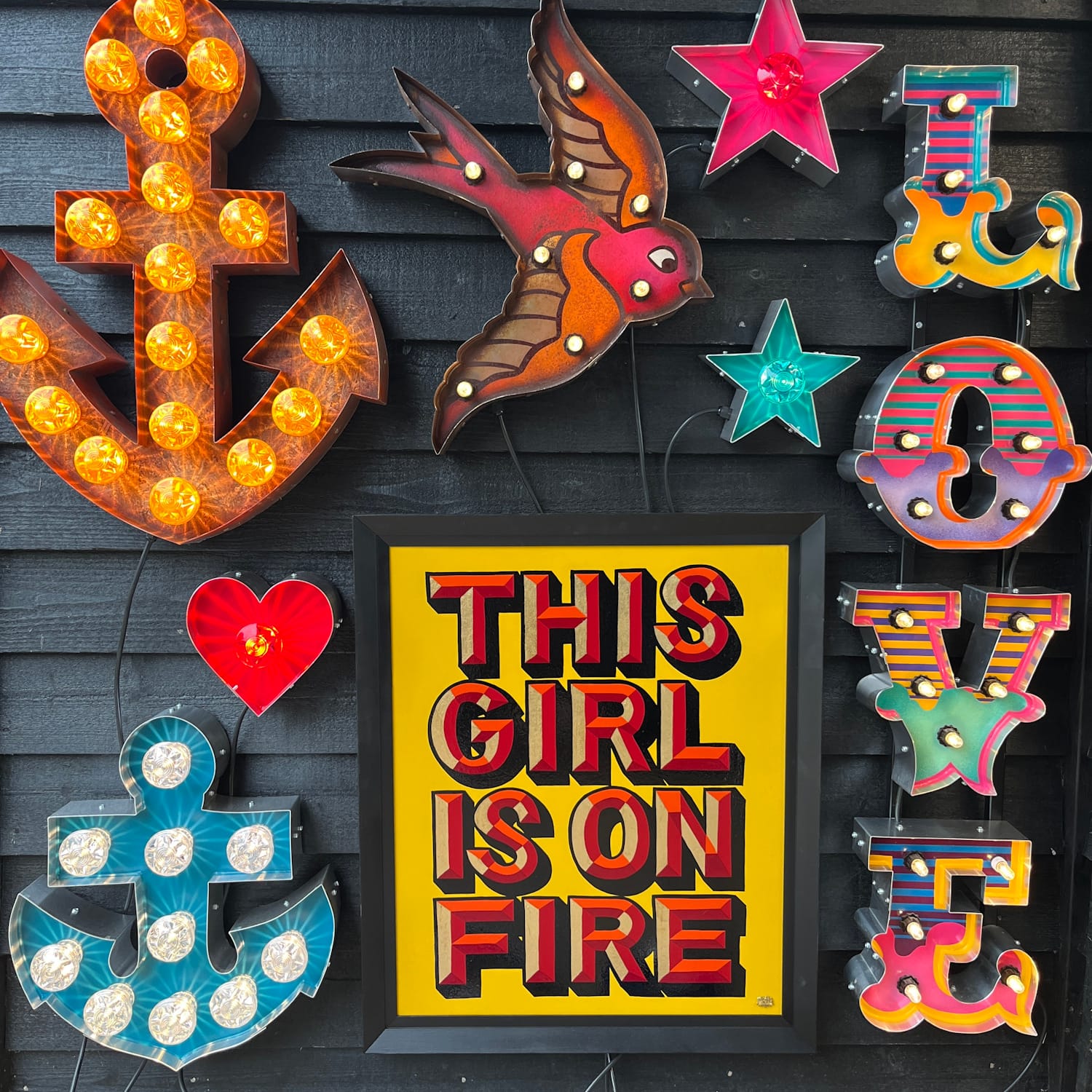
I studied fashion design at a haute couture college in Sydney, Australia, but when I got back to London and started working I had definitely fallen out of love with the sewing machine. However, I have found the pattern making skills I’ve learnt very transferable to sign design.
I then found a job as a sign maker, where I learnt the metal bending techniques for channel letters and understood the electrical side of things. I’ve also done a few short courses for sign painting and gilding with Mike Meyer and Joby Carter.
What barriers or challenges have you faced while trying to get into or working in the sign painting trade?
I would probably say my fear of heights. I tend to only paint in my workshop and ship the signs instead of painting on-site.
What advice would you give to anyone just starting out?
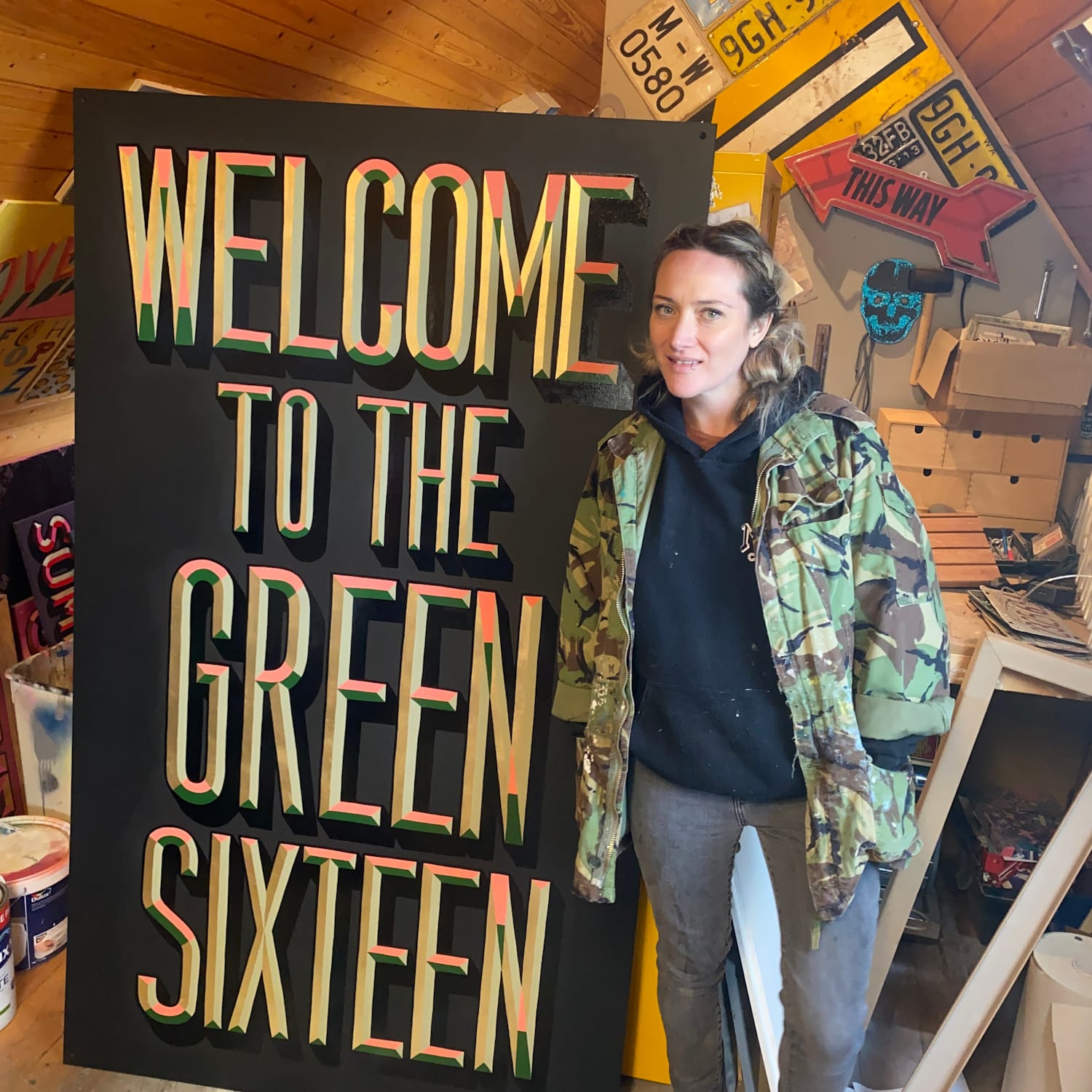
There is nothing more satisfying than a hand-painted sign. Keep it alive and keep practising. And never stop learning — always book into that next course!
Ashley Carson (Restless Roots Signs)
Location
USA
Training
- Growing up in a duck decoy maker’s garage (long live turps!).
- BFA in Painting.
- Sign painter meetups including Brushmaster’s Getaway and Letterheads 50.
- In-person and online workshops with Mike Meyer, Liane Barker, Joby Carter, and Smart Alex Signs.
Tell us about your route into the world of sign painting.
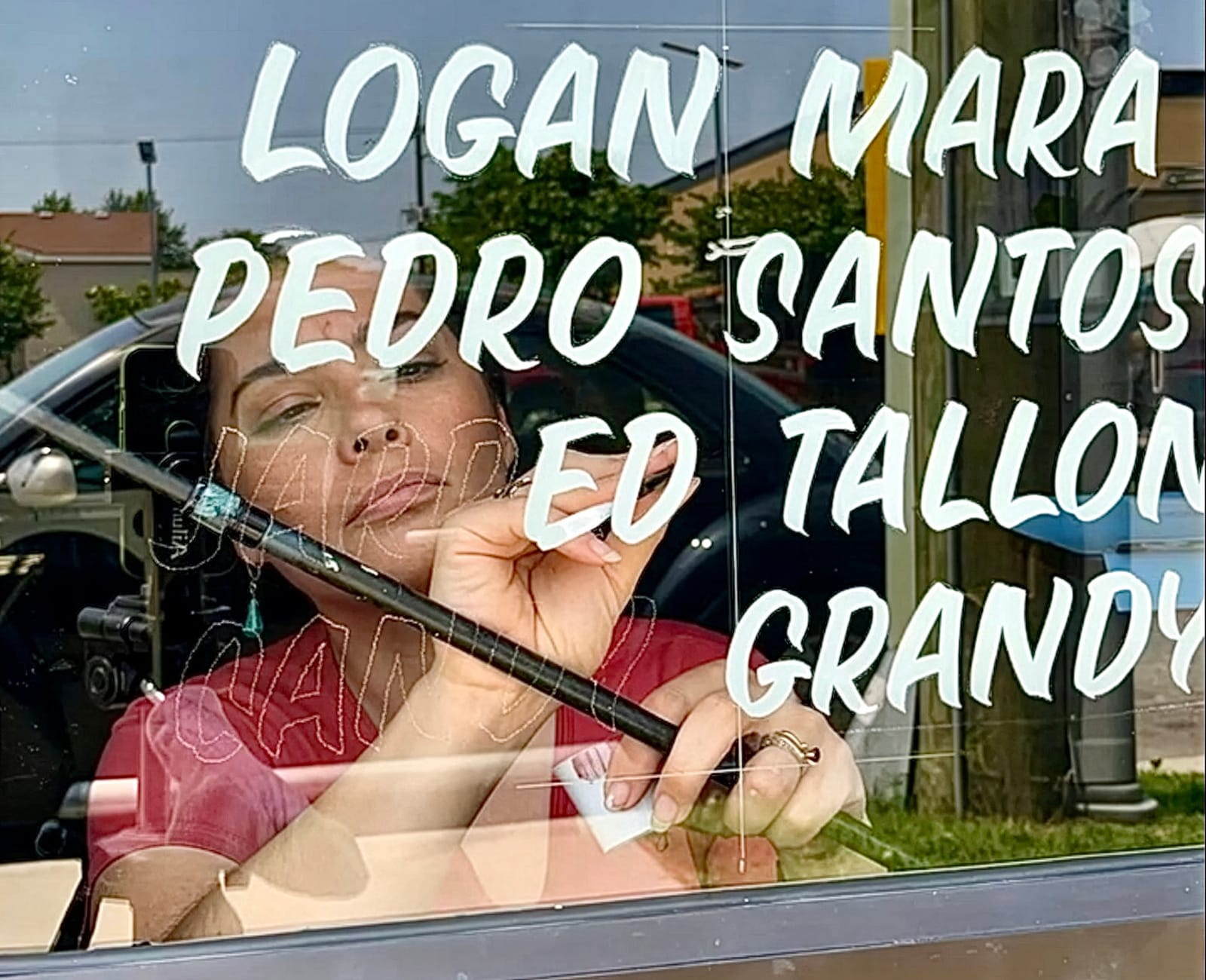
My partner was stationed across the country in Alaska with the military when we started dating. It quickly became clear that I needed a mobile career, but I had no idea what could check all the boxes and make use of my art degree. I worked a string of dead-end jobs and was always the ‘artsy’ one, asked to create t-shirt designs, chalkboards, logos, and product labels.
In 2018, three cross-country moves and a child later, we found ourselves in Memphis, Tennessee, living next to a Coca-Cola ghost sign — and that’s when everything clicked. The abandoned commercial building in a residential neighbourhood was a vivid reminder of the past, and my daydreams led me to the Sign Painters documentary. Discovering it was monumental and I felt a strong urge to help preserve this craft and serve as a link in the chain of knowledge for the future of the industry.
We moved again in 2019, home-schooled for kindergarten during 2020–2021, and I’ve continued to juggle parenting a high-needs child, unpredictable military schedules, and sign painting. Some customer relationships ultimately weren’t the right fit, but each one has helped me figure out which services I do — and don’t — want to offer.
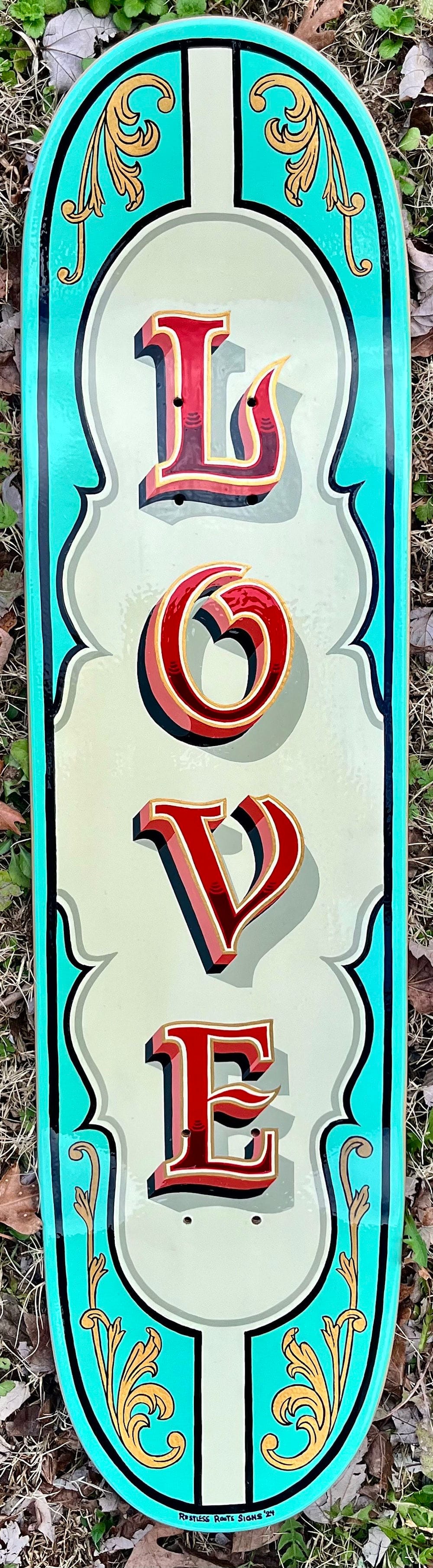
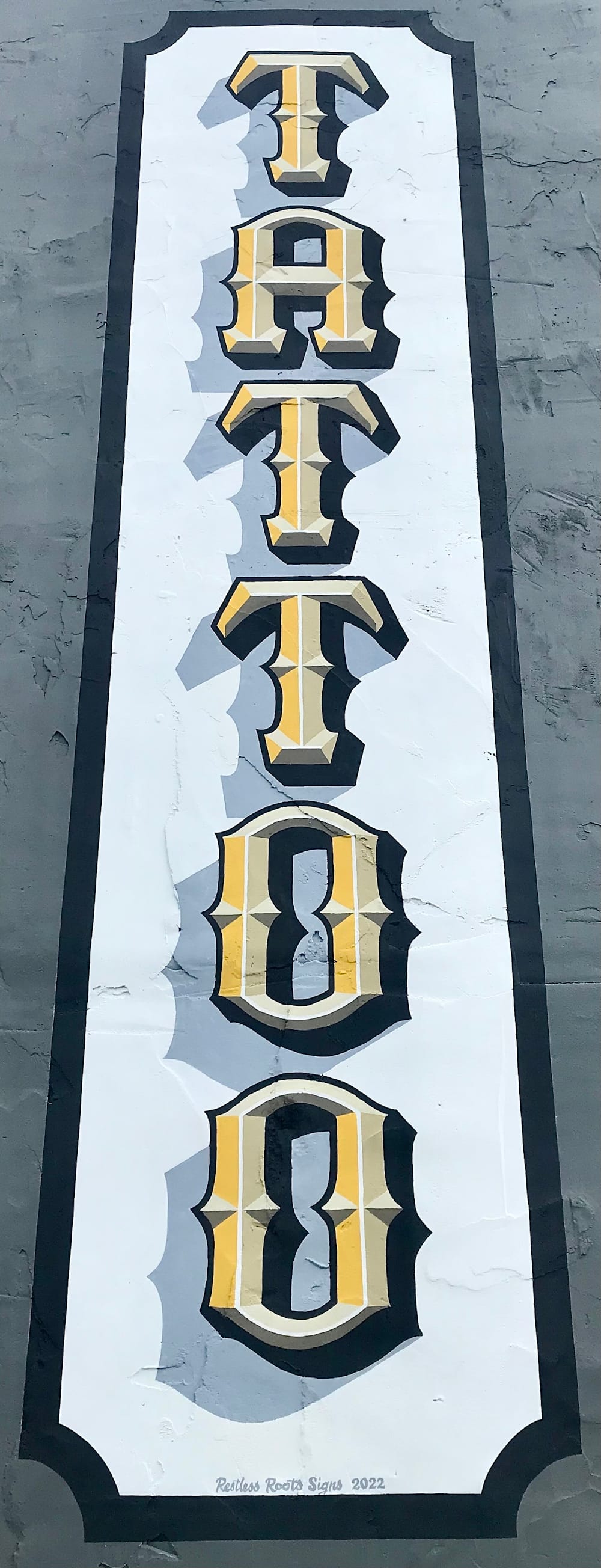
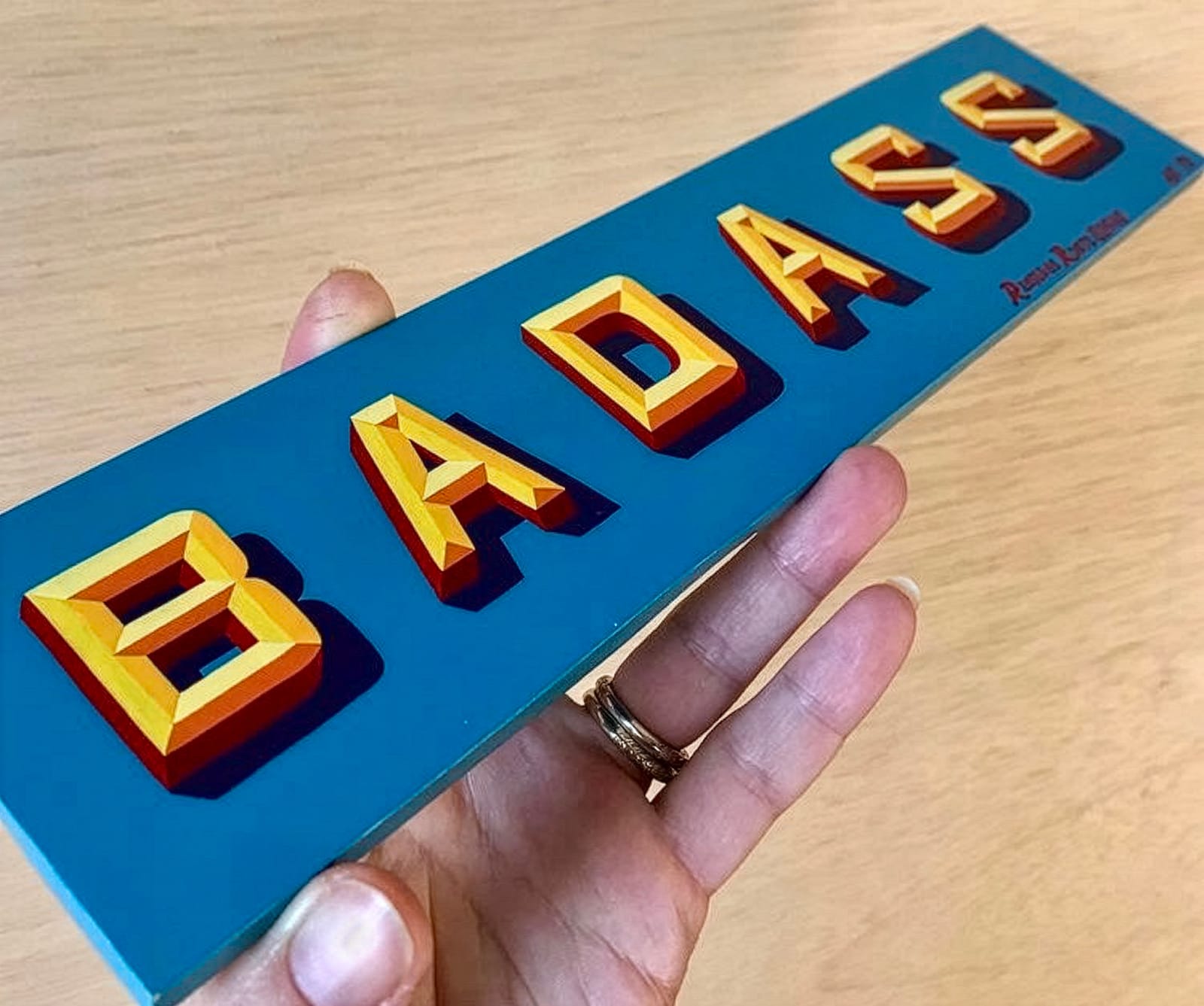
Skateboards and walls as canvas for Love (2024) and Tattoo (2025).
What are your creative interests and passions, and have they had any influence on your work and/or chosen career path?
My jump list includes optical illusions, trompe-l'œil, Art Nouveau, naturalist sketchbooks, old cars, bird nerding, genealogy, architecture, the 1880s–1940s, languages, and people-watching. I’m drawn to businesses that prioritise storytelling with a community mindset, and the cherry on top is incorporating visual details from this list when possible.
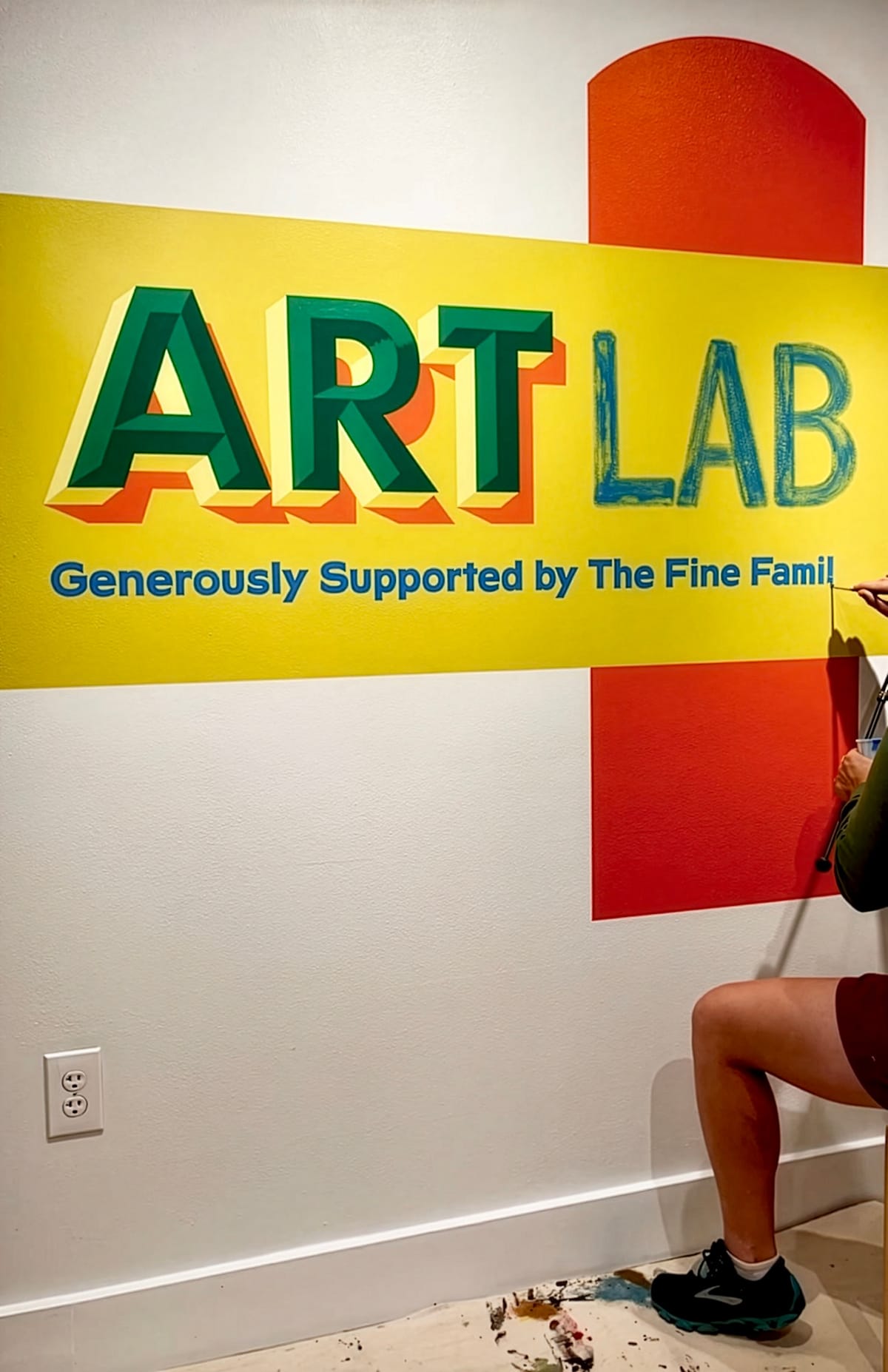
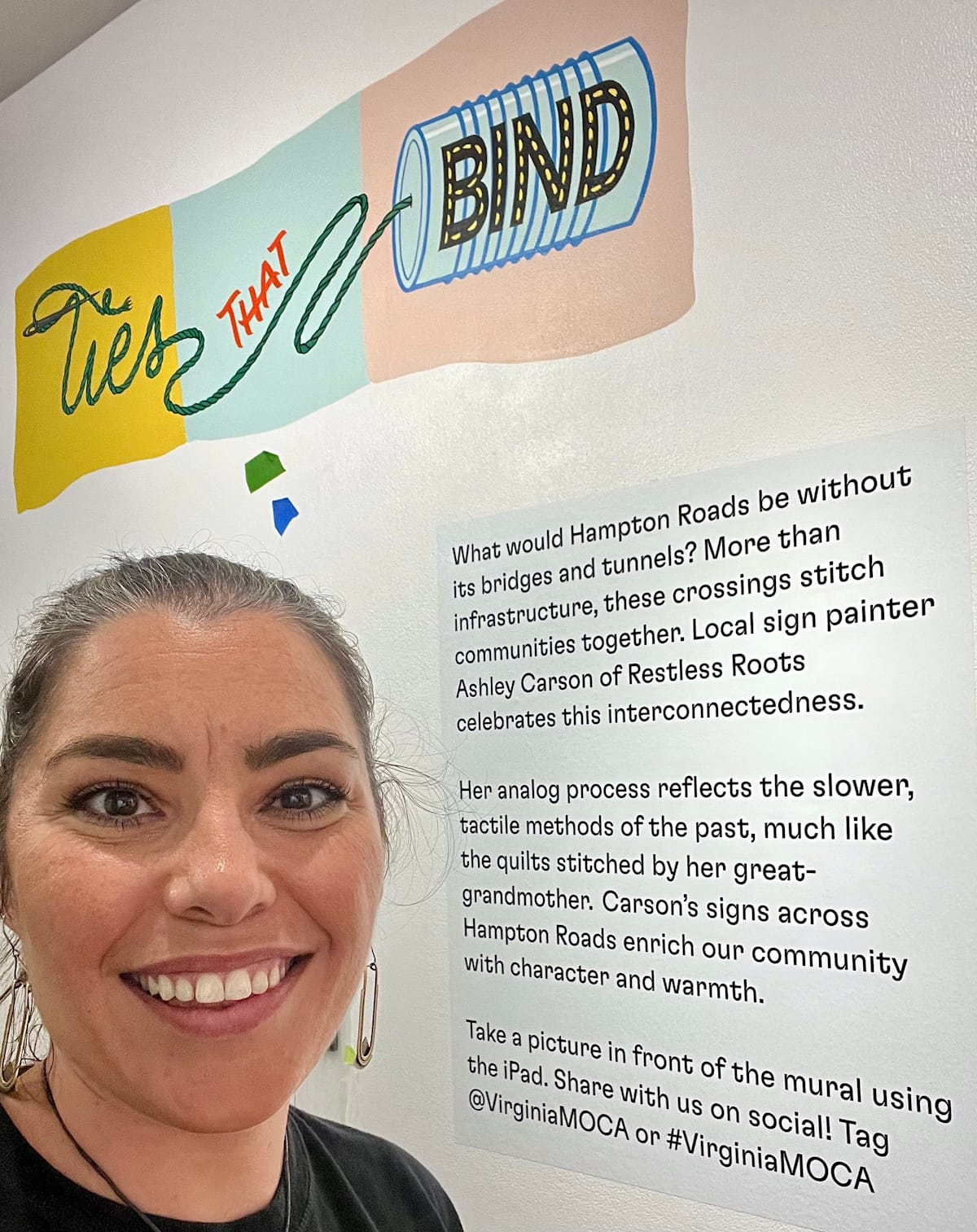
Keeping it hand-painted for an exhibition of local artists' work at the Virginia Museum of Contemporary Art.
What barriers or challenges have you faced while trying to get into or working in the sign painting trade?
Sometimes the challenges come from exterior factors, and sometimes I’m getting in my own way! Educating our region on what sign painting is has taken time and remains a major part of my pitch. Since no local painters were open to apprenticeships, I relied on online friendships and community to support my self-directed learning in the first year. Our area is also pretty regulated, and permitting can take several weeks. Because I don’t offer permitting services, clients take on that headache themselves — and sometimes end up going elsewhere. Add in weekly medical appointments, unplanned military work trips, and changing weather, and flexibility becomes essential.
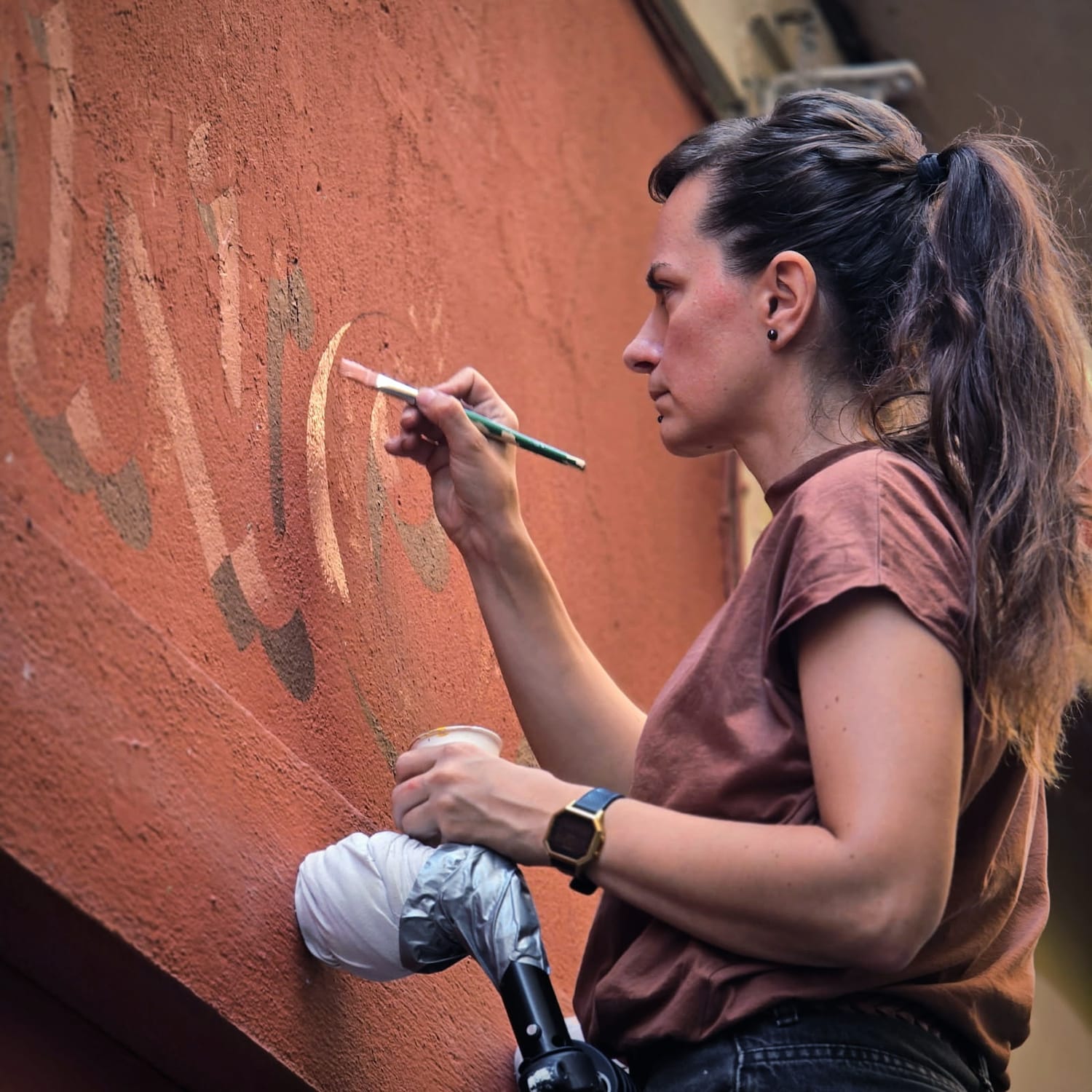
Internally, there are hurdles too. I often encounter situations as a woman that my male mentors have never navigated. The constant need to prove myself has drained my confidence at times, but I’m determined to carve out space for women in this craft and to show young women and myself that we can rise above it. You can look confident, but at 5 ft, 2 in (157 cm), there will always be someone asking if I need help with my ladder. I hold myself to a high standard and sometimes hesitate to offer new services until my skills feel airtight. I don’t want to deliver cheap quality for a cheap price, but also don’t want to let the years pass without sharing my talents because of my own insecurities.
What advice would you give to anyone just starting out?
Learn the basics of design/layout, along with letter construction in the 4–5 foundational alphabet styles. Spend time practising with pencil and paper before moving on to any of the fancier stuff. Workshops or apprenticeships are invaluable, not only for building community, but for receiving real-time feedback on your technique and learning tips you’ll never find in a book.
Bring a beginner’s open mind and give yourself permission to fail. Remember: the folks that give you a hard time (and still give me a hard time) are often doing it for themselves, not because you’ve done anything truly worthy of criticism.
Slava Jevcinova
Location
France
Training
- Type and Media programme at the Royal Academy of Art in The Hague.
- Various workshops and Letterheads meets.
Tell us about your route into the world of sign painting.
During my [type design] studies in The Hague, I heard about the Amsterdam Sign Painters who were organising workshops. These were with the American sign painter Mike Meyer from the documentary Sign Painters, which had just been released at the time. I decided to attend and instantly fell in love with the craft.
What are your creative interests and passions, and have they had any influence on your work and/or chosen career path?
My passion for letterforms is really the driving force behind everything I do. That's why I first chose to study type design — to get to the essence of how letters are built. That knowledge helps me select the right typography for sign painting projects, or even to design a tailormade font.
At the same time, working as a sign painter often sparks ideas for new typefaces. This, and my experience in letter carving, calligraphy and letterpress, shapes the way I approach every project, with these different disciplines reinforcing each other.
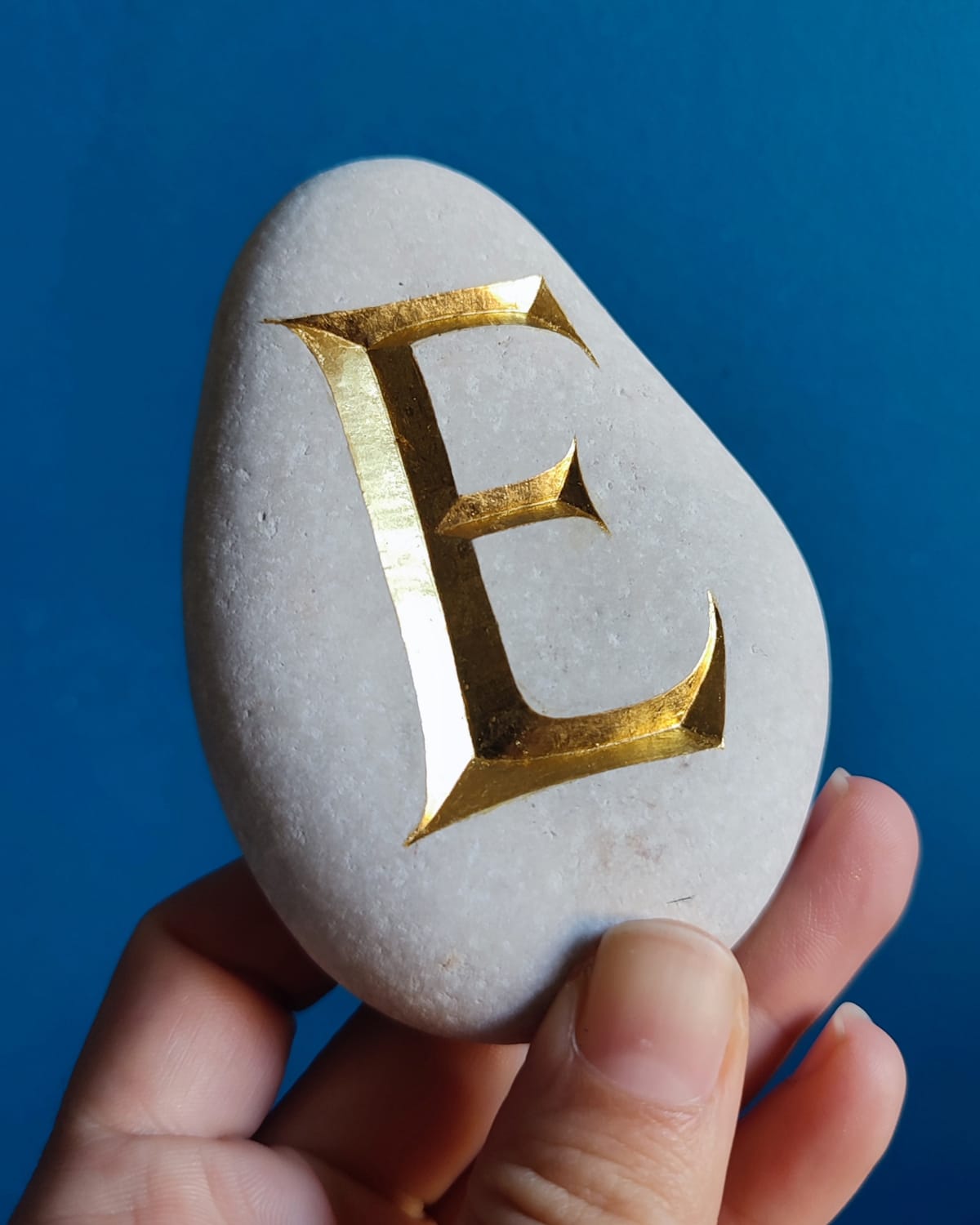
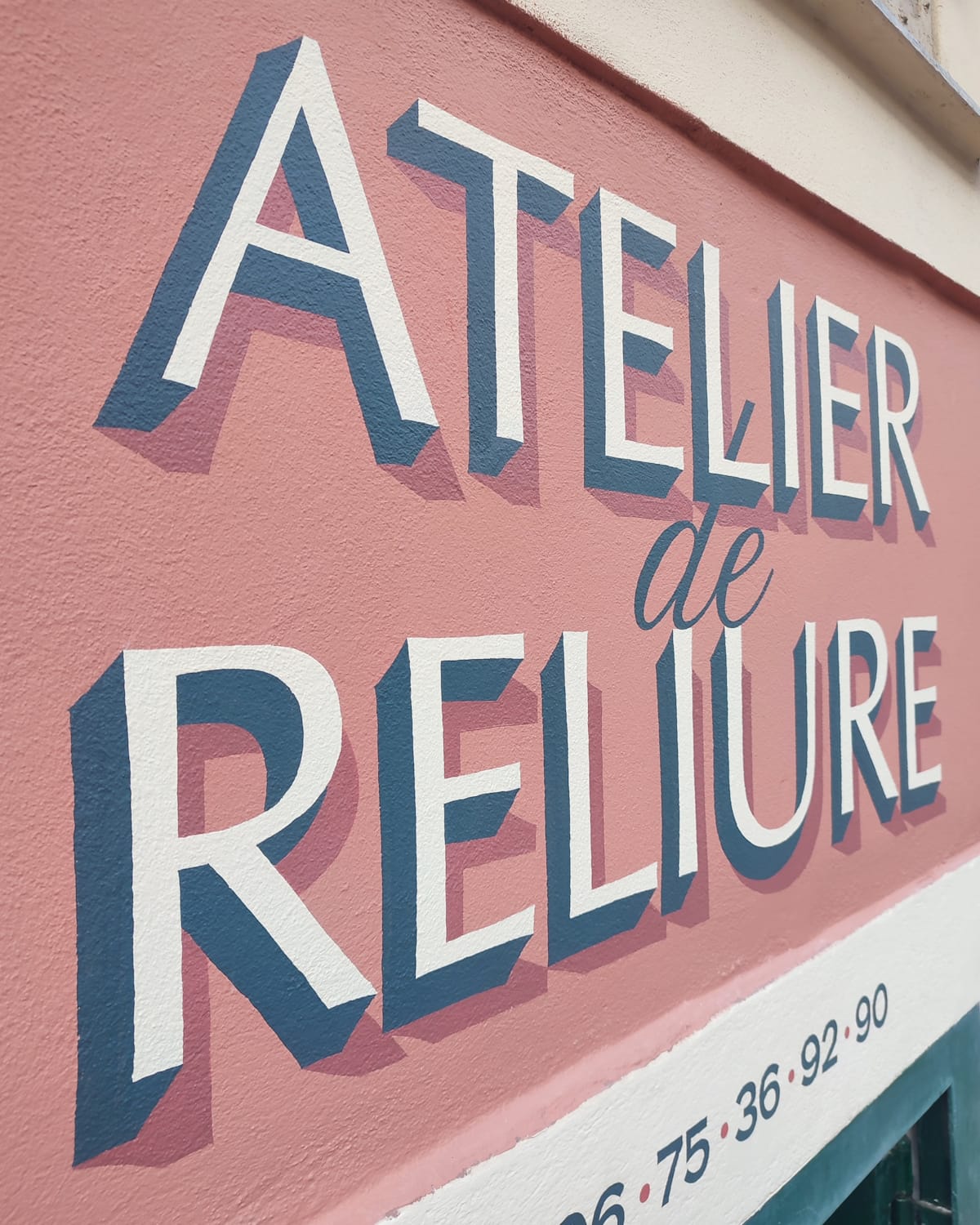
Gilding on carved stone and hand-painted signage for a bookbinding workshop.
What barriers or challenges have you faced while trying to get into or working in the sign painting trade?
My biggest challenge was the language. As a non-French speaker starting a sign painting business in the south of France, I learned French as I went — the lettering turned out to be easier to master than the language 😄.
Apart from that, as a type design geek adjusting Bezier points with unit by unit precision, it took me some time to appreciate the beauty of imperfect brush strokes.
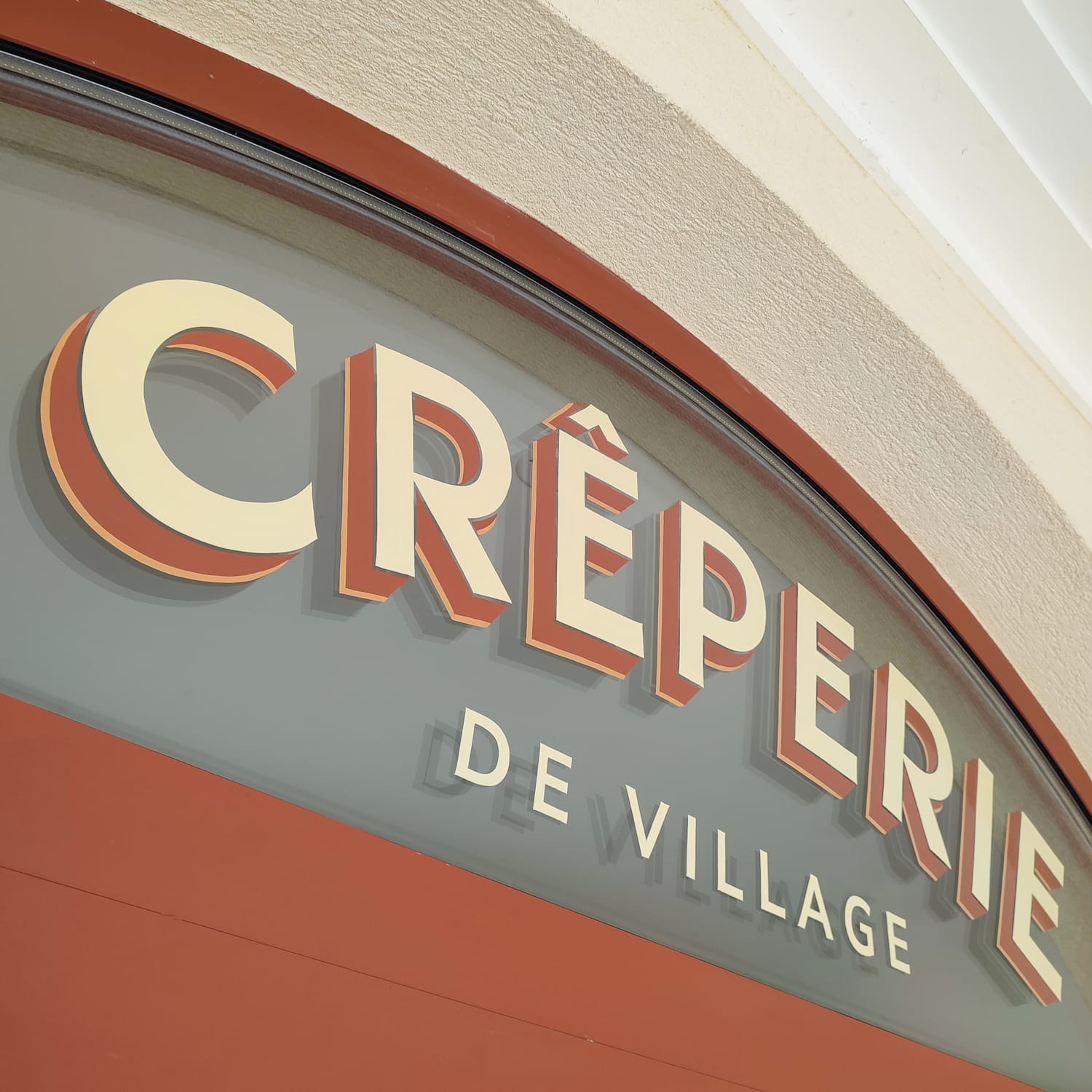
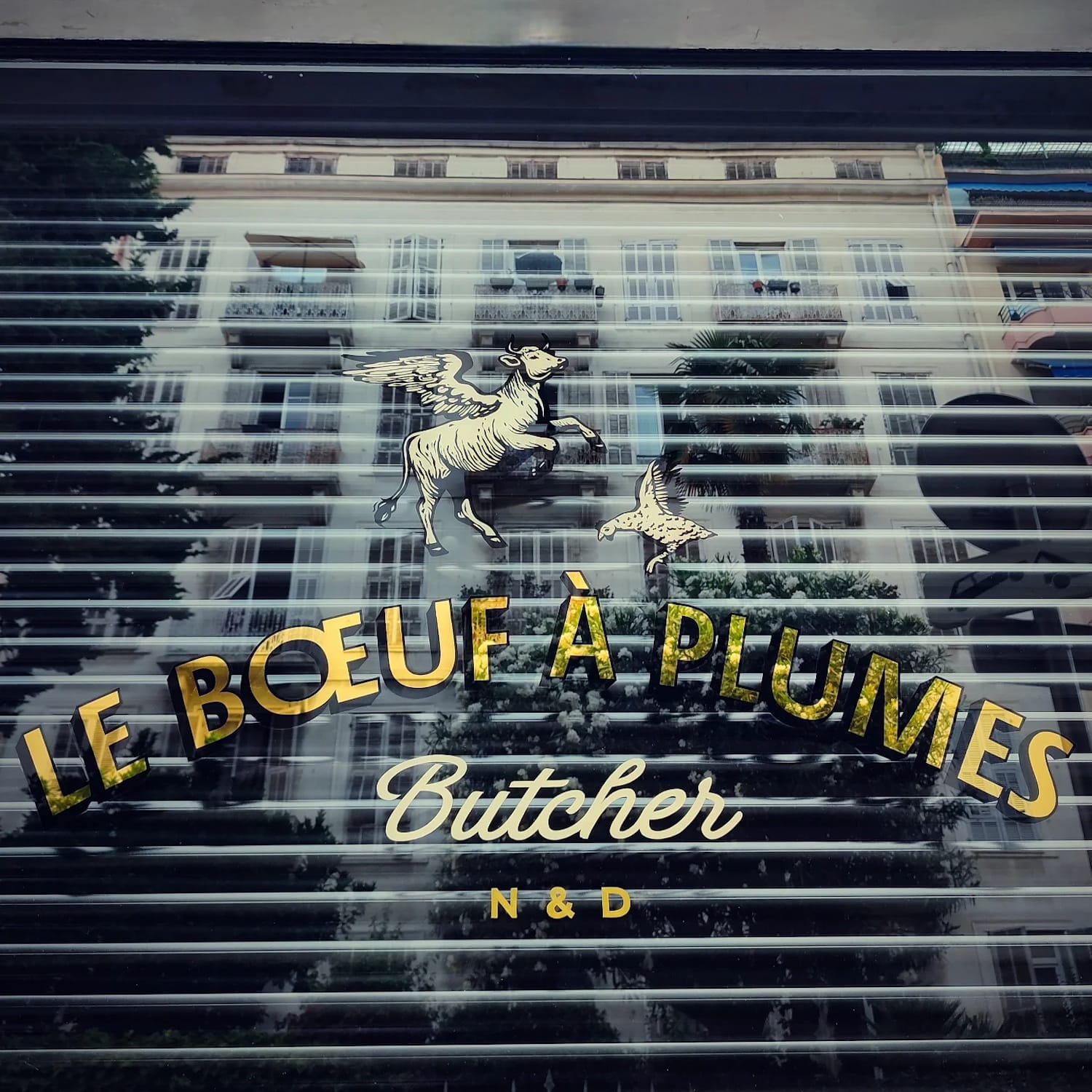
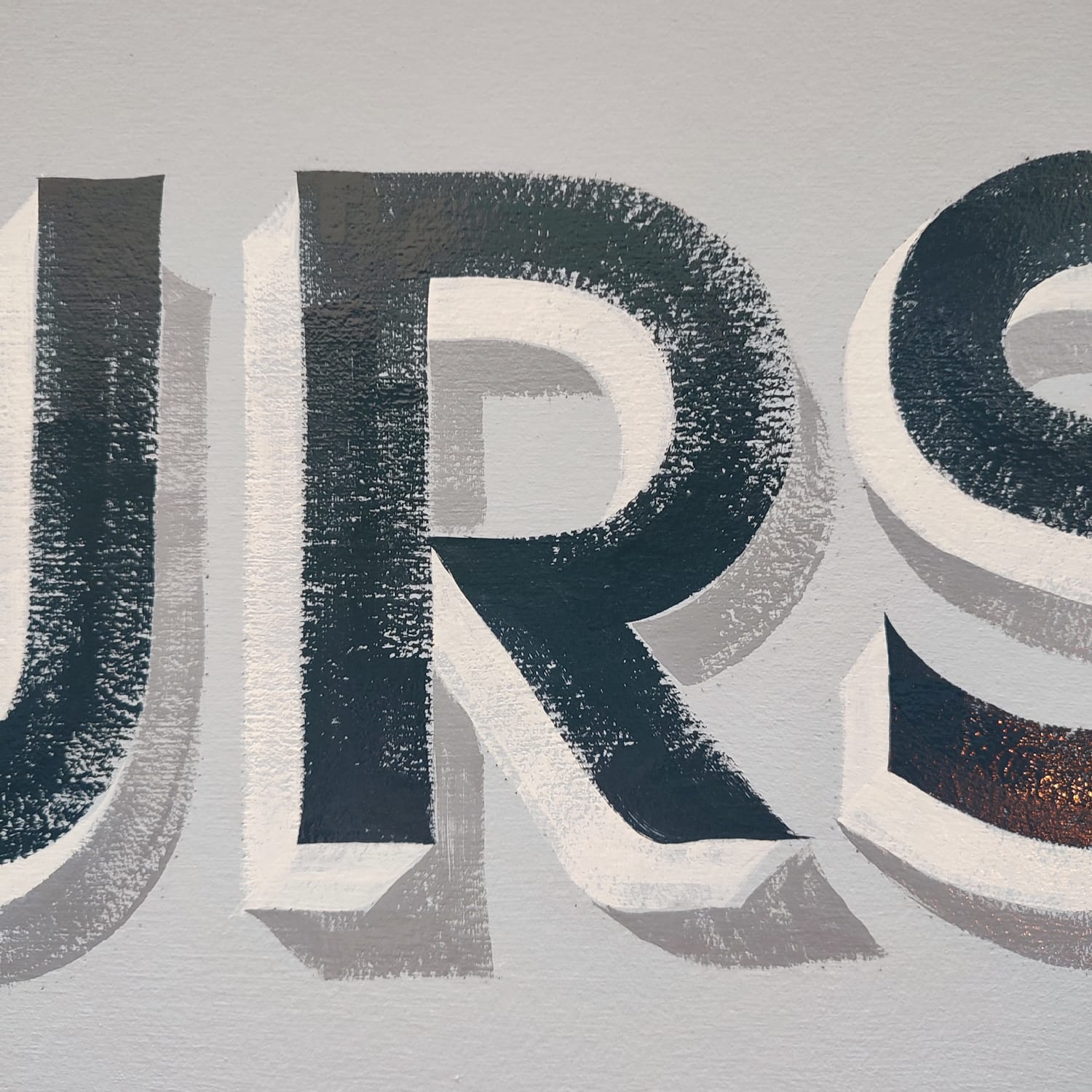
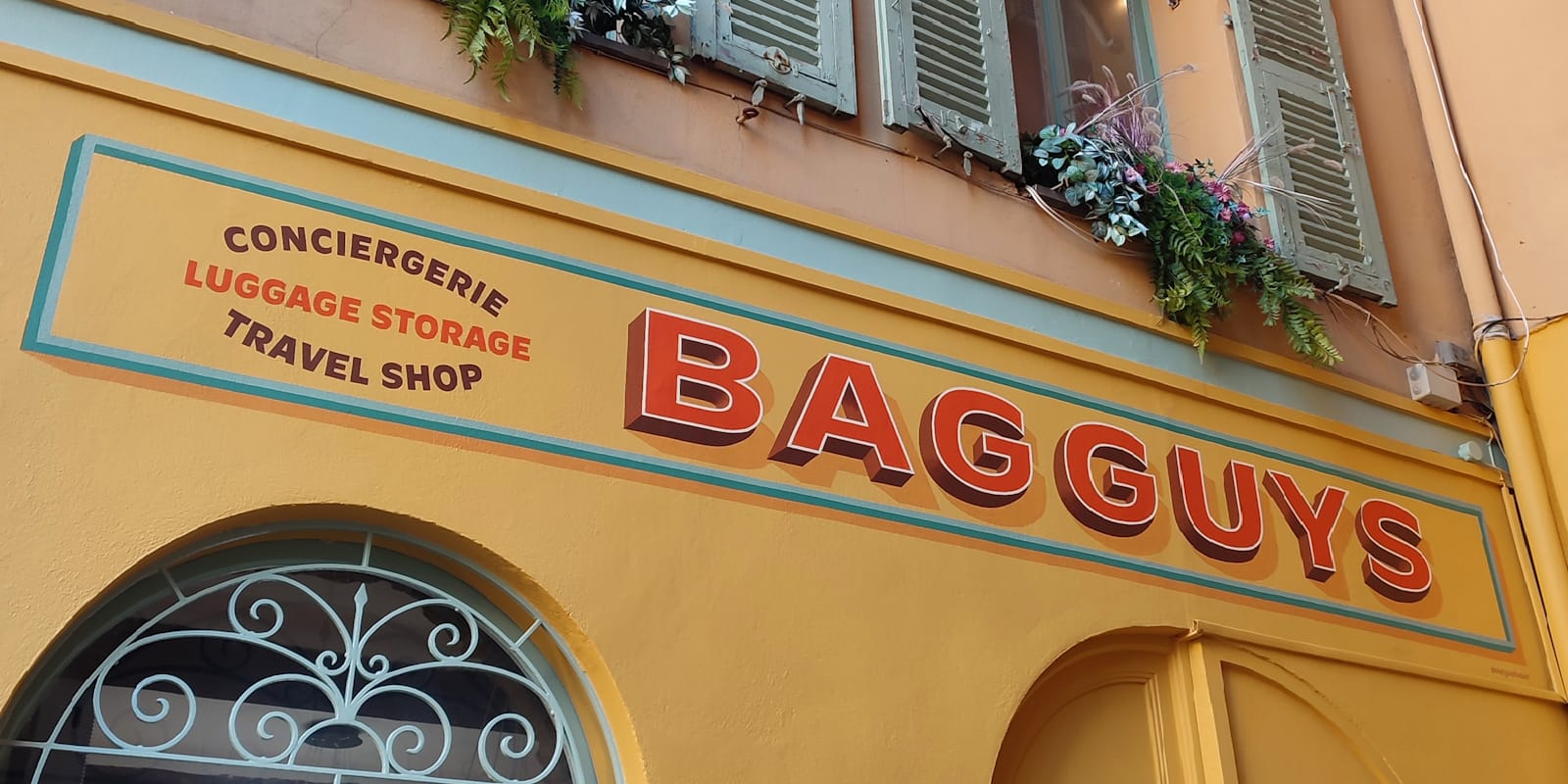
Work by Slava Jevcinova can now be seen across the city of Nice in southern France.
What advice would you give to anyone just starting out?
If you know that this is the direction you want to go, then you’re already halfway there, so push it hard and make your dreams come true!
More People
Better Letters
More Learning
Better Letters