William Gilpin: Signwriter of Ulverston
Tony Lewery describes one man’s contribution to the character of a Cumbrian town.

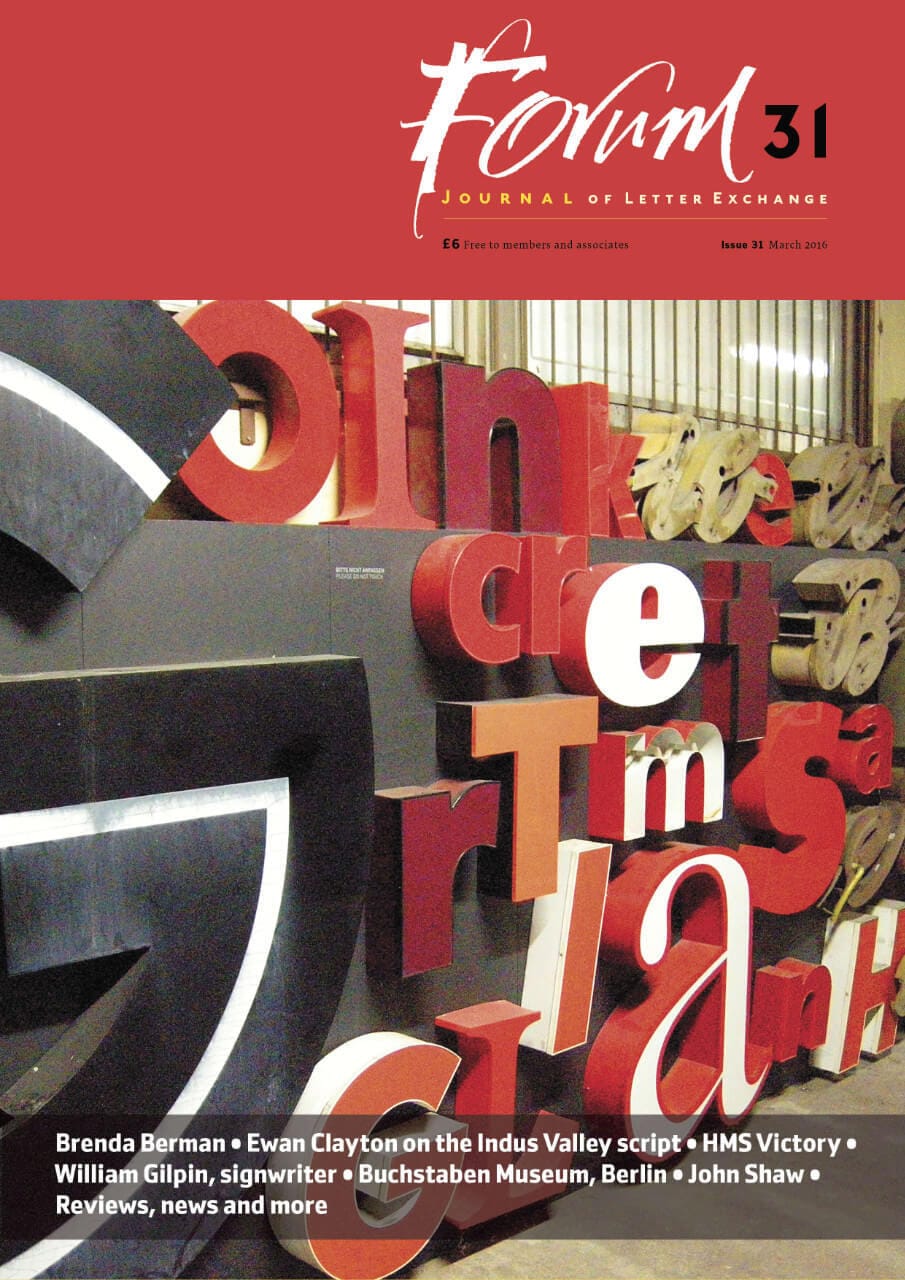
The following feature was first published ten years ago in Forum, journal of Letter Exchange. The journal comes out twice each year and its mixture of in-depth articles and shorter ‘clippings’ straddles everything from calligraphy and letter carving to graffiti and type design.
Issue 31 (March 2016) had a number of fascinating pieces, including a visit to Berlin’s Buchstabenmuseum and an account of James Mosley’s project to restore the hand-painted lettering on HMS Victory. It also contained Tony Lewery’s profile of William Gilpin, a signwriter and grainer from Ulverston in Cumbria.
Lewery is the author of many important books about British signwriting, including Signwritten Art and The Art of the Narrow Boat Painters. He first wrote this profile of Gilpin in 1988 but it sat unpublished until he updated it for Forum in 2016. He and Forum editor John Neilson have kindly given permission for its reproduction here, including many examples of Gilpin’s work that Tony photographed in the late 1980s and early 1990s.
William Gilpin: Signwriter of Ulverston
Text and photography by Tony Lewery
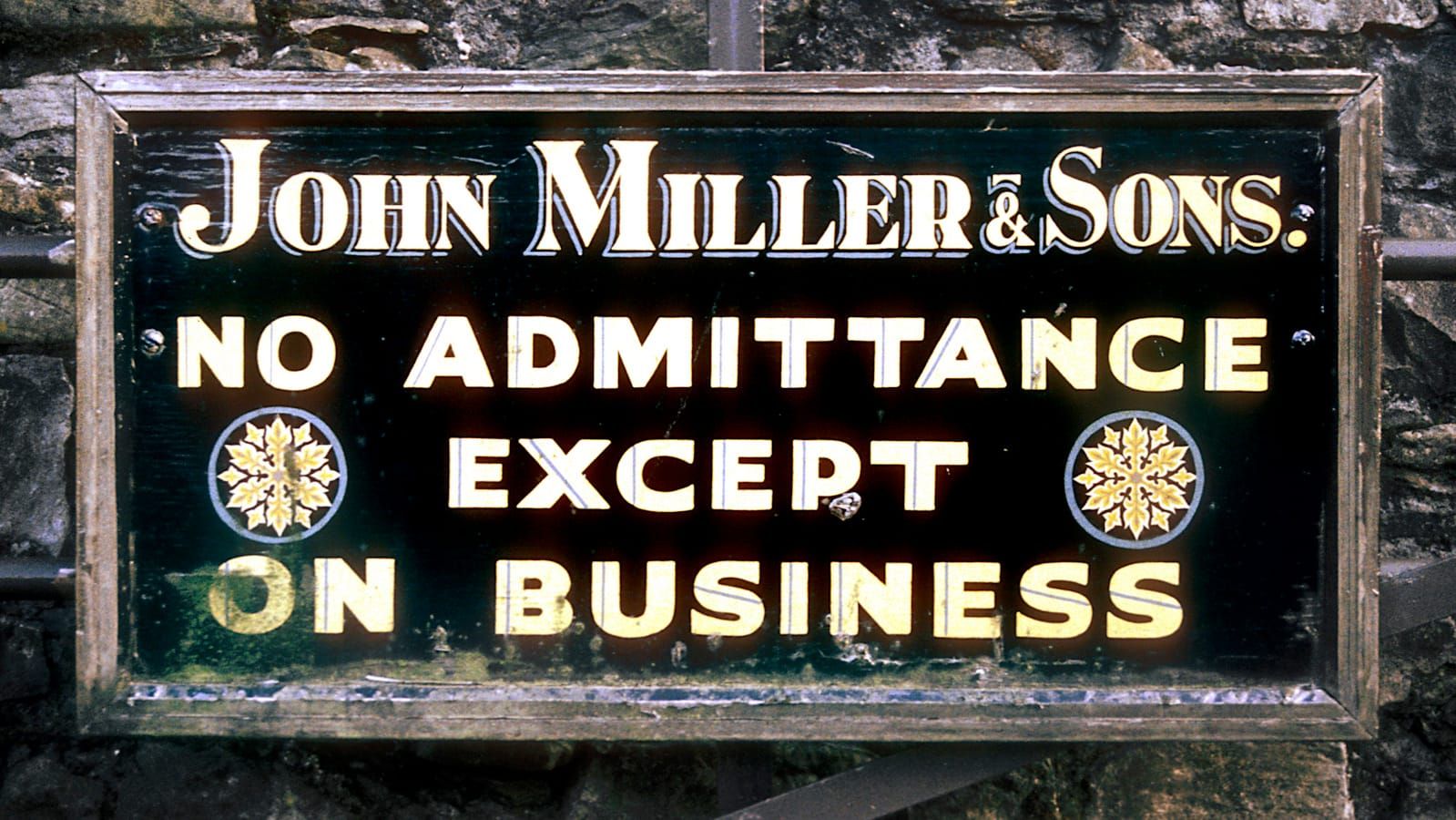
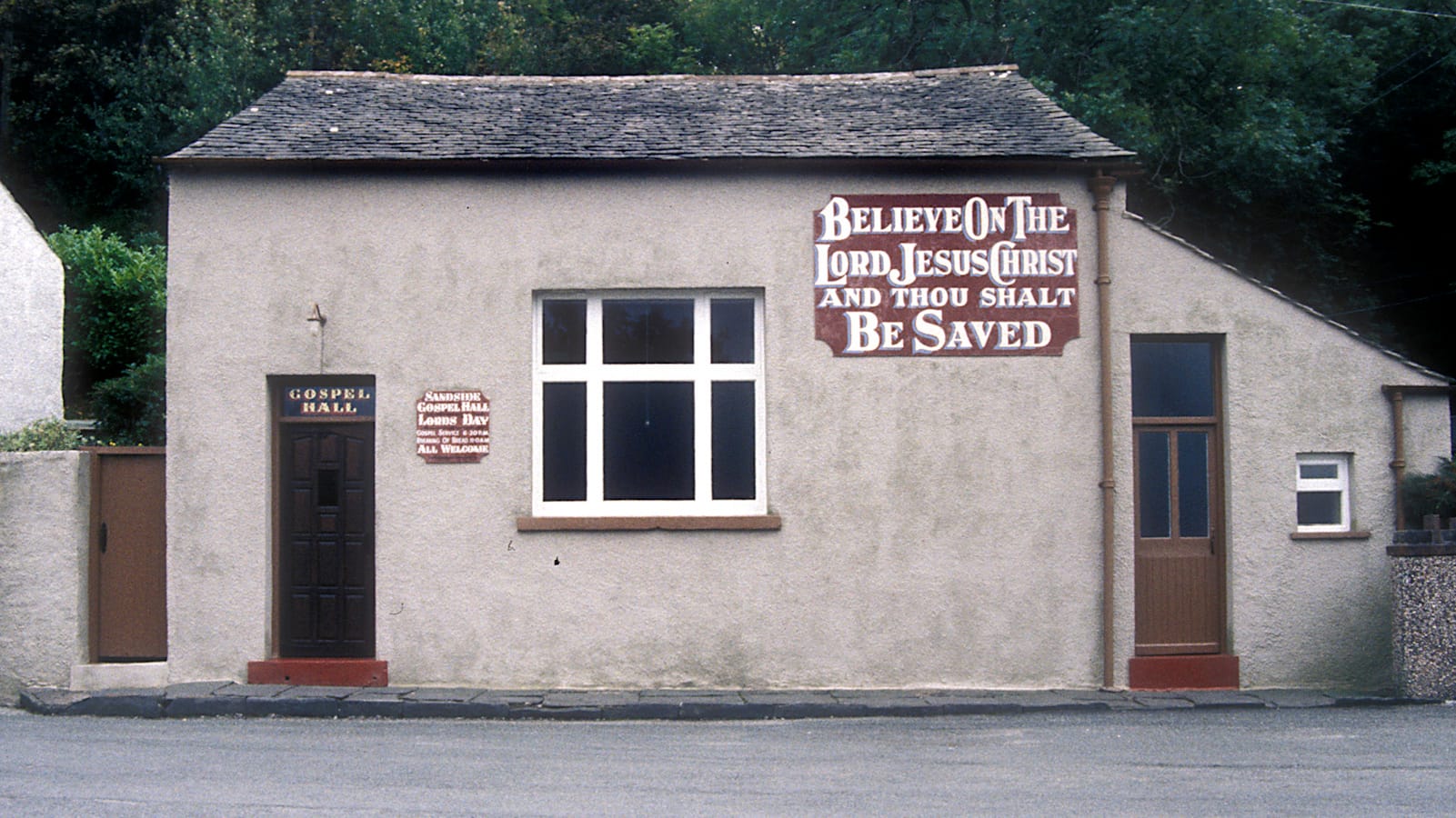
When I first visited Ulverston in Cumbria in 1978, the work of a local signwriter was an obvious part of the visual quality of the town. His odd and clearly recognisable lettering pervaded the business life of Ulverston in the way that a typeface influences the style of a book or a colour can control the atmosphere of a room. It may seem an exaggeration to consider a signwriter’s work an important aesthetic ingredient in the character of a whole geographical area, but in Ulverston the rough stone architecture is so much an extension of the rocky Lakeland landscape that man-made notes of contrast sing out even more clearly than they would in a place where the architecture shouts out against its surroundings.
Here apparently was a town concerned only with itself and its own people, not straining to be a part of something bigger or a part of somebody else’s corporate identity. Dress shops and shoe shops were content to present and advertise themselves to the High Street in a gentle local way, without feeling the need to ally themselves with the designer’s image for the superstore or the brashness of the magazine or television commercial. With several generations of existence behind them, they seemed to be resisting the temptations of progress and the fast return which had become the tone and temper of late twentieth century Britain.
As a visible expression of that refreshing out-of-date attitude, the local lettering seemed perfect — little affected by modern advertising, a slightly old-fashioned but individual statement about the man behind the brush and his customers. Closer acquaintance modified this rosy romantic view of the town somewhat, for the common pressures of modern life were making their mark, but Ulverston was still a relaxing place to be in, and it was a great pleasure to look up and meet Mr William Gilpin, the local signwriter.
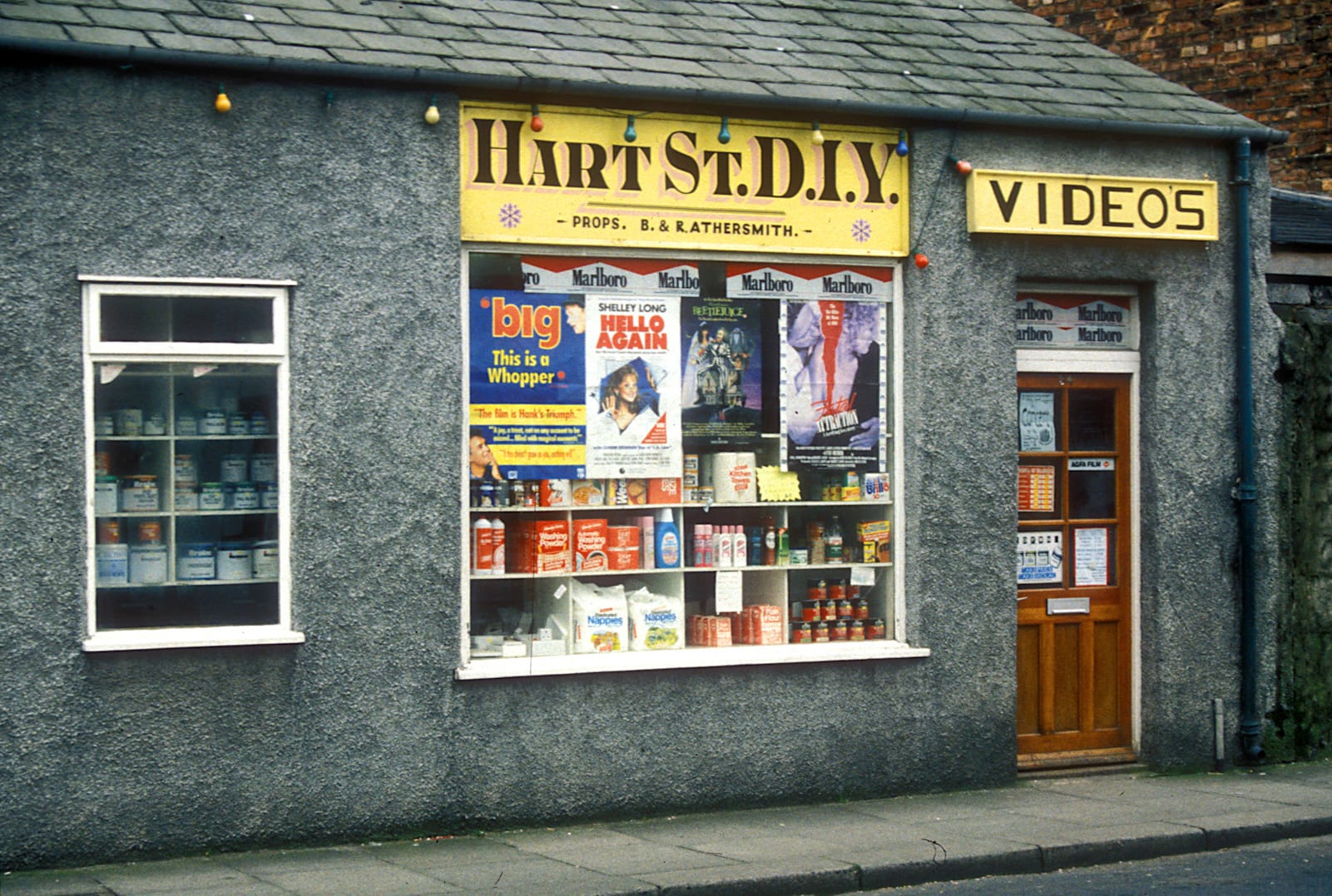
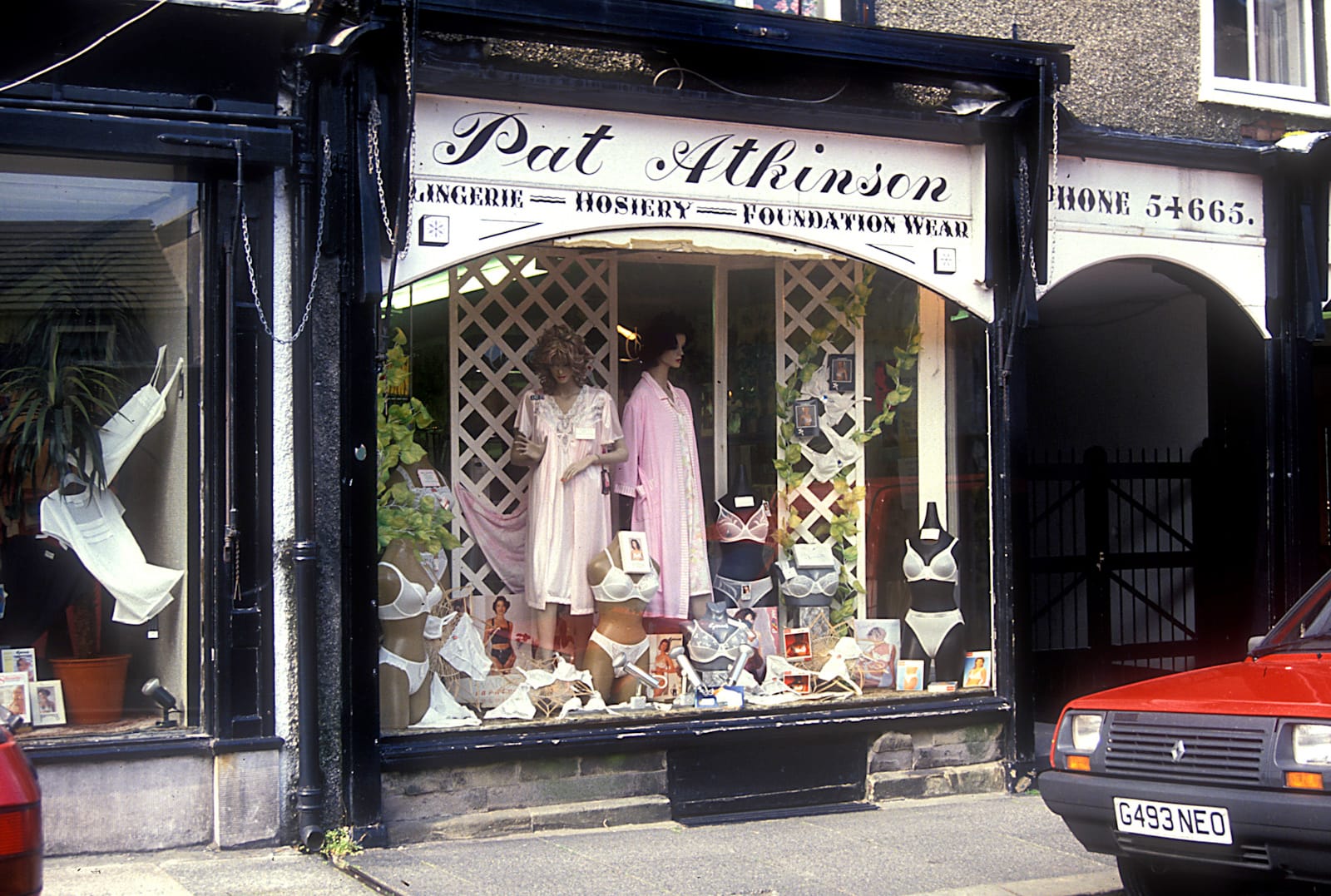
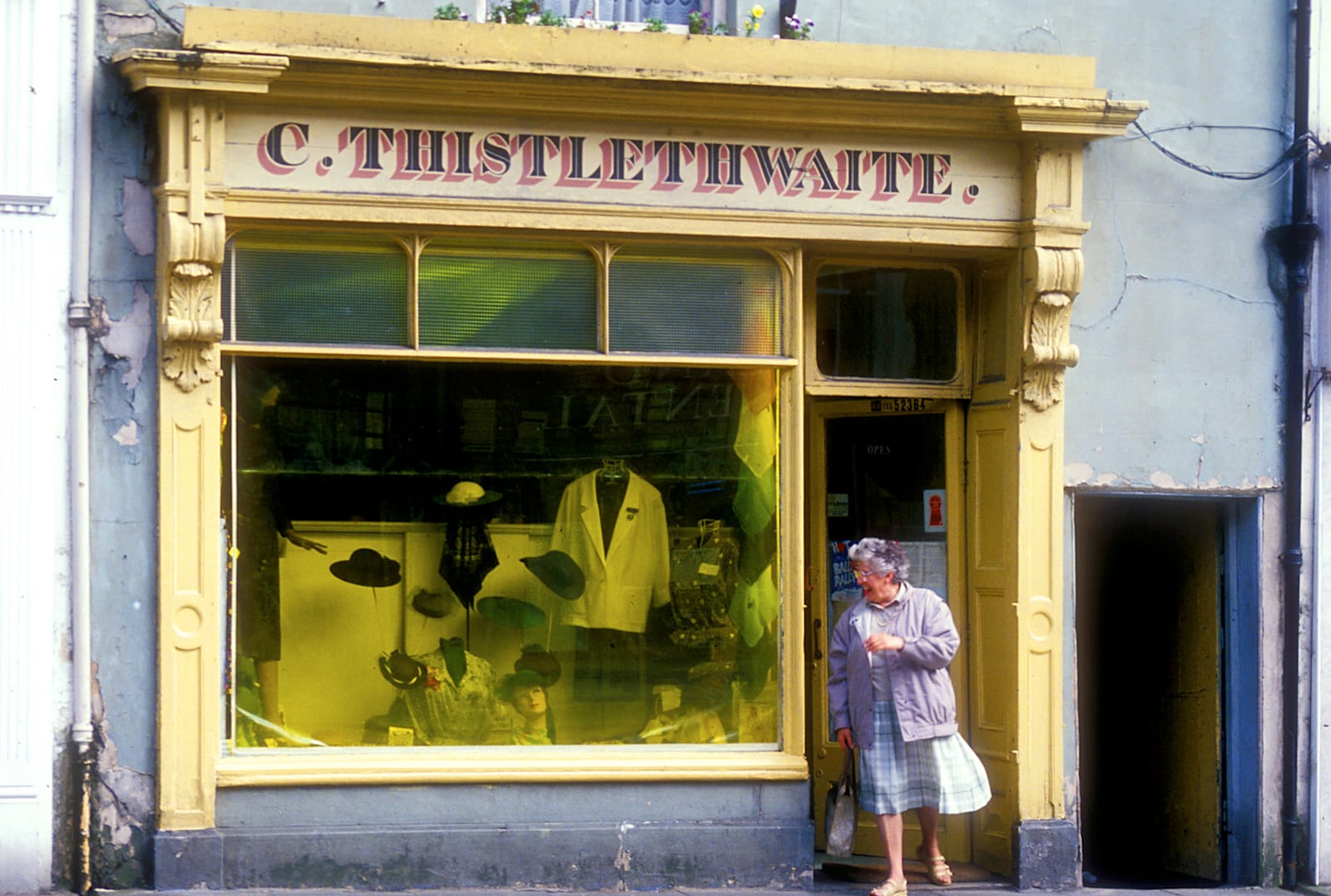
Shops in Ulverston, Cumbria, in the late 1980s and early 1990s.